Volkswagen profit slump prompts lower 2026 revenue outlook
Volkswagen cut its 2026 sales revenue forecast after second-quarter operating profit fell short of analyst expectations.
By Amanda Ross · Deals Correspondent
· 3 min read
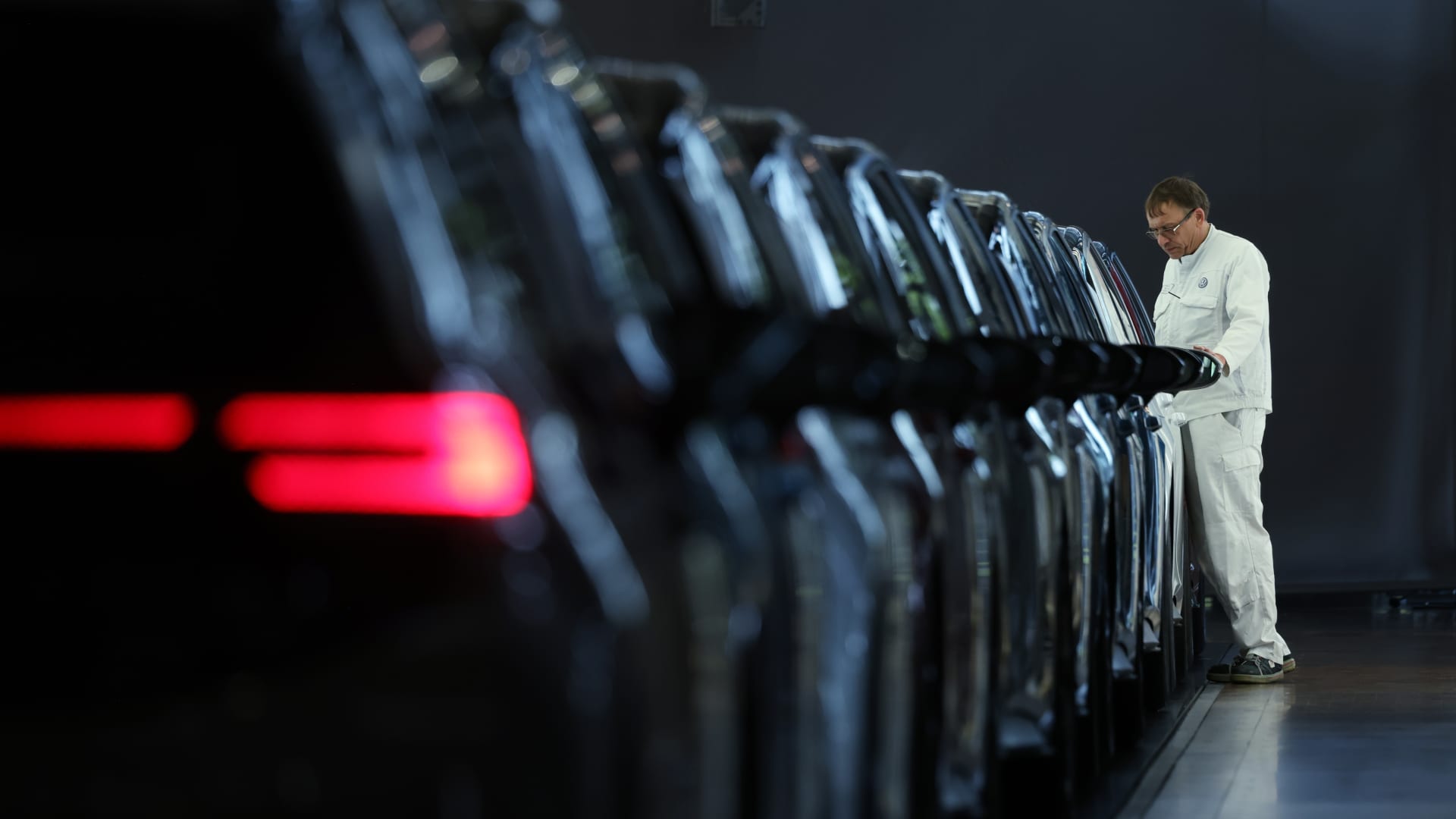
Volkswagen profit slump concerns deepened on Friday after the German automaker reported a weaker second quarter and lowered its 2026 sales revenue outlook. The company posted operating profit of 3.5 billion euros, or $3.98 billion, for April through June, almost 10% below the same period a year earlier and short of a 4.3 billion euro consensus compiled by LSEG.
Europe’s largest carmaker said it now expects 2026 sales revenue to range from a 3% decline to no growth versus the previous year. Its prior guidance had called for revenue to rise by as much as 3%, with the lower end at zero growth.
Volkswagen attributed the quarterly earnings pressure to the end of production of its top electric vehicle in the U.S. and unfavorable mix effects. Mix effects refer to changes in the types of vehicles or markets generating sales, which can reduce profitability if a larger share of revenue comes from lower-margin products.
Why did Volkswagen profit slump?
The company cited two main factors in the second quarter: the discontinuation of the ID.4 electric sport utility vehicle in the U.S. and negative mix effects. Volkswagen said in April that it would stop making the ID.4 at its Tennessee plant, pointing to a difficult U.S. market for electric vehicles.
The earnings update comes as Volkswagen prepares a deeper cost-cutting effort. CNBC reported earlier this month that the company had confirmed it was looking to cut up to 100,000 jobs, twice the number previously stated, as it responds to weaker profitability, billions of euros in tariff costs and stronger competition from Chinese automakers.
In a staff memo reported by Reuters earlier this month, Chief Executive Oliver Blume said Volkswagen’s costs were 20% higher than those of comparable businesses and that the group would need to reduce expenses further. Reuters also reported that Blume said the company had not been able to confirm alternative uses for four German factories that had previously faced closure risk.
The factories cited in the Reuters report were Volkswagen’s sites in Hanover, Zwickau and Emden, along with Audi’s Neckarsulm plant. Audi is part of the Volkswagen group.
What is Volkswagen changing in Germany?
Volkswagen agreed with unions in late 2024 to avoid factory closures in Germany and to rule out compulsory redundancies until the end of 2030. The latest cost-cutting discussions indicate that management is still under pressure to find savings while operating within commitments made to labor representatives.
Tariffs can weigh on automakers by raising the cost of vehicles, parts or cross-border supply chains. Competition from Chinese brands can add pressure by forcing established manufacturers to defend market share, often while also spending heavily on electric vehicles and software.
Investors had already marked down Volkswagen shares before the results. CNBC reported that the stock was down nearly 30% for the year to date, and that Volkswagen shares fell 3.3% in premarket trading ahead of the open.
The revised outlook leaves Volkswagen facing a narrower revenue base while it tries to lower costs across a large industrial footprint. The company’s next challenge is to show whether restructuring measures can offset weaker electric-vehicle conditions in the U.S., tariff expenses and sustained pricing pressure in global auto markets.
This story draws on original reporting from CNBC.