Stocks fall for second week as oil and AI spending concerns hit sentiment
The S&P 500 lost 0.6% and the Nasdaq fell 2.1% as crude prices, rates, tech capex and health-care catalysts drove trading.
By Amanda Ross · Deals Correspondent
· 4 min read
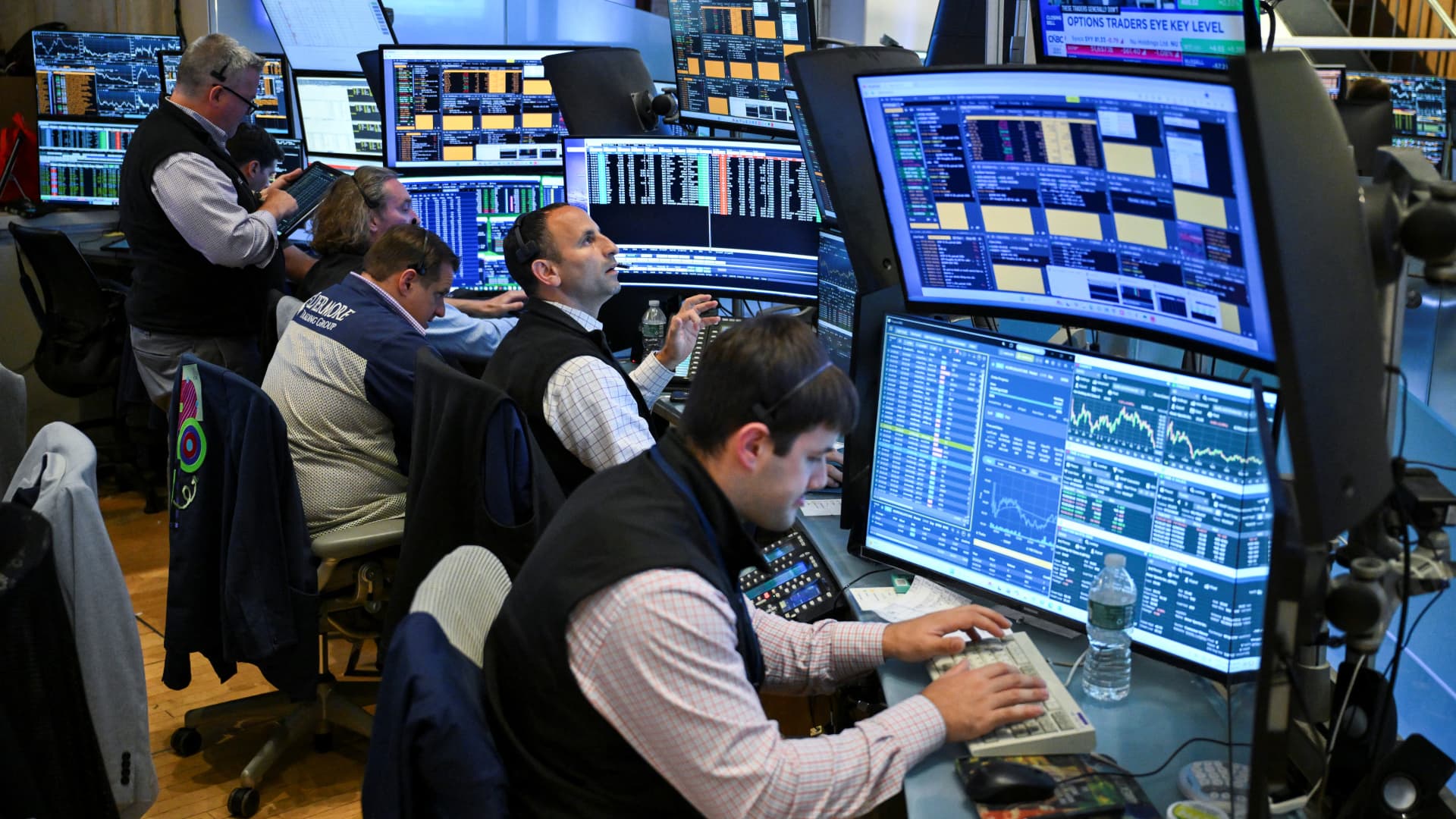
Why stocks fell this week came down to four forces: a renewed oil shock tied to the Iran war, rising rate expectations, tougher scrutiny of artificial intelligence spending and uneven company earnings. The S&P 500 declined 0.6% and the Nasdaq Composite lost 2.1%, marking a second consecutive weekly drop for both indexes, according to CNBC.
The week showed how quickly geopolitics can feed into inflation expectations and equity valuations. A jump in crude prices lifted Treasury yields, while investors also questioned whether large technology companies can convert heavy AI investment into cash returns soon enough to justify their spending plans.
Why did stocks fall this week?
Oil was the clearest macro driver. U.S. benchmark West Texas Intermediate crude rose more than 8% for the week, while Brent crude climbed nearly 10%, according to CNBC. Brent moved above $100 a barrel on Thursday for the first time since before the U.S. and Iran reached an interim ceasefire agreement last month.
Prices rose after President Donald Trump warned that Iran would pay “many times over” for the deaths of three U.S. service members. CNBC also reported that Trump later threatened to bomb Iranian bridges and power plants, while Secretary of State Marco Rubio said Tehran was not serious about a deal to stop the fighting. Concerns widened after Houthi militants claimed attacks on Saudi oil tankers in the Red Sea.
Crude prices eased on Friday on hopes that U.S.-Iran peace talks could resume, but the earlier rise revived concern that higher energy costs could slow progress on inflation. The 10-year Treasury yield climbed to its highest level since January 2025. CME FedWatch showed markets pricing a nearly 35% chance of a quarter-point Federal Reserve rate increase next week, up from 13% a week earlier.
AI spending faces tougher investor tests
Alphabet became the main test case for investor tolerance of AI capital spending. The Google parent reported better-than-expected revenue and earnings, and Google Cloud revenue grew 82% from a year earlier, according to CNBC. Its shares still fell 7% on Thursday after management lifted its capital expenditure outlook again.
Alphabet now expects to spend between $195 billion and $205 billion on capital expenditures this year and indicated spending will rise again in 2027. CNBC reported that free cash flow turned negative, adding to Wall Street concerns over whether hyperscale cloud companies can keep spending at that scale without clearer financial returns. Alphabet ended the week down 7.8% in CNBC’s Investing Club portfolio.
Intel showed the other side of the AI infrastructure trade. The chipmaker reported its strongest quarterly revenue growth since 2011, helped by a 59% increase in data center revenue, according to CNBC. But the stock reversed an early Friday gain and closed almost 8% lower, leaving it down 3% for the week, after investors looked for a larger foundry customer announcement. Intel named Fortinet as its first disclosed foundry customer earlier in the week, while no formal Apple agreement has been announced.
Industrial earnings were uneven
GE Vernova shares fell about 8% on Wednesday after the company missed Wall Street’s earnings-per-share estimate. CNBC highlighted a different operating signal: orders rose 88%, led by demand in Power and Electrification, businesses tied to electricity needs for AI data centers.
The stock rebounded 4.7% on Thursday, then slipped 1.6% on Friday, ending the week down about 4.1%. Dover also came under pressure after a mixed quarter in which earnings narrowly exceeded expectations but revenue missed. Its shares fell almost 8% on Thursday, recovered 2.2% on Friday and finished the week down 5.6%. CNBC reported that AI data center-related businesses account for about 25% of Dover’s expected 2026 revenue.
Health-care news offered separate catalysts
Eli Lilly shares rose after the company announced late-stage data for retatrutide, its next-generation obesity drug. CNBC reported that the therapy has shown greater weight loss than Lilly’s Zepbound and Novo Nordisk’s Wegovy. Lilly shares gained 2% on Thursday and 1.4% for the week.
Investors also weighed Lilly’s plan to file retatrutide in the first quarter of 2027 as a biologic. That route generally offers stronger intellectual property protections and would exempt the drug from Medicare price negotiations under the Inflation Reduction Act, according to CNBC.
Johnson & Johnson gained after the Food and Drug Administration approved its Ottava robotic surgery system earlier than investors expected. The approval gives J&J an entry in a market led by Intuitive Surgical and adds a growth point for its MedTech business. J&J shares rose 2% on Wednesday and ended the week 4.1% higher.
This story draws on original reporting from CNBC.