Wyden bill would require Congress to approve key Trump tariffs
The Oregon Democrat’s proposal targets presidential tariff authorities after Trump announced 50% duties on a range of Canadian goods.
By Sarah Jenkins · Chief Macro Economics Correspondent
· 3 min read
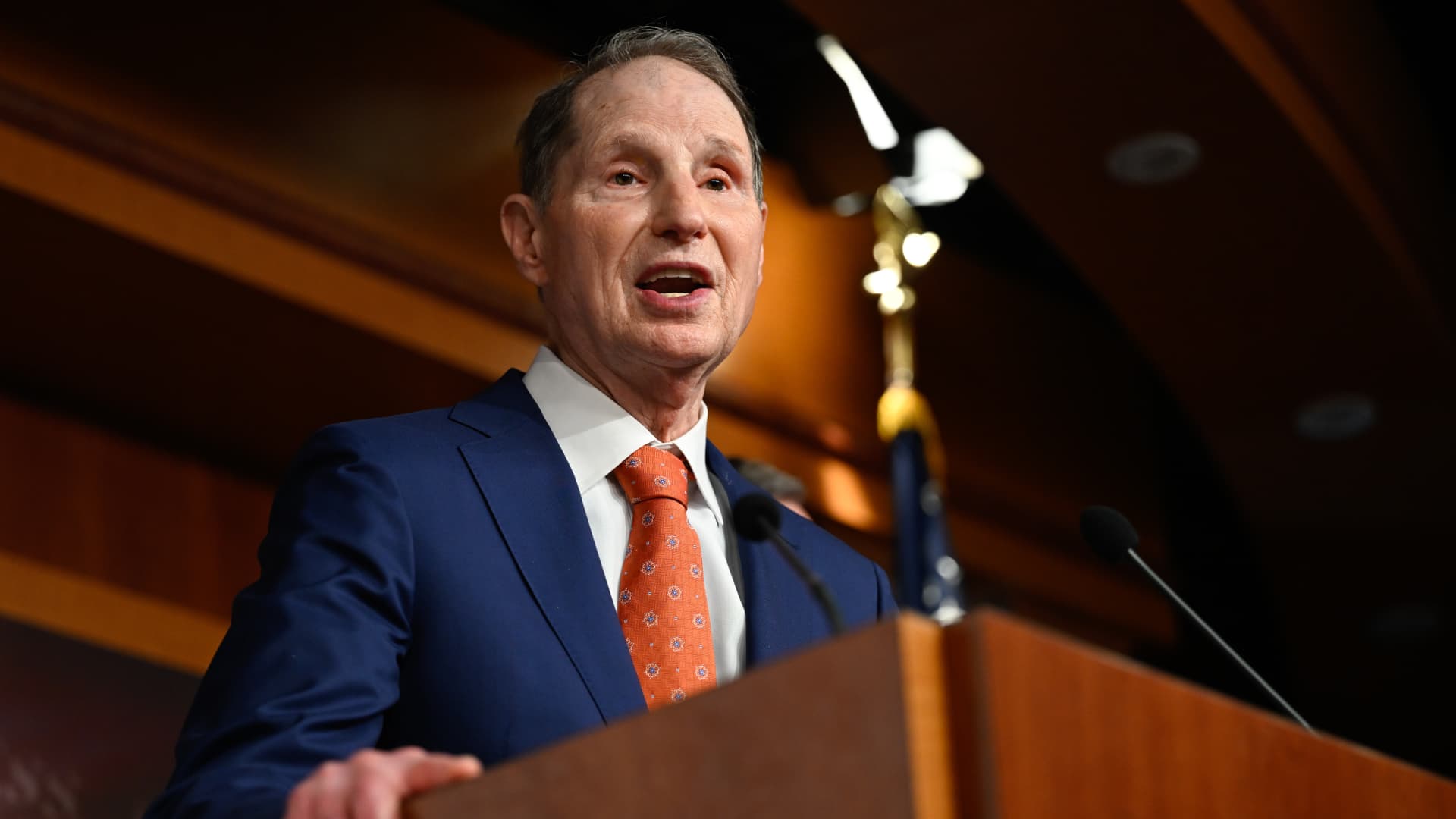
Sen. Ron Wyden introduced legislation Wednesday that would limit President Donald Trump’s authority to impose import duties by requiring congressional approval for several major tariff tools. The move came after Trump announced 50% retaliatory tariffs on a broad range of Canadian goods, a step Wyden said relied on a rarely used statute from the 1930s.
Wyden, an Oregon Democrat and the ranking member on the Senate Finance Committee, said in a statement that Trump had “abused every trade authority at his disposal” and was using a Depression-era law to impose wide-ranging duties on products from Canada, one of the United States’ closest trading partners.
He said the tariffs would raise costs for U.S. households, families and small businesses, and said he would introduce legislation to “put Congress back in the driver’s seat.”
The bill, named the Congressional Trade Powers Reform Act of 2026, seeks to shift tariff decisions back toward the legislative branch. The U.S. Constitution gives Congress authority over tariffs, though lawmakers have delegated substantial powers to presidents over decades, according to the Congressional Research Service.
How the bill would change tariff authority
Wyden’s proposal would require the president to obtain congressional approval before imposing tariffs under three existing trade authorities: Section 301 and Section 201 of the Trade Act of 1974, and Section 232 of the Trade Expansion Act of 1962.
Section 301 allows the executive branch to respond with tariffs when it determines that foreign trade practices are unfair to the United States, according to the Congressional Research Service. Section 201 permits duties when the U.S. International Trade Commission finds that rising imports are seriously threatening a domestic industry. Section 232 allows tariffs on national security grounds.
The legislation would create a Joint Committee on Tariffs and Trade in Congress. The president would have to submit tariff proposals to that panel, which would include five members from the Senate Finance Committee and five from the House Ways and Means Committee.
The committee would have as long as 30 days to review a proposal and decide whether to recommend that Congress vote on a joint resolution within a specified period. That structure would make Congress an active gatekeeper for duties imposed under the covered authorities, rather than leaving final action solely with the White House.
Older powers would be repealed
The bill would eliminate two tariff authorities that Wyden described as outdated. One is Section 122 of the Trade Act of 1974, which concerns tariff actions tied to international payments problems. The other is Section 338 of the Tariff Act of 1930, which allows the president to impose tariffs of up to 50% on goods from countries found to discriminate against the United States.
Wyden’s criticism of Trump’s Canada tariffs centered on that older 1930 law. He said Trump was using it to impose broad duties unilaterally against an allied country and trading partner.
The proposal would also change oversight of the Office of the U.S. Trade Representative. It would make USTR a separate agency outside the Executive Office of the President and establish an inspector general within the office.
The bill faces substantial political obstacles. Republicans control both the House and Senate, and even if the measure passed Congress, Trump could veto it.
This story draws on original reporting from CNBC.


