China tightens tech fund oversight as Dreame links draw scrutiny
New State Council rules and scrutiny of Dreame-linked financing highlight Beijing’s effort to curb risks in state-backed technology investment.
By David L. Chen · Senior Columnist
· 4 min read
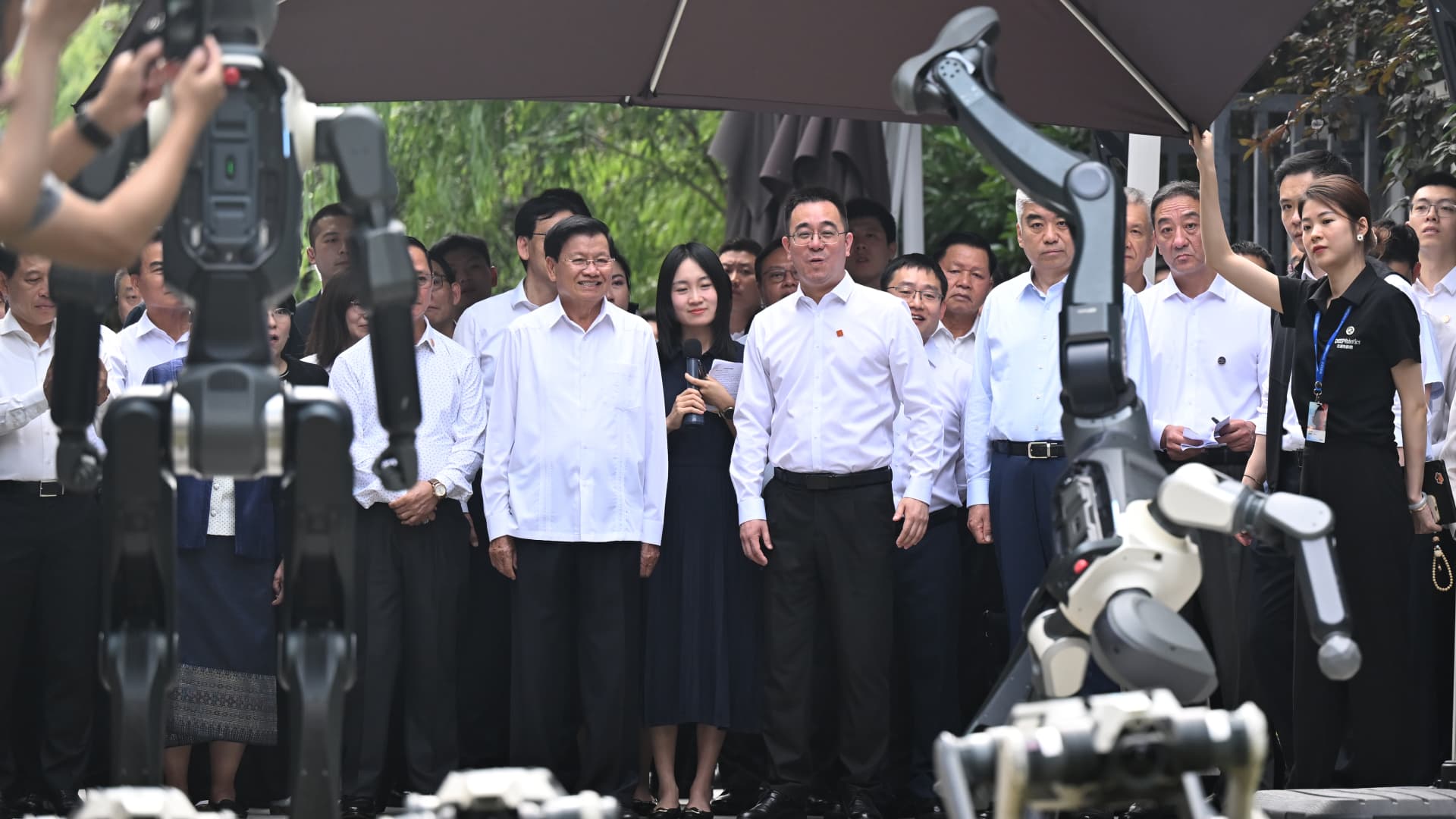
China has moved to tighten supervision of its 23 trillion yuan, or $3.4 trillion, private fund industry after a local government review of companies’ exposure to Dreame Technology highlighted strains in state-backed technology financing. The measures point to Beijing’s effort to support strategic industries while reducing fiscal waste and credit risks tied to local government investment vehicles.
A city government in Jiangsu province asked local companies to examine and report their financial links to entities connected with Dreame, the robot vacuum maker, according to state-backed media. The requested information included investment amounts, fiscal spending and operating ties, those reports said.
Hours after that order, China’s State Council issued broad rules aimed at strengthening oversight of private funds. The guidance called for tighter control over new government investment funds and said counties and districts would need higher-level approval before creating new funds, according to state media.
Dreame, China’s State Council and the Changzhou municipal government did not respond to CNBC requests for comment.
State capital under review
Dreame ranked as the world’s largest robotic vacuum maker by sales in the first quarter, according to research consultancy IDC. Since its founding in 2017, the company has expanded through a wide web of affiliated businesses across electric vehicles, smartphones, humanoid robots, bubble tea and satellite networks, according to Chinese media reports.
Founder Yu Hao said in January that he aimed to build an ecosystem that would become the “first $100 trillion company in human history,” according to Chinese financial media. State-linked media also reported that Yu’s Weibo account was suspended, limiting his ability to post public comments.
Much of the scrutiny centers on how Dreame’s growth was financed. State-backed media reported that its Sky Factory Venture Capital Fund manages 41.6 billion yuan in assets, with about 80% coming from local government industry funds in cities including Suzhou and Xiamen. Nearly all of its 29 funds reportedly include local state-owned capital and are spread across more than 10 cities.
China’s asset management association this month also sought greater disclosure when a fund places more than 90% of its assets into another single fund, a structure that can obscure where capital ultimately sits and who bears the risk.
How the model works
China’s local governments use guidance funds to take equity stakes in companies deemed aligned with industrial policy. The model differs from the U.S. approach, where support for technology firms more often flows through procurement, grants, tax incentives and other indirect channels.
Dan Wang, China director at Eurasia Group, said local governments have increasingly turned from land finance, weakened by the property downturn, toward equity finance. By taking stakes in start-ups, officials seek both industrial development and possible capital gains as fiscal revenue.
Wang said the approach can create competition among localities to spend heavily on favored sectors, raising the risk of misallocated public funds and future credit pressure. Local officials may also lack the investment expertise to evaluate projects as professional venture investors do, he said.
Tilly Zhang, an industrial policy analyst at Gavekal Dragonomics, said guidance funds have been promoted as “patient capital” for long-term technology bets. The same incentives can encourage companies to present themselves as aligned with government priorities to secure funding, she said.
Wall Street-linked U.S. funds have largely retreated from China in recent years because of geopolitical risk, leaving local yuan-denominated funds to provide more of the capital for start-ups.
Winners, waste and tighter control
The system has produced some notable successes. Hefei’s early investments in electric-vehicle maker Nio and chipmaker CXMT helped make the city a model for government venture funding.
Research by Rhodium Group found that Chinese local governments created thousands of such funds over the past decade, often leading to overlapping investments and wasted capital. Official figures cited by Chinese media show China had more than 2,100 government guidance funds by the end of 2025, with target capital exceeding 11 trillion yuan.
Yuen Yuen Ang, a Johns Hopkins University professor of political economy, described China’s innovation drive as “enormous in scale but low in productivity” and a “spray and pray” model that accepts a high failure rate in pursuit of a few major winners.
Bob Chen, a Shanghai-based investor in a renminbi fund, said the new rules shift oversight upward to city and provincial authorities. If lower-tier governments lose room to deploy equity capital, he said, they will have fewer tools left to spur local investment.
This story draws on original reporting from CNBC.