Iran faces tougher market for stored crude as Chinese demand cools
Analysts say weaker Chinese buying, rising OPEC+ supply and tanker backlogs could slow Iran’s effort to sell accumulated oil inventories.
By Amanda Ross · Deals Correspondent
· 3 min read
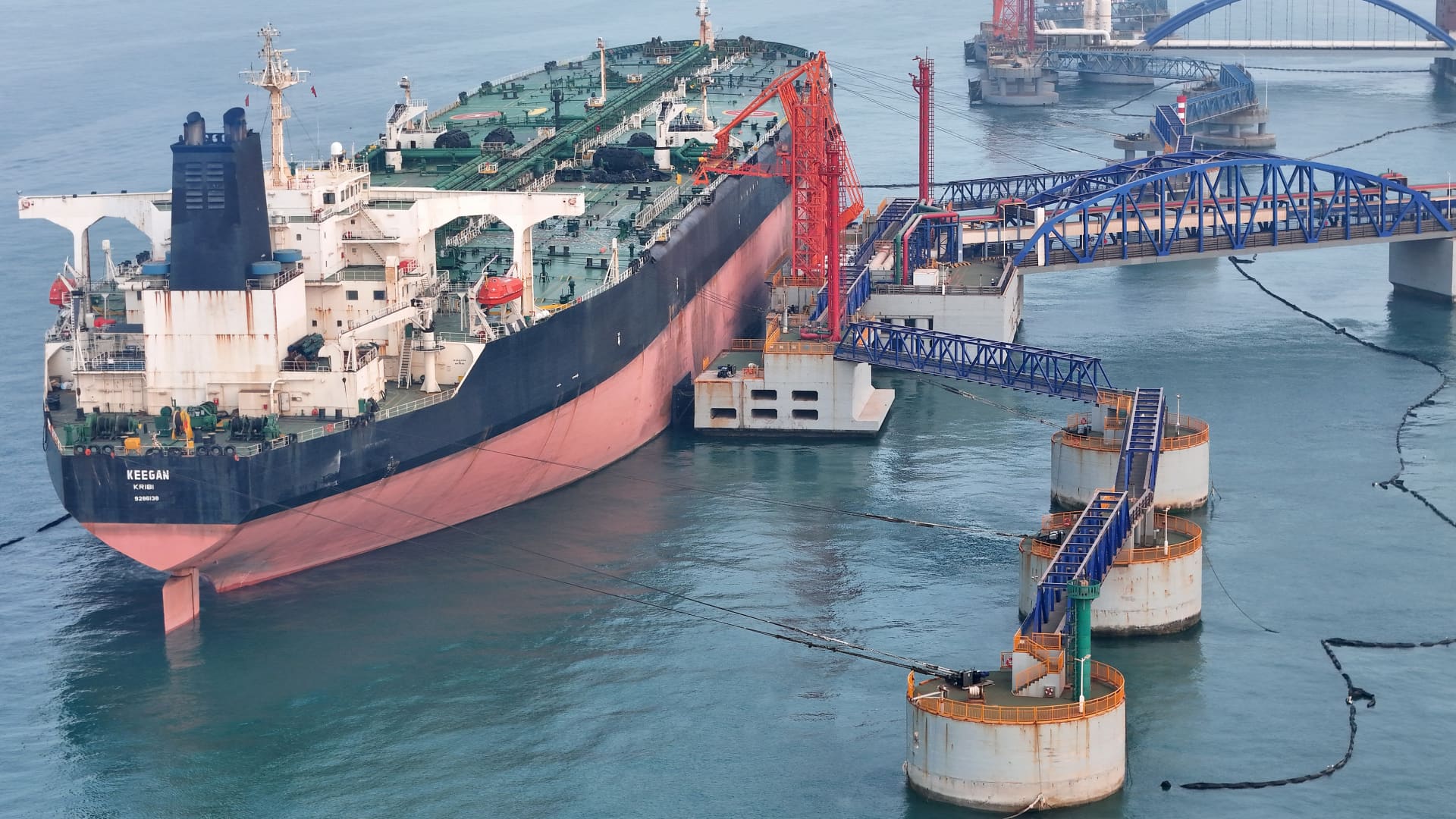
Iran may struggle to draw down accumulated crude inventories even if restrictions on its energy trade are eased, as its largest traditional buyer is importing less and competing supplies are rising, analysts told CNBC. China’s crude imports fell 29% from a year earlier in May to 7.82 million barrels a day, the lowest level since February 2018, according to Wind Information.
The shift matters because Iran’s ability to clear stored oil depends on refiners willing to absorb additional cargoes, particularly in China, the world’s largest crude importer. Fereidun Fesharaki, chairman emeritus at FGE NexantECA, told CNBC’s “Squawk Box Asia” that Chinese buyers have shown limited appetite for crude purchases, including from Iran.
Bloomberg reported that China’s crude imports from Iran dropped by more than half in June from the previous month to about 654,000 barrels a day. CNBC reported that China has historically been Iran’s main oil customer, making that decline a key constraint on any rapid inventory drawdown.
Chinese energy policy adds to the pressure
The Middle East conflict has affected China’s assessment of energy security, according to the Stockholm-based Institute for Security and Development Policy. In a report, the institute said the crisis had sharpened Beijing’s strategic focus and added momentum to its shift toward green energy.
The institute said Chinese Premier Li Qiang has repeated calls to expand non-fossil energy, build a new energy system, support innovation and accelerate reforms. For oil exporters, that policy direction may add to near-term demand uncertainty, particularly when refiners are already taking fewer barrels.
China’s weaker buying has coincided with the war involving Iran, which CNBC reported began in late February. Lower import volumes from the country have weighed on oil demand, according to the figures cited by Wind Information and Bloomberg.
More supply is entering the market
Iran is also facing a broader increase in available crude. OPEC+ has agreed to raise its output target for August by 188,000 barrels a day. A higher target gives members more room to produce under the group’s quota system, adding barrels to the market if producers use the additional allowance.
United Overseas Bank said in a report that the increase is part of the group’s effort to complete the rollback of earlier output cuts. The bank said OPEC+ has added 940,000 barrels a day to quotas since the war began.
Tiago Lacerda, market analyst at brokerage Axi, told CNBC by email that the supply increase was already visible. He said there had been a sharp buildup of oil at sea, with Iran shipping more than 40 million barrels since the United States lifted its naval blockade, while Russian exports had also climbed to record levels.
Those barrels create a competitive market for any Iranian inventory released after restrictions ease. Stored crude still needs shipping, insurance, financing and refinery demand, and buyers can compare Iranian cargoes with alternatives from OPEC+ members and Russia.
Hormuz remains a risk factor
Analysts also pointed to the Strait of Hormuz as a source of uncertainty for energy flows. The waterway is a critical route for oil shipments from the Gulf, and any change in access terms could affect trading decisions and freight costs.
Fesharaki told CNBC that Iran has indicated the current free passage through the strait would apply for 60 days. After that, he said, Tehran could apply tiered tolls, charging lower rates to friendly countries, higher rates to others and potentially denying passage to some buyers.
That risk does not remove the immediate challenge facing Iran’s inventories: the market is receiving more supply while its most important customer is buying less. For now, analysts cited by CNBC said those conditions could limit how quickly Iran can turn stored barrels into cleared sales.
This story draws on original reporting from CNBC.


