Nvidia Kyber AI rack pushed to 2028, SemiAnalysis says
SemiAnalysis cited circuit-board manufacturing problems in Nvidia’s Kyber NVL144 rack system, a reported delay that could affect the 2027 Rubin Ultra rollout.
By Sarah Jenkins · Chief Macro Economics Correspondent
· 3 min read
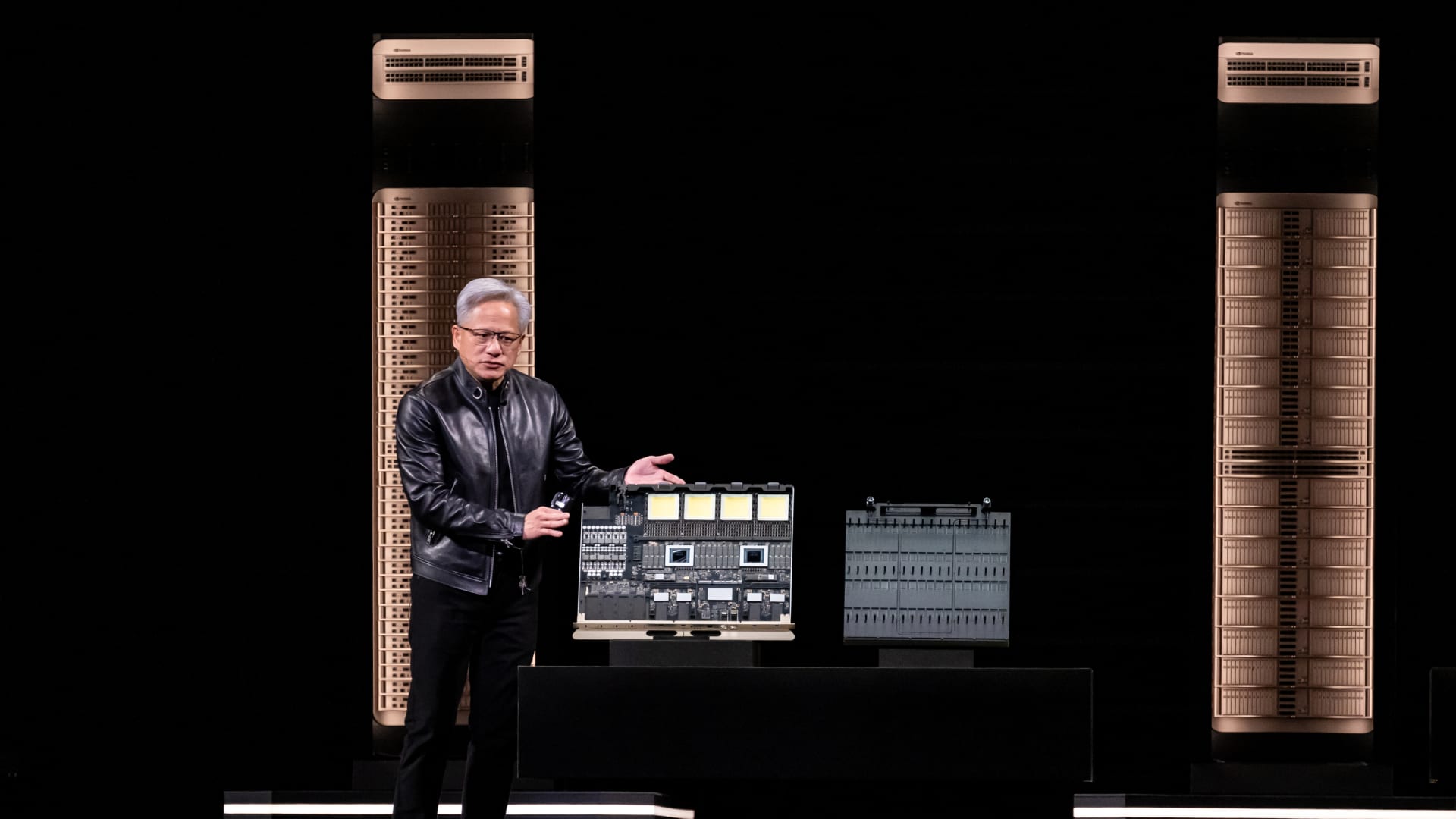
Nvidia’s Kyber NVL144 rack-scale AI system has been delayed to 2028 because of manufacturing problems with a central circuit board, research firm SemiAnalysis said Monday. The reported slip moves a marquee system designed for the company’s 2027 Rubin Ultra chips by more than a year and adds scrutiny to Nvidia’s rapid product-release schedule.
Kyber is a server-rack architecture built to combine 144 of Nvidia’s high-end graphics processors in one cabinet. The design is intended to let the chips operate as a tightly connected computing system for training and running advanced artificial intelligence models.
The system uses vertically mounted compute trays rather than the horizontal layouts common in many servers. That arrangement is meant to increase density and cut communication delays between components, two factors that matter when AI workloads are spread across large numbers of chips.
SemiAnalysis said the problem centers on the printed circuit board midplane, a multi-layer board that links electronic modules inside the rack. “Kyber NVL144 rack architecture has been delayed to 2028 as the PCB midplane remains challenging from a manufacturability standpoint,” the firm said.
A midplane acts as the internal connection layer for the rack. In a high-density AI system, it must carry data and power across many modules while meeting tight reliability and thermal requirements. If that component cannot be manufactured at scale and with acceptable yields, the broader rack design can be held back even when the processors themselves are ready.
SemiAnalysis also said NVL576, a larger configuration that would connect eight racks through optical links, is likely delayed or available only in limited volumes. Nvidia did not respond to CNBC’s request for comment.
The report points to pressure across Nvidia’s hardware road map as the company tries to maintain an annual cadence for AI accelerators and related systems. Nvidia has become the central supplier for much of the AI infrastructure buildout, and its rack-level designs are closely watched by cloud providers, model developers and investors because they shape how quickly new compute capacity can be deployed.
A fallback design has also been cancelled, according to SemiAnalysis. That plan would have paired two of Nvidia’s current-generation racks to deliver comparable computing power, but the research firm said cloud service providers and hyperscale customers objected to the design because it was awkward and expensive to operate.
“It has since been cancelled due to heavy pushback from CSPs and hyperscalers over its odd design and heavy operational burden,” SemiAnalysis said.
SemiAnalysis said the cancellation leaves Nvidia without “no proven solution to expand the scale-up world size for Rubin Ultra.” The firm said that gap could create an opening at the high end of the market for Advanced Micro Devices and Google, whose in-house AI chips have already won business from major AI labs.
Nvidia’s current Rubin systems are in full production and are scheduled to begin shipping this fall to eight cloud partners, including Amazon Web Services, Microsoft Azure and Google Cloud, according to SemiAnalysis. The firm also projected Nvidia’s data-center compute revenue will run 20% above Wall Street consensus in the second half of fiscal 2027.
Nvidia shares moved between gains and losses in premarket trading and were last down less than 0.1% at $194.79.
This story draws on original reporting from CNBC.


