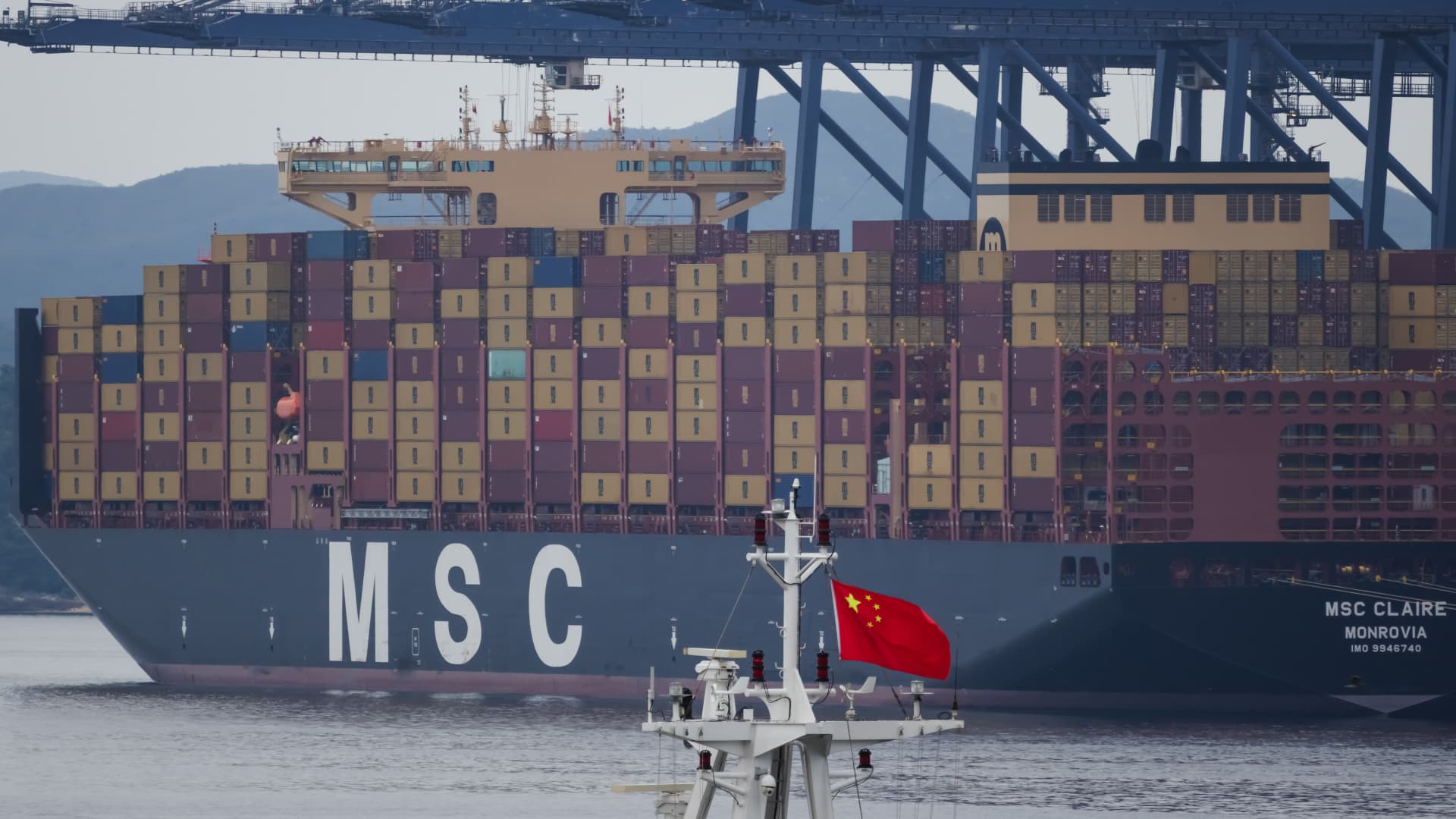
China U.S. orders gauge rises before Trump-Xi summit
A private survey’s U.S.-orders balance rose to 13 in September, though wider Chinese order measures remained weak.
By Sarah Jenkins · Chief Macro Economics Correspondent
· 2 min read
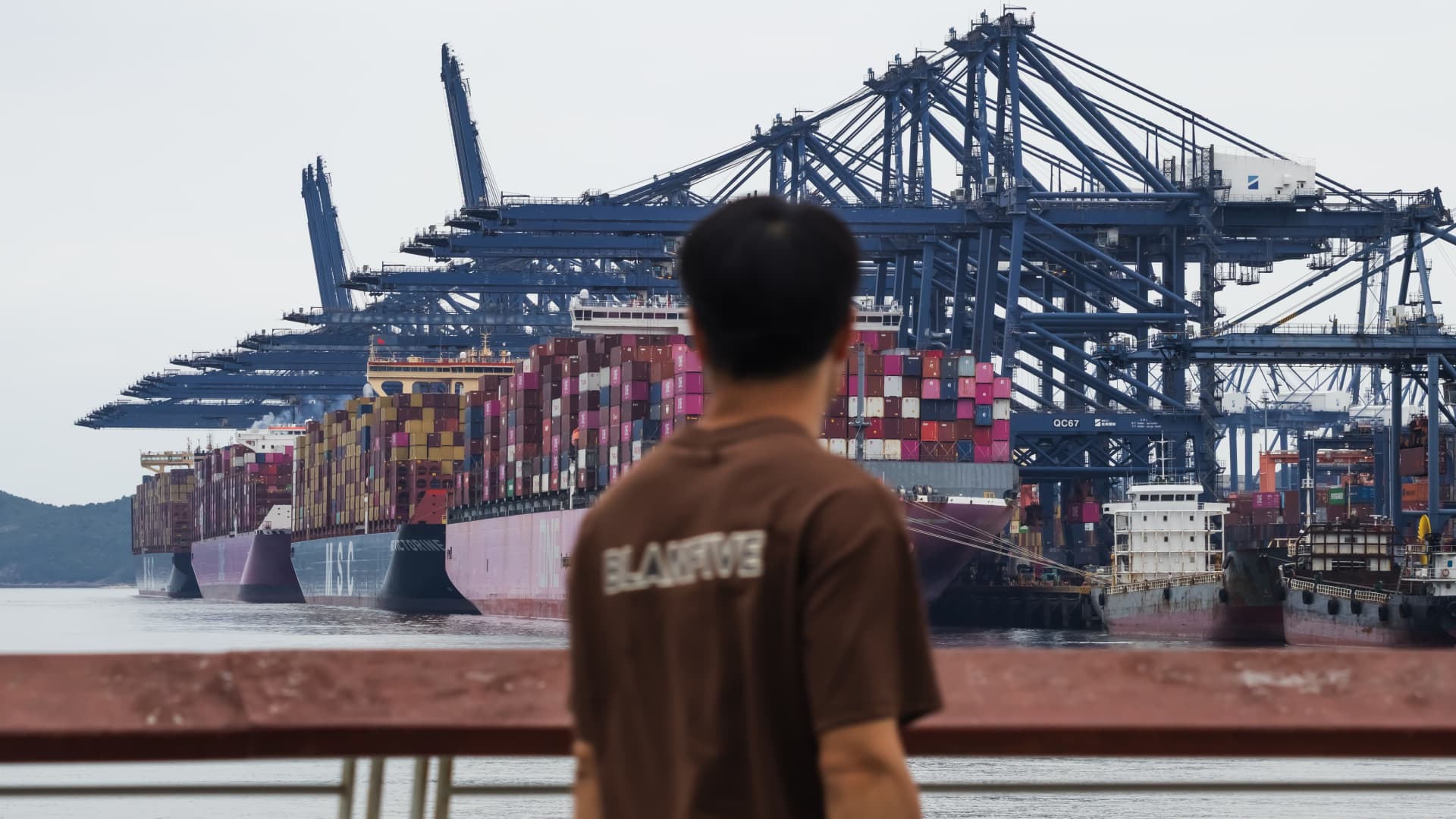
China’s U.S. orders survey gauge rose to 13 in September, from 3 in August and minus 12 a year earlier, according to China Beige Book’s survey of 1,295 Chinese companies. The China U.S. orders survey result came in the weeks before a summit between President Donald Trump and Chinese leader Xi Jinping, while the broader survey still showed domestic and export orders below their levels of a year earlier.
The New York-based research firm surveyed companies from Sept. 1 to Sept. 22. It described the increase in U.S.-bound orders as a surprise and said it occurred as China’s relative tariff position improved.
The reading is a survey balance rather than a dollar figure, shipment count or official trade statistic. China Beige Book calculates it by subtracting the proportion of respondents reporting lower U.S. orders from the proportion reporting higher orders. A positive result therefore indicates that more surveyed companies reported an increase than a decrease.
What did the China U.S. orders survey measure?
The September figure points to a marked improvement in this specific bilateral orders measure: it was 10 points higher than in August and 25 points above the reading a year earlier. It does not by itself establish a broad recovery in Chinese exports or sustained U.S. demand.
China Beige Book’s wider findings were less favourable. Overall domestic and export orders remained below their year-earlier levels, and new orders weakened from August, according to the survey. The contrast indicates that the U.S.-focused measure strengthened even as the firm’s broader gauges remained under pressure.
The result arrived amid a temporary easing in trade-policy uncertainty. CNBC reported that Washington and Beijing agreed to extend their trade truce by two months, to January. Under the arrangement, tariffs would remain lower, restrictive controls on rare-earth exports would stay suspended, and higher port fees on ships would be held off, CNBC said.
CNBC also reported that businesses had positioned for a more favourable summit outcome. That account and China Beige Book’s assessment of relative tariff conditions describe the setting for the survey, rather than demonstrating that the truce or the meeting caused the September reading.
Tariff barriers nevertheless remained elevated. Barclays estimated the effective U.S. tariff rate on Chinese goods at about 23%, higher than the average levy imposed on other major U.S. trading partners, according to CNBC’s report.
This story draws on original reporting from CNBC.