U.S. job openings fell to 7.15 million in November
BLS data showed openings lower in November, while hires and separations were steady at 5.1 million, signaling reduced labor demand but stable turnover.
By David L. Chen · Senior Columnist
· 3 min read
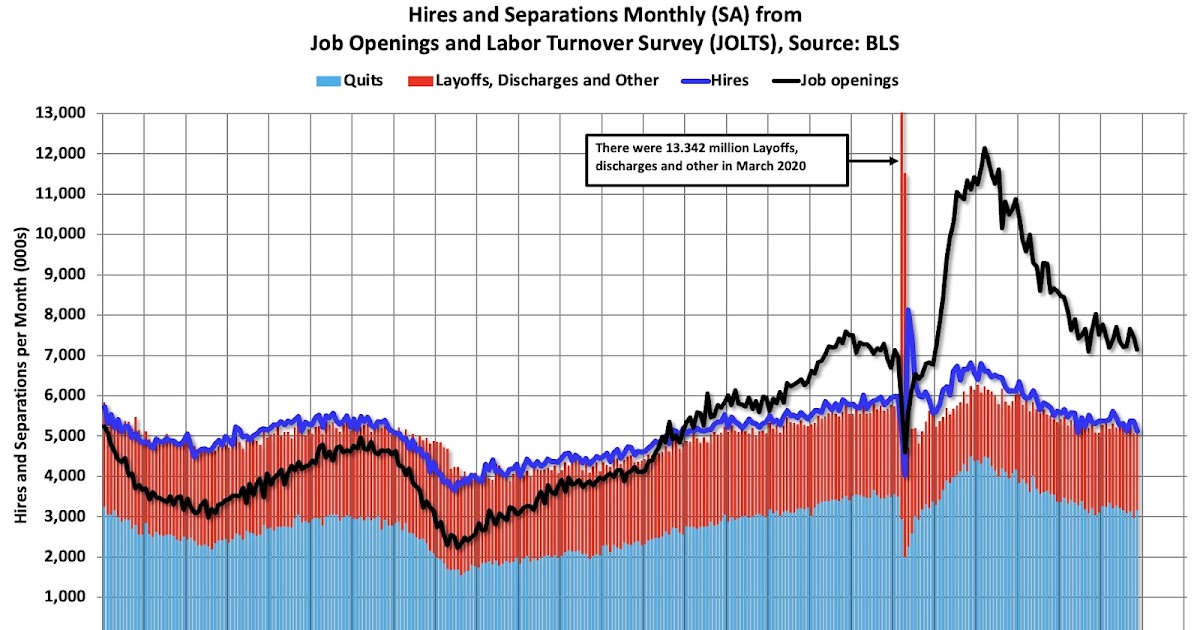
U.S. job openings declined to 7.15 million in November from 7.45 million in October, according to figures cited by Calculated Risk from the Bureau of Labor Statistics’ Job Openings and Labor Turnover Summary. The data point to softer demand for workers ahead of the December employment report, while hires and separations remained broadly stable.
The Bureau of Labor Statistics said the number of job openings was “little changed” at 7.1 million in November on a rounded basis. Hires were also little changed, and total separations were unchanged, with both measures at 5.1 million for the month, the agency reported.
Within separations, quits stood at 3.2 million and layoffs and discharges at 1.7 million, both little changed from the prior month, according to the BLS. Quits are voluntary departures and are watched as one gauge of worker confidence, while layoffs and discharges capture employer-initiated separations.
Labor demand eased from a year earlier
Calculated Risk said job openings were down 11% from a year earlier. The same analysis said quits were up 4% year over year, placing the latest report in the context of both cooler vacancy demand and still active voluntary turnover.
The Job Openings and Labor Turnover Survey, known as JOLTS, tracks several parts of the labor market that are not captured by a single payroll headline. Openings measure unfilled positions. Hires show workers added to payrolls. Separations include quits, layoffs and discharges, and other departures.
Calculated Risk noted that the gap between hires and separations in JOLTS is similar in direction to the net jobs figure from the payroll survey. When hires exceed separations, employment is being added on net; when separations are higher, employment is being reduced on net.
In November, hires and total separations were equal at 5.1 million, according to the BLS figures. That balance points to stable turnover in the JOLTS framework, even as openings moved lower from October.
Report precedes payrolls data
The November JOLTS report arrives before the employment report for December, which Calculated Risk said is scheduled for release on Friday. The two reports cover different reference periods and measure different aspects of the labor market, so investors and policymakers often read them together rather than as substitutes.
Calculated Risk also noted that the JOLTS series began in December 2000. Its chart of the series tracks job openings, hires, layoffs and discharges, and quits over time, with the March 2020 spike in layoffs and discharges labeled separately to preserve the scale for more typical monthly readings.
The latest figures show a labor market with fewer advertised vacancies than in October and fewer than a year earlier, while the flow of workers into and out of jobs remained close to unchanged in November, according to the BLS and Calculated Risk.
This story draws on original reporting from Calculated Risk.