American Airlines plans premium push to narrow profit gap with rivals
CEO Robert Isom told CNBC the carrier is targeting a margin gap with United and Delta through reliability, cabins, lounges and new aircraft.
By Amanda Ross · Deals Correspondent
· 4 min read
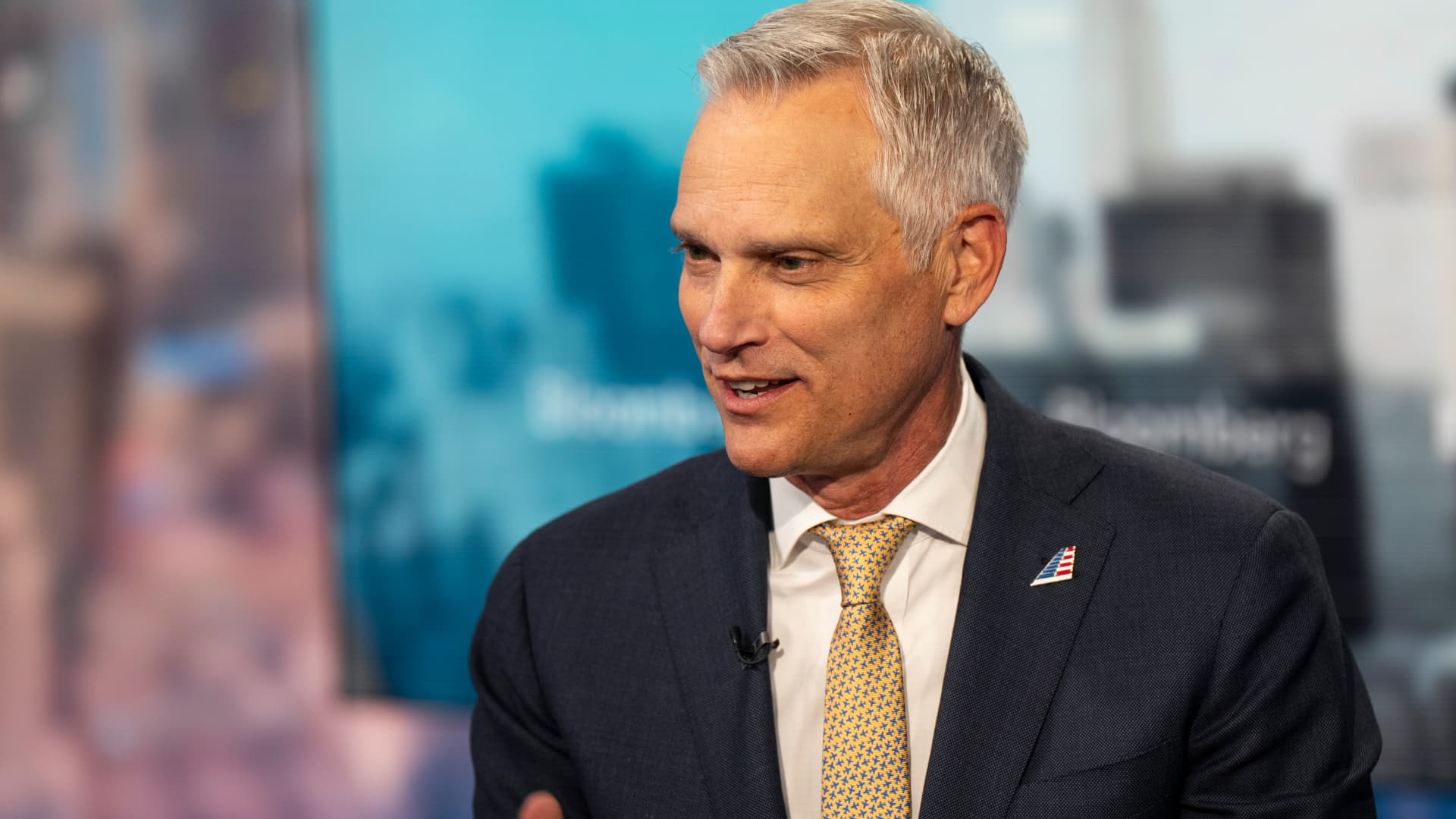
American Airlines is preparing a premium-focused overhaul as it tries to close a profit gap of more than $3 billion with United Airlines and nearly $5 billion with Delta Air Lines, according to CNBC. Chief Executive Robert Isom said the carrier’s long-range plan is to narrow its margin shortfall, while declining to set a timetable.
The carrier is operating about 6,500 flights a day this year, more than its closest competitor by roughly the size of Alaska Airlines’ operation, CNBC reported, citing Cirium. Scale has not translated into comparable earnings: United made about $3 billion more than American last year, while Delta, the U.S. industry’s profit leader, made almost $5 billion more.
American’s strategy centers on higher-revenue passengers, improved operational reliability, a larger loyalty business, refurbished aircraft interiors and expanded airport lounges. Isom described American to CNBC as “a premium global airline with the largest footprint in North America.”
Premium cabins and unit revenue
Chief Financial Officer Devon May told CNBC that American has run an efficient operation, but that management will measure progress by whether the airline closes its revenue and unit revenue gaps. Unit revenue is a key airline metric because it shows how much money a carrier generates for each seat flown over a given distance, linking pricing power, cabin mix and route performance.
Analysts expect American to earn 64 cents a share this year on an adjusted basis, nearly 80% above last year, according to estimates cited by CNBC. Wall Street expects adjusted earnings to rise to $2.58 a share in 2027. American is due to update its outlook when it reports second-quarter results.
American is adding more premium seats and new amenities as it remodels cabins and takes new aircraft deliveries. Executives have said they are considering whether to restore seatback screens to much of the narrow-body fleet, and the airline recently joined carriers adding Starlink satellite Wi-Fi from SpaceX.
Isom told CNBC that cabin refresh work will soon extend to Boeing 787-8 Dreamliners, while revamped cabins on 777-300ER aircraft could enter service in the coming weeks. CNBC reported that a lie-flat business-class seat can sell for close to $10,000 on some long-haul international routes, compared with $2,000 or less for some seats at the back of the aircraft.
The Association of Professional Flight Attendants questioned whether American can maintain premium service levels as larger business-class cabins arrive. Union president Julie Hedrick said in a statement that the airline is asking fewer flight attendants to deliver more personalized service. CNBC reported American reduced staffing on those aircraft from 13 flight attendants to 11 in 2020, a move other carriers have also made.
Lounges, reliability and fleet decisions
Chief Customer Officer Heather Garboden told CNBC that American plans to build its largest Admirals Club, a 37,000-square-foot lounge, at Dallas Fort Worth International Airport’s Terminal C. The airline is also planning a grab-and-go Provisions lounge in the airport’s under-construction Terminal F and a Flagship check-in area in Terminal D. The airport, American’s largest hub, is undergoing a $12 billion renovation.
Operational reliability remains part of the turnaround plan. Cirium data cited by CNBC ranked American sixth among 11 U.S. airlines for punctuality in the first half, with a 76.6% on-time rate. Delta ranked second and United third. American, under Isom and Chief Operating Officer David Seymour, is spreading out schedules at major hubs and using artificial intelligence to predict maintenance issues, CNBC reported.
American is also weighing a wide-body aircraft order this year, with both Boeing and Airbus under consideration, Isom told CNBC. The airline’s wide-body fleet is currently all Boeing, and some Boeing 777 aircraft average more than 20 years old. American declined to disclose the potential order size, and CNBC reported new aircraft would likely arrive in the early or middle of the next decade.
The balance sheet remains a constraint. CNBC reported that American carries about $35 billion of debt, down from a pandemic-era peak of roughly $54 billion, and that management has made further improvement a priority.
Isom also dismissed the practicality of a merger with United after United CEO Scott Kirby raised the idea earlier this year. Isom told CNBC that advisers, interested parties and politicians saw no viable path for such a transaction, citing history, law and prior mergers.
This story draws on original reporting from CNBC.


