Black Friday 2026 spending outlook rises as shoppers seek discounts
Surveys, early online sales and Cyber Week forecasts point to resilient holiday demand, though final Black Friday sales are not yet known.
By Sarah Jenkins · Chief Macro Economics Correspondent
· 3 min read
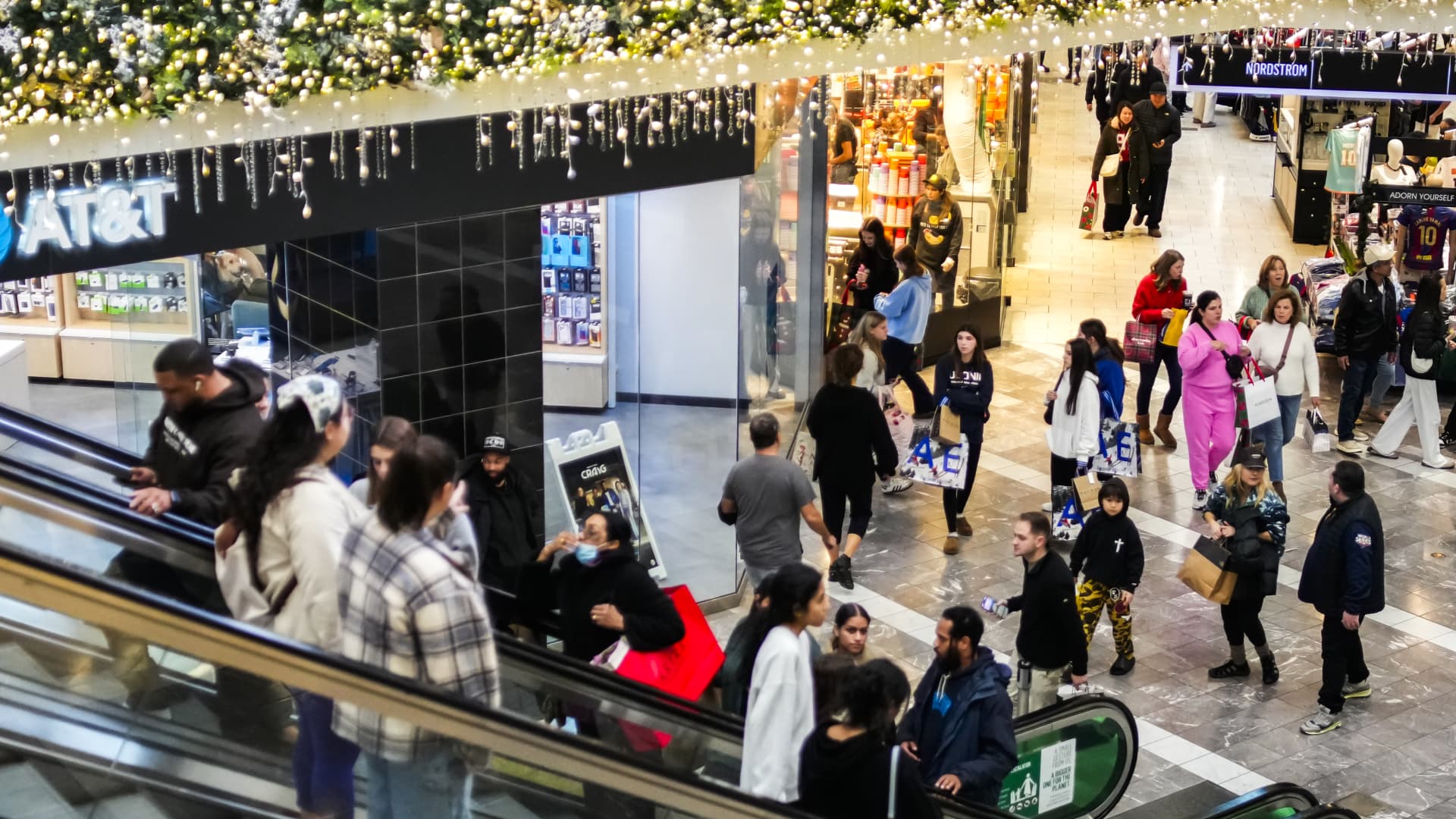
Black Friday 2026 spending is expected to hold up as households focus their holiday purchases on promotions, despite pressure from inflation and weaker consumer sentiment. A Deloitte survey cited by CNBC found that 87% of respondents planned to shop Black Friday and Cyber Monday, while early online-sales data and forecasts also indicated higher demand.
The figures do not represent final sales results. They show planned purchases, preliminary online spending and projections for the promotional period, rather than a completed measure of Black Friday trading.
Why are shoppers expected to spend on Black Friday 2026?
Inflation and concerns about employment have made consumers more price-sensitive. CNBC reported that the consumer price index rose 0.4% in October on a seasonally adjusted basis, while the personal consumption expenditures price index was 3.8% higher than a year earlier. October retail-sales growth was the slowest in nearly a year, according to the CNBC/NRF Retail Monitor.
That backdrop appears to be changing the timing of purchases rather than eliminating holiday demand. Brian McCarthy, Deloitte’s retail strategy lead, told CNBC that consumers had deferred some larger purchases and were placing more spending in promotional windows. Retailers’ heavier discounts may give shoppers an incentive to wait for Black Friday and Cyber Monday before buying discretionary items.
Salesforce found that US discount rates in November were 8% higher than a year earlier, CNBC reported. Its forecast called for online sales of $84 billion in the US and $357 billion globally from November 24 through 30, each 6% above the comparable period a year earlier. Those are forecasts, not reported sales.
What do the consumer spending indicators show?
Deloitte’s survey of 1,200 consumers in mid-October found 87% intended to make purchases during Black Friday and Cyber Monday, up from 82% in 2025 and the highest participation rate since 2016, according to CNBC. Respondents expected to spend $624 over the holiday period, broadly in line with the previous year. The survey also found that 40% of Generation Z respondents planned to use buy now, pay later.
The Conference Board estimated planned gifts and non-gift holiday spending at $1,049 per consumer, up 5.9% from $990 a year earlier. After adjusting for inflation, CNBC reported that the estimate represented a 3.2% annual increase.
Early digital spending provides a separate, incomplete reading of demand. Adobe recorded $82.5 billion of online purchases in the first 22 days of November, an increase of 9.1% from a year earlier, CNBC said.
Deloitte has described value-seeking as a broader consumer shift. Its research found four in 10 Americans displayed deal-driven or cost-conscious habits, including higher-income households reassessing what they regard as value. In an earlier outlook, the firm said shoppers across income groups were shifting toward less expensive brands, discount retailers and promotional periods.
The available evidence therefore points to deal-focused holiday demand, but it does not establish final Black Friday sales or show whether higher nominal spending will translate into a comparable increase in purchase volumes.
This story draws on original reporting from CNBC.