Nvidia rally fades after Jensen Huang return as CNBC club buys Alphabet and Goldman
Nvidia rose more than 31% after Jensen Huang’s reinstatement, but renewed AI-stock pressure led CNBC’s charitable trust to buy Alphabet and Goldman shares.
By Amanda Ross · Deals Correspondent
· 3 min read
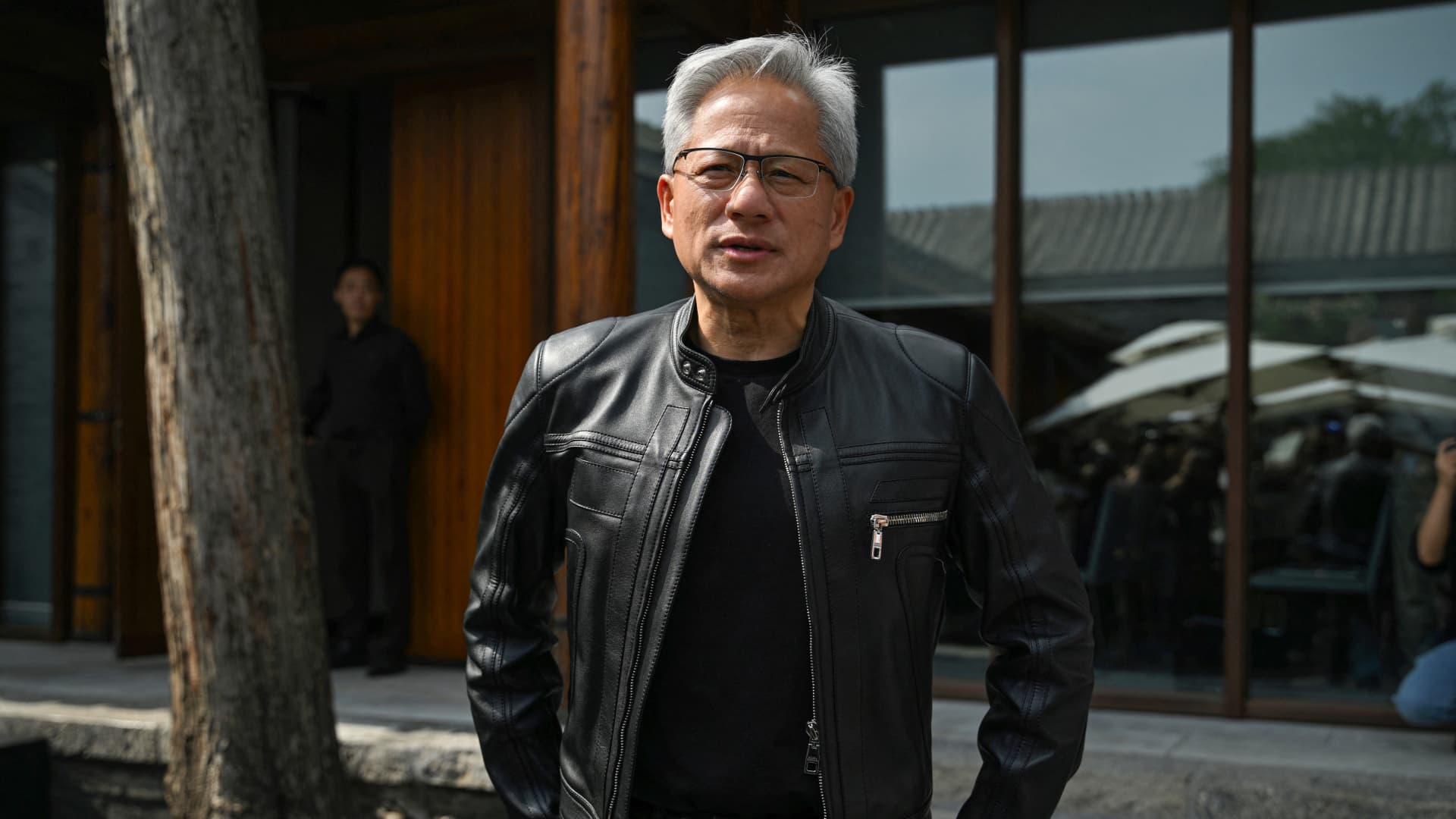
The Jensen Huang return Nvidia rally lifted the chipmaker’s shares by more than 31% on Monday, according to CNBC’s Investing Club, before renewed selling in AI-related stocks later in the week. The club said its charitable trust responded by buying 50 Alphabet shares on Tuesday and 10 Goldman Sachs shares on Wednesday, transactions that reflect the trust’s own strategy rather than a recommendation to investors.
Nvidia’s board had unanimously reinstated Huang as chief executive after receiving input from senior levels of the US government, CNBC separately reported. The board said it was confident that the reinstatement created no national-security risk.
Monday’s move helped produce the Nasdaq Composite’s 6.35% gain and the S&P 500’s 4.73% rise, their strongest sessions since April 2025, CNBC’s Investing Club said. For the holiday-shortened week, the Nasdaq rose 6.6%, the S&P 500 gained 5.6% and the Dow Jones Industrial Average added 5.5%, according to the club.
The initial relief did not hold. CNBC reported that Nvidia fell about 5.9% on Tuesday and continued to decline on Wednesday as pressure returned to chip and AI-linked shares. Yahoo Finance likewise reported renewed losses, citing Nomura strategist Charlie McElligott’s view that Huang’s return did not resolve tighter financial conditions, including higher interest rates, wider credit spreads and volatility.
Why did AI-stock concerns persist after Huang’s return?
CNBC’s Investing Club said the leadership change removed one source of uncertainty at Nvidia, but left other concerns unresolved. These included uncertainty over Nvidia chip sales to China, opposition to data-centre construction and the prospect of a more hawkish Federal Reserve.
The club pointed to October personal consumption expenditures data showing annual inflation of 3.8% and core inflation of 3.3%. It said those figures, together with new US tariffs on more than a dozen trading partners, added to market concerns about further interest-rate increases.
The trust cited its own S&P Oscillator, which it said had fallen to minus 8.75%, as part of its rationale for using the sell-off to put cash to work. Under the club’s methodology, a reading below minus 4% signals technically oversold conditions. That is a proprietary indicator and not an independently established signal about future market returns.
For Alphabet, the club cited a valuation of just under 19 times estimated 2027 earnings and its view that existing AI infrastructure could gain value if data-centre construction faces greater political resistance. For Goldman Sachs, it noted that the shares were about 30% below July highs and cited increased merger activity, including CrowdStrike’s proposed all-stock acquisition of Zscaler.
CNBC’s Investing Club says receiving its information creates no fiduciary duty and does not guarantee a particular outcome or profit.
This story draws on original reporting from CNBC.