Chinese EV groups widen overseas investment lead over US rivals
Atlas Public Policy says Chinese companies announced nearly $101bn in overseas EV and battery investments from 2019 to 2025, versus just over $38bn by US companies.
By Marcus V. Thorne · Markets Editor
· 3 min read
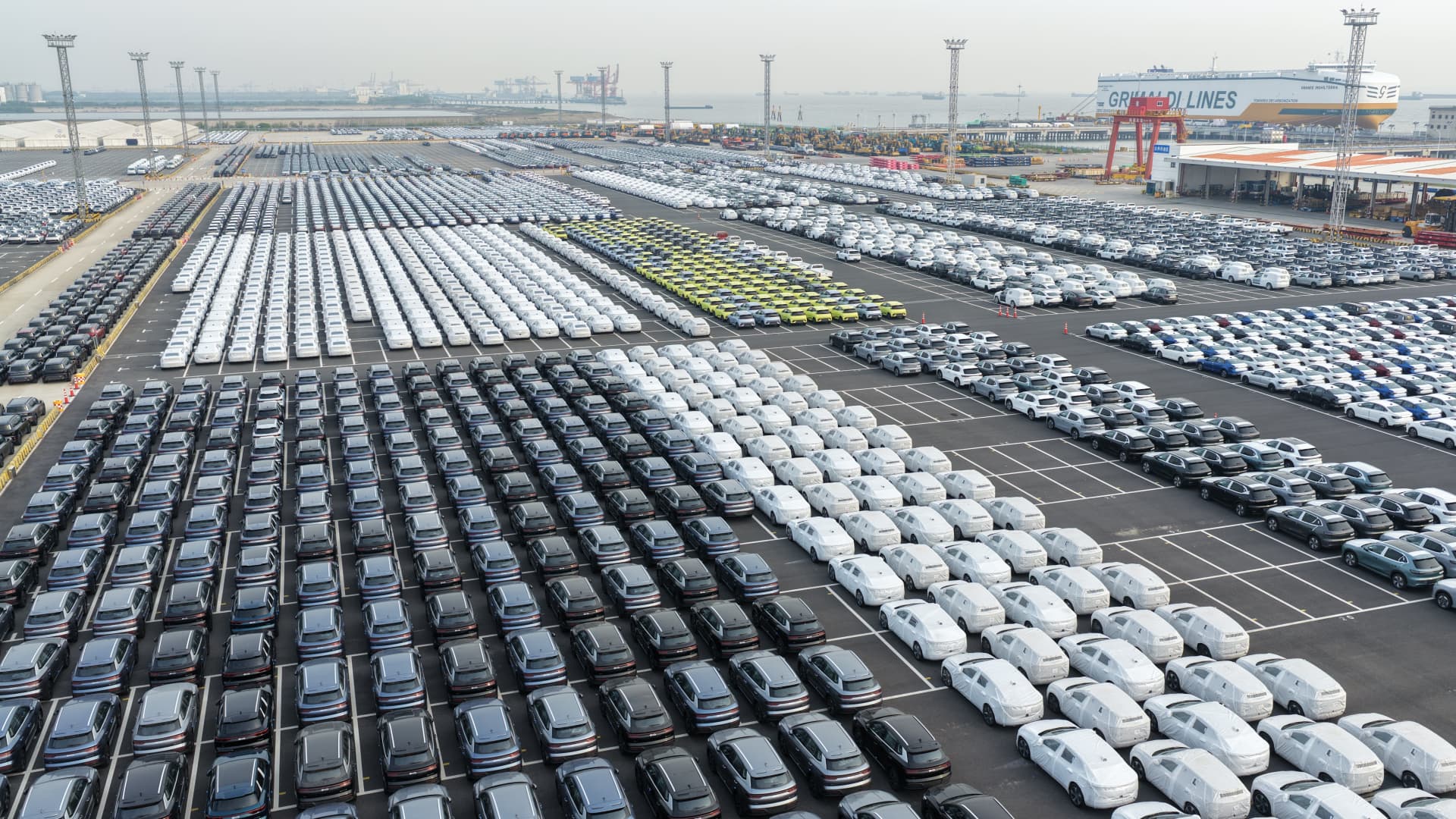
Chinese electric-vehicle and battery companies have announced nearly $101 billion in overseas investments from 2019 to 2025, outstripping just over $38 billion from US companies over the same period, according to Atlas Public Policy. Analysts told CNBC the shift is giving Chinese manufacturers broader market access and supply-chain reach as trade barriers reshape the global auto industry.
The investment push follows China’s emergence as a dominant EV exporter and reflects pressure at home. Kyle Chan, a fellow at the Brookings Institution, told CNBC that China’s domestic car market is saturated, with price competition and excess factory capacity making profitability difficult. He said companies including BYD are building the scale and international supply chains that could make them the leading manufacturers of the EV era.
Ford and General Motors did not respond to CNBC requests for comment.
Atlas Public Policy data show US companies led Chinese groups in foreign direct investment through 2021, before Chinese investment moved ahead. Tom Taylor, a senior policy analyst at Atlas, said differences among estimates often reflect how researchers count facilities and the years in which projects are recorded.
Other analysts use narrower measures. Armand Meyer, an analyst at Rhodium Group, told CNBC that his firm estimates Chinese foreign direct investment since 2014 across clean technology, including solar, wind and EVs, at about $173 billion. Rhodium said only about half of the announcements it tracked, roughly $85 billion, resulted in completed factories or facilities. Meyer said the scale may be smaller than some announcement-based tallies suggest.
Demand outside China has strengthened the case for investment abroad. Auto industry analyst Felipe Muñoz said 80% of electric vehicles sold in Latin America are Chinese. In a report cited by CNBC, Muñoz said demand for Chinese cars outside China is growing at an unprecedented pace. His data on new light-vehicle sales across 86 markets showed Chinese vehicle sales rose 51% year on year in the first quarter, with faster growth in developed markets such as Europe and Australia.
Factory investment also changes how companies respond to tariffs. Exporting vehicles by ship leaves manufacturers exposed to import duties and quota rules. Building vehicles in or near target markets can reduce tariff exposure, qualify products for local market access and create manufacturing jobs that host governments may seek.
Chan said Chinese investment has tended to flow to countries that are large markets themselves or that provide access to large markets. A plant in Hungary, for example, can serve the European Union market without the same tariff treatment applied to imported vehicles from China.
Taylor told CNBC that tariffs, whether already in place or expected by Chinese companies, have been a central driver of many investment decisions. He described the shift as a generational change in trade.
Industrial ties beyond autos
Chan said overseas plants can help automakers build market share, secure supply chains and distribution, and gain an early position in technologies tied to EVs, including software, sensors and powertrains. He also said those capabilities can spill into related sectors such as robotics.
He described China’s approach as “industrial diplomacy,” saying investments in Europe, Asia, North Africa, Latin America and other regions can deepen ties with countries where Beijing has, or seeks, stronger relationships.
Meyer cautioned that direct comparisons between US and Chinese foreign investment can miss structural differences. He said US automakers have focused more on their domestic market in recent years and already operate factories in places including Mexico, China and parts of Europe, which may reduce the need for new projects.
Even so, Meyer told CNBC that Chinese EV makers are investing four to six times as much outside China as their US counterparts. He said that acceleration could increase Chinese manufacturers’ influence and create longer-term dependencies in global supply chains.
This story draws on original reporting from CNBC.


