India inflation rises to 4.38% as food and fuel costs build
June consumer inflation topped a Reuters poll estimate as oil-market stress and uneven monsoon conditions added to price pressures.
By Amanda Ross · Deals Correspondent
· 3 min read
India’s consumer price inflation accelerated to 4.38% in June from 3.93% in May, exceeding the 4.30% increase expected by economists in a Reuters poll. The move adds pressure to policymakers as higher food and fuel costs feed into household budgets and business input costs.
The increase came as the U.S.-Iran war lifted energy-market risks and a weak monsoon threatened agricultural supply, according to CNBC. India is highly exposed to imported fuel costs, which makes global oil disruption a direct channel into domestic inflation.
The Reserve Bank of India left interest rates unchanged last month and said it expected inflation to rise while growth moderates in the financial year ending March 2027. The central bank has forecast inflation at 5.1% for that period, with consumers facing higher fuel prices and crop supplies at risk from weather disruption linked to El Niño. It put core inflation at 4.7% for the same period.
Oil exposure raises the inflation channel
Global oil prices have risen as the U.S. and Iran contest control of the Strait of Hormuz, a key route for energy shipments. A brief ceasefire in June was followed by renewed hostilities last week, according to CNBC.
India imports nearly 85% of its fuel requirements and depends on the Strait of Hormuz for about half of its crude imports, 60% of its liquefied natural gas and almost all of its liquefied petroleum gas supplies, CNBC reported. That reliance means disruptions can move quickly from global shipping and commodity markets into domestic fuel prices.
Energy costs also influence broader inflation through freight, production and operating expenses. The RBI has repeatedly highlighted core inflation, which strips out volatile food and energy components. CNBC reported that core inflation has not yet become a major concern, but prolonged increases in food and energy prices could lift it through higher input and transportation costs.
Monsoon volatility threatens farm supply
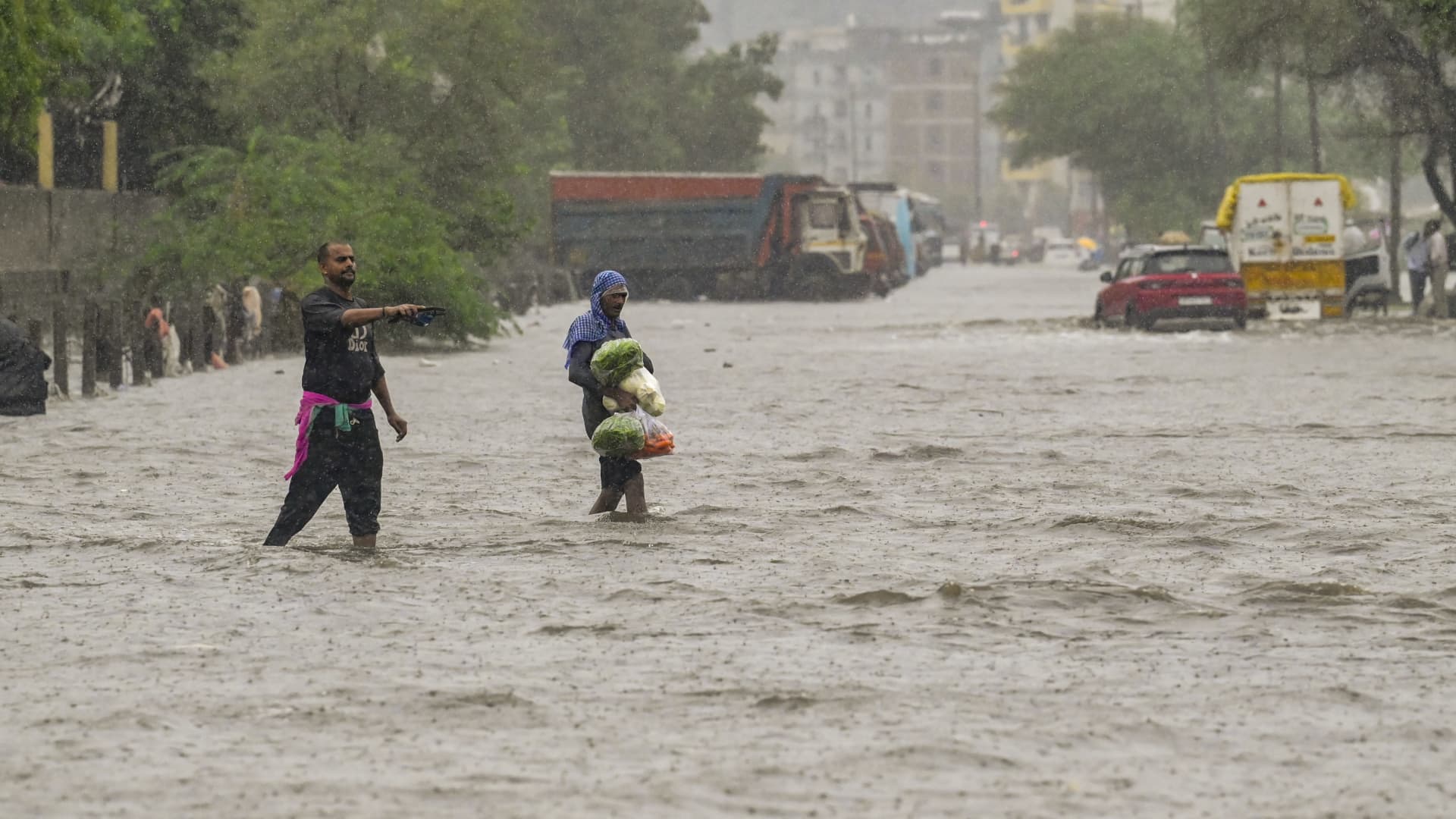
Weather has added a second pressure point. Heavy rain caused flooding in parts of India in the past two weeks, but the country still faces the possibility of a deficient monsoon this year.
Crisil, the Indian research and ratings firm owned by S&P Global, said in a Friday report that after a dry June, the monsoon advanced quickly and narrowed the all-India rainfall deficit from 40% to 15% as of July 8. The India Meteorological Department has forecast July rainfall at 6% below the long-period average.
Crisil said sharp shifts between too little and too much rainfall can hurt agriculture by affecting sowing decisions, crop health and rural incomes. Food prices are a significant part of India’s consumer inflation basket, so disruptions to crop output can have a broad impact on households.
India remains the world’s fastest-growing major economy, according to CNBC, but the latest inflation reading underscores the policy challenge created by imported energy dependence and weather-sensitive food supply. The RBI’s next decisions will be assessed against whether headline price pressures begin to pass more forcefully into core inflation.
This story draws on original reporting from CNBC.


