Even Realities CEO says Shenzhen has edge in building AI hardware
Will Wang told CNBC that Shenzhen’s supply chain and engineering base give consumer electronics startups an advantage over Silicon Valley.
By Sarah Jenkins · Chief Macro Economics Correspondent
· 3 min read
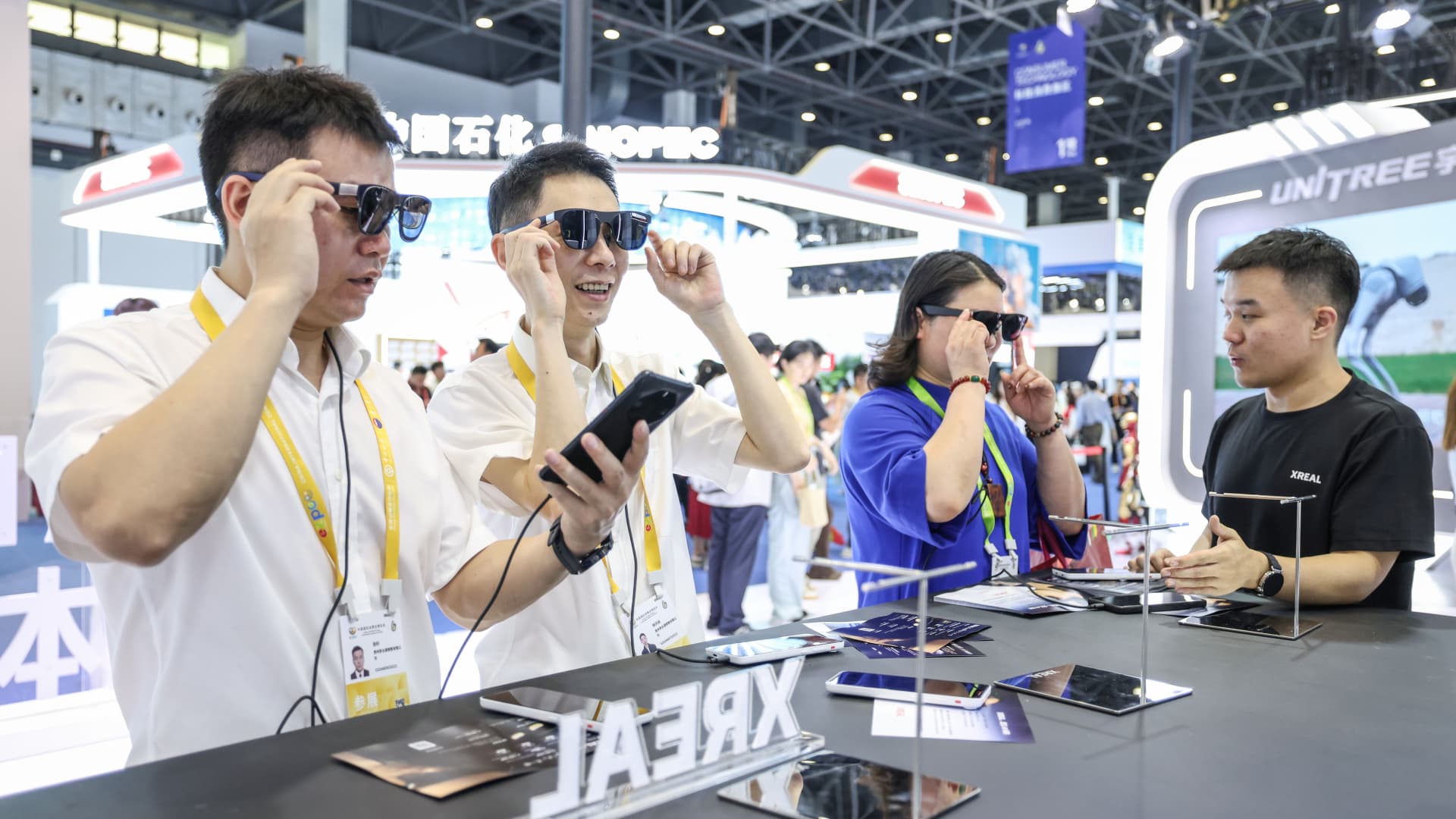
Even Realities Technology Chief Executive Will Wang said Shenzhen offers a stronger base than Silicon Valley for consumer electronics startups seeking to build a company on the scale of Apple. The comments follow the smart-glasses maker’s $150 million fundraising at a $1 billion valuation, with backers including Meituan and Tencent, according to CNBC.
Wang, a former Apple executive, told CNBC’s Chery Kang that companies aiming to build the next major consumer electronics platform need to be close to the centre of hardware production. He cited Shenzhen’s engineering workforce and its position in global electronics supply chains as central to that advantage.
“If we wanted to create a future around consumer electronics, if we wanted to really build possibly the next Apple, we need to be at the center of hardware, which is Shenzhen,” Wang told CNBC.
Even Realities is based in Shenzhen and competes in AI-enabled wearable devices, a market where Meta Platforms has built a prominent position through its Ray-Ban smart glasses. Even Realities said on Monday it had reached a $1 billion valuation in its latest funding round.
Hardware focus shifts toward Shenzhen
Wang worked at Apple from 2016 to 2018 on Apple Watch and iPhone development and mass production, according to CNBC. He said Silicon Valley has become less receptive to hardware founders because consumer devices often require longer product cycles, face supply-chain constraints and can appear less attractive than AI software applications.
“Silicon Valley seems to not really reward hardware people that much anymore,” Wang said, adding that talent and capital have been moving into AI and software agents. He said the result has been fewer consumer electronics startups and less related talent in Silicon Valley.
Shenzhen’s role is different, Wang said, because the city has developed dense networks of mechanical, electrical and optical engineers. Its industrial base includes phone makers, drone companies and other consumer electronics manufacturers.
The city is home to major Chinese technology and manufacturing groups including Tencent, Huawei, DJI and BYD. It has also supported newer companies such as camera maker Insta360 and robotics firm UBTech, according to CNBC.
US users and global capital plans
Despite its Shenzhen base, Even Realities sees the United States as a core market. More than half of the company’s users are in America, CNBC reported.
Several Chinese startups are pursuing AI-related consumer hardware products, using China’s manufacturing capacity while the United States retains strength in software. Even Realities’ domestic competitor Rokid is valued at $2.58 billion after raising money from investors including Singapore’s Temasek, according to PitchBook data cited by CNBC. RayNeo, a smaller rival, is valued at $239.9 million.
Asked whether Even Realities had intentionally raised capital only from Chinese-origin investors, Wang told CNBC that Chinese backers “simply move much faster, and they are closer to us.” He said the company plans to seek “much more global investors” in its next fundraising round to support expansion outside China.
Even Realities has received funding from Chinese-origin venture firms including CDH Investments, Monolith Management and CVC Capital. It also raised an undisclosed amount from Unicorn Capital Partners and Cyanhill Capital in January, according to CNBC.
The company was founded in 2023 and introduced its Even G2 smart glasses late last year alongside the Even R1, a ring used to control the display. CNBC reported that, unlike Meta’s camera-equipped Ray-Ban line, the G2 has no camera or recording hardware. The device instead shows notifications, navigation and live translation through a heads-up display in the lenses.
This story draws on original reporting from CNBC.