Google joins €411mn Proxima Fusion round as Europe pursues first plant
Germany’s Proxima Fusion said the financing valued it at $2.7bn and will support stellarator technology, magnets and hiring.
By Sarah Jenkins · Chief Macro Economics Correspondent
· 3 min read
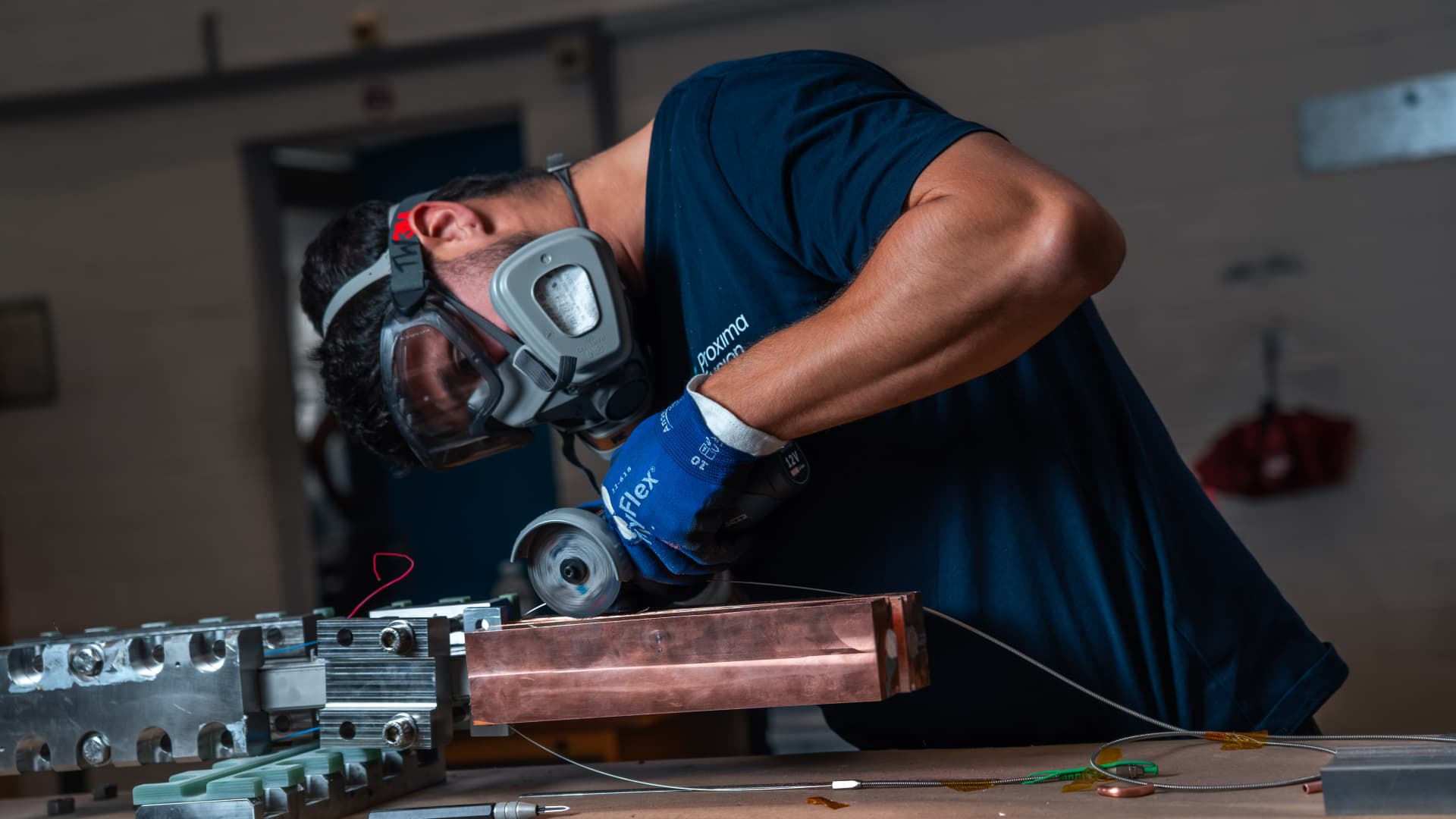
Google has invested in Germany-based Proxima Fusion as part of a €411 million, or $468 million, funding round for a company seeking to build Europe’s first commercial nuclear fusion power plant. Proxima said the financing valued the business at $2.7 billion and would support work toward a fusion demonstrator in the early 2030s, with a commercial plant targeted later in that decade.
The round was led by XTX Ventures and East X Ventures, according to Proxima. RWE and Google joined as strategic investors, while Plural, UVC Partners, Balderton and Cherry Ventures were among the venture capital firms participating.
Proxima said Google’s participation reflected the technology group’s long-term interest in fusion as a potential source of abundant, carbon-free and firm power. Firm power refers to electricity that can be supplied on demand rather than only when weather conditions allow, a feature that would be valuable for grids with rising demand from data centres, industry and electrification.
Nuclear fusion releases energy by combining hydrogen atoms to form helium. Existing nuclear power stations use fission, which produces energy by splitting atoms. Fusion has not yet been used commercially for electricity generation, and companies in the sector are still working through major scientific, engineering and manufacturing barriers.
Stellarator approach
Proxima is developing stellarator fusion technology, one of several designs being pursued by fusion companies and laboratories. A stellarator uses carefully shaped magnetic fields to confine extremely hot plasma, the electrically charged gas in which fusion reactions can occur. The approach requires complex magnets and precision engineering, which is why production capability is central to Proxima’s plan.
The company said the new capital would help expand high-temperature superconducting cable and magnet production. It also plans to develop engineering and manufacturing systems needed for stellarators and to hire across engineering, manufacturing and operations.
Francesco Sciortino, Proxima’s co-founder and chief executive, said in a statement that “Europe is racing with the United States and China to get to the first fusion power plant.” He said the financing showed Europe could build competitive companies around breakthrough technologies, and that investors saw both “the urgency and the opportunity” in the company’s work.
US rivals remain larger
Proxima described itself as Europe’s best-funded fusion startup by a wide margin. US fusion companies have raised larger sums, according to Dealroom data cited for the sector. Commonwealth Fusion Systems raised $863 million in August, bringing its total funding to $2.9 billion, while Helion Energy, backed by Sam Altman, raised $465 million last month and has total funding of $1.5 billion.
Google also has exposure to Commonwealth Fusion Systems. In June 2025, Google signed an offtake agreement with CFS for power from its first commercial plant once it is operating, according to the company.
In a blog post at the time, Google said fusion had “huge potential” because it could be clean, abundant, safe and built in many locations. The company also cautioned that commercialising the technology remained “immensely challenging” and that success was not assured.
This story draws on original reporting from CNBC.