Hesai’s US lidar growth draws scrutiny over China cyber risk
CNBC reported that Pentagon-blacklisted Hesai is expanding in US autonomous systems as executives, researchers and lawmakers dispute the risks.
By Sarah Jenkins · Chief Macro Economics Correspondent
· 4 min read
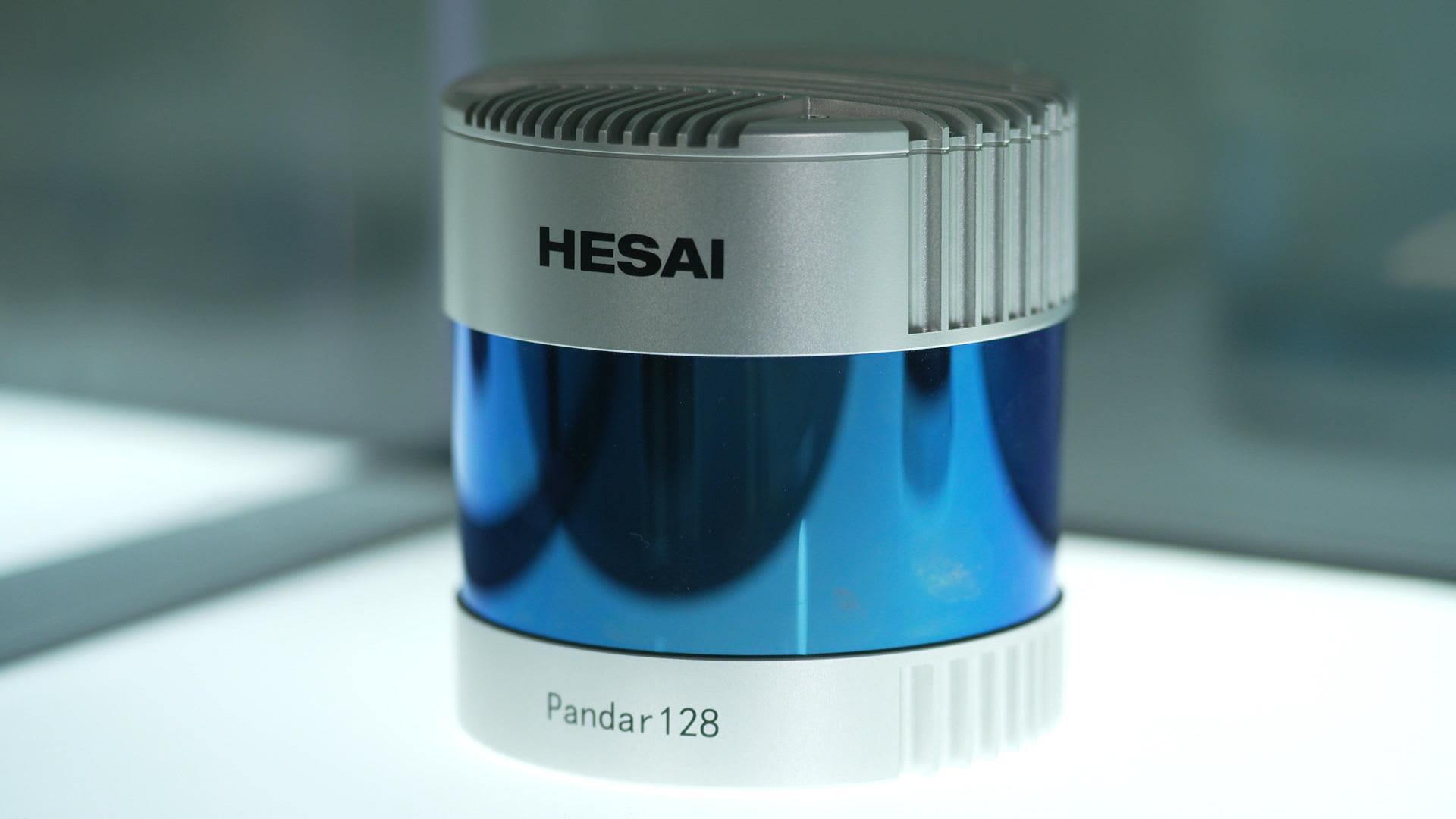
Shanghai-based Hesai Technology, one of the world’s largest lidar makers, is expanding its role in U.S. autonomous vehicle and robotics systems despite a 2024 U.S. Defense Department blacklist designation, CNBC reported. The scrutiny reaches Nvidia’s autonomous driving platforms, where Hesai sensors are among the options automakers can select, and comes as McKinsey estimates autonomous driving could become a $300 billion to $400 billion market by 2035.
The Pentagon has designated Hesai a Chinese military entity, a finding that bars the company from Defense Department contracts but does not prohibit commercial U.S. customers from using its products. Hesai is appealing after losing a federal lawsuit challenging the designation, according to CNBC.
Hesai co-founder and Chief Executive David Li denied that the company works for China’s military or that its sensors create a security threat. In an interview with CNBC, he said the Defense Department case lacked sufficient evidence and called concerns about Beijing accessing data through Hesai “fiction.”
Why lidar is under review
Lidar, short for light detection and ranging, uses laser pulses to measure distance and build a three-dimensional map of the surrounding environment. Autonomous cars, robots, drones and industrial systems use those maps to identify objects and operate in physical space.
Craig Singleton, senior director for the China Program at the Foundation for Defense of Democracies, told CNBC that Chinese-made lidar could allow Beijing to reach sensitive U.S. data or disrupt critical operations as sensors are deployed near airports, utilities and defense-related sites. The think tank has argued that Chinese lidar presents risks to U.S. infrastructure and military systems.
Hesai says its devices do not store data because they lack the memory to do so, and Li told CNBC that customers, rather than Hesai, control and protect data generated by the sensors. The company also said its products have met standards set by Tüv Rheinland and Dekra, independent firms that conduct safety and cybersecurity assessments.
Cybersecurity researchers described risks that are not specific to Hesai. Miroslav Pajic, a Duke University professor who studies lidar vulnerabilities, told CNBC that lidar can be spoofed physically and that malware could be inserted during production or through firmware updates. In a lab demonstration, Pajic showed how manipulated lidar data could create a false person in a sensor’s view or remove a real object from detection.
Commercial footprint and pricing
Hesai told CNBC it has about one-third of the global automotive lidar market. Its sensors are used or integrated in systems linked to Nvidia, Amazon’s Zoox, Kodiak, Waabi, Nuro and Agtonomy, and have also been used at New York’s John F. Kennedy International Airport to monitor passenger and traffic flow, CNBC reported.
Nvidia did not answer CNBC’s detailed questions about Hesai, including safeguards for sensor data. In a statement, Nvidia said its DRIVE Hyperion architecture is open and vendor-agnostic, allowing automakers to choose components consistent with regulatory and commercial requirements.
Pricing is central to Hesai’s expansion. The company told CNBC it has reduced the cost of its lidar units from more than $10,000 to under $200. Aeva, a U.S. lidar maker, told CNBC its automotive sensors cost “in the few hundreds of dollars” per unit. Yole Group, an advisory and market analysis firm, said in a 2025 report that Chinese lidar companies are leading because of cost, scale and government support.
Li denied that Hesai benefits from Chinese state support. CNBC cited Hesai’s 2025 annual filing with the U.S. Securities and Exchange Commission, which disclosed Chinese government subsidies, preferential tax treatment, below-benchmark borrowing rates and enhanced deductions for research and development. Hesai said such incentives are commonly available to qualifying technology companies in China and that no government entity owns equity in the company.
Policy pressure builds
The Defense Department has cited Hesai’s location in Shanghai’s Jiading district, supplier ties to China Electronics Technology Group Corporation and China’s military-civil fusion strategy in defending the blacklist designation, CNBC reported. Li said the company’s sensors are for civilian and commercial use and that its agreements prohibit military applications, while acknowledging that Hesai cannot physically control where hardware goes after shipment.
The Prague Security Studies Institute reported in 2025 that a Hesai sensor appeared on a military vehicle in a 2023 Chinese military television program. Li confirmed the device appeared to be Hesai technology but said the company did not provide it for the competition.
U.S. lawmakers are also weighing restrictions. Rep. John Moolenaar, Republican of Michigan and chairman of the House Select Committee on the Chinese Communist Party, told CNBC that the ability of such sensors to transmit information is a major concern. The committee has proposed legislation to phase out Chinese-made lidar technology in the United States.
This story draws on original reporting from CNBC.