Hormuz route dispute strains U.S.-Iran truce as oil prices rise
Tanker attacks have exposed a gap in the U.S.-Iran accord over Hormuz shipping routes, lifting crude prices and reviving blockade risks.
By Marcus V. Thorne · Markets Editor
· 3 min read
Oil prices rose more than 4% this week after attacks on three tankers in the Strait of Hormuz intensified a dispute over who controls shipping routes through one of the world’s most important energy chokepoints. U.S. crude traded near $71 a barrel on Friday, while Brent hovered just below $76, still far under its wartime high of about $122, according to market data cited by CNBC.
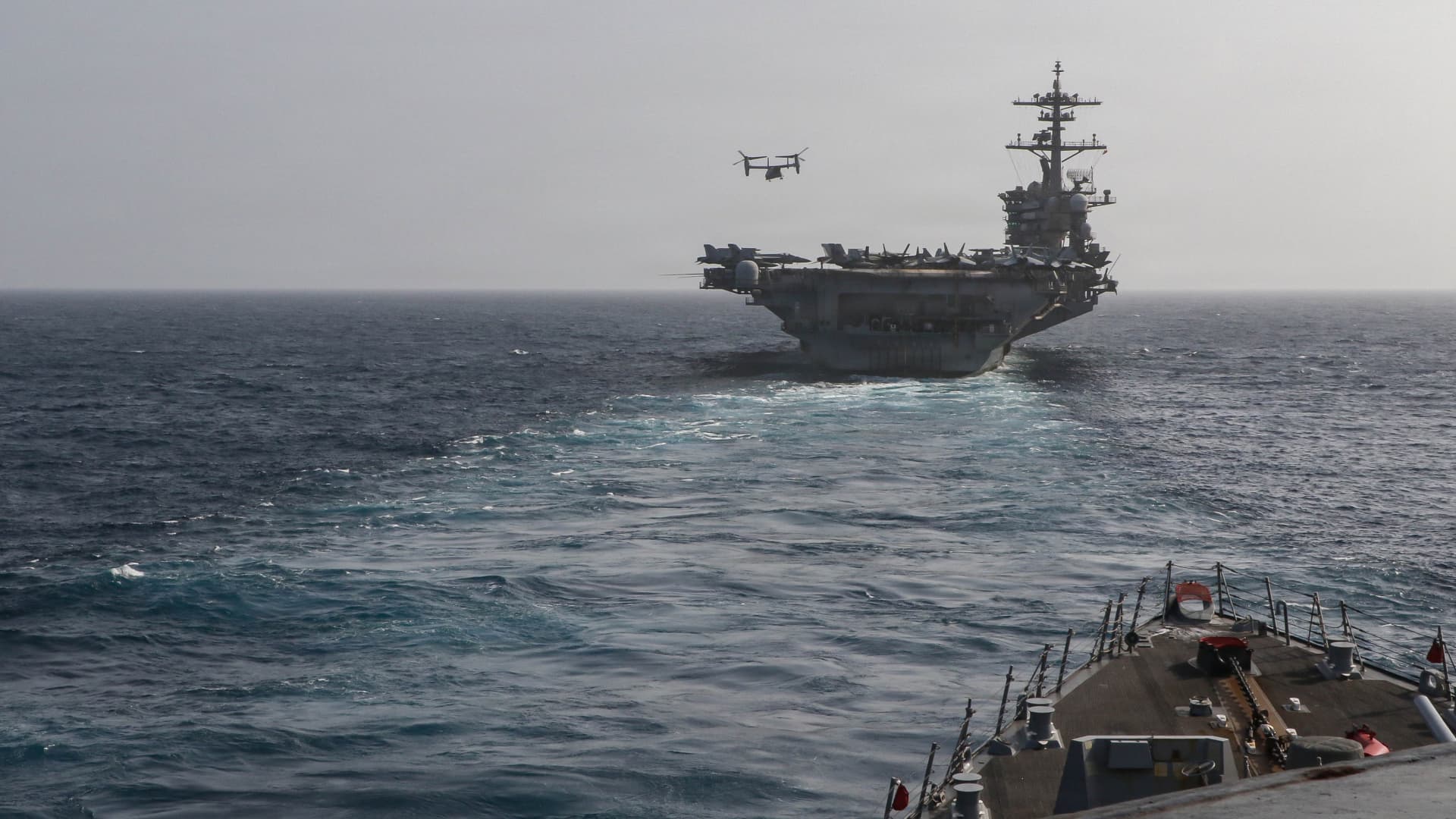
The latest fighting has centered on a U.S. Navy-protected southern corridor through waters off Oman, which has allowed tankers carrying Gulf oil and gas to leave the Persian Gulf without seeking Iranian approval. Analysts at maritime intelligence firm Windward described the clashes as the most significant escalation since the conflict’s opening phase in late February and early March.
The interim U.S.-Iran memorandum of understanding was intended to restore commercial passage through Hormuz. Under the arrangement, Iran agreed for 60 days to provide safe passage and not levy tolls, while Washington lifted a naval blockade on Iran and temporarily eased sanctions on Iranian oil sales.
The accord left a central question unresolved: which routes ships could use. Tehran has argued that safe passage applies to a northern route through Iranian territorial waters. The U.S. has supported the southern corridor along Oman’s coast, which Michelle Wiese Bockmann, senior maritime intelligence analyst at Windward, said Gulf producers have increasingly used for exports.
Senior U.S. officials told reporters on June 17 that military escorts had enabled between 5 million and 8 million barrels a day to exit Hormuz. That remains well below the roughly 20 million barrels a day of oil and refined products that moved through the strait before the war.
David Goldwyn, a former State Department special envoy for international energy affairs under President Barack Obama, said the memorandum deferred the core issue of traffic management. He said the agreement’s fifth paragraph requires Iran to use “best efforts” to ensure safe passage, but does not define the routes. The text also says Iran and Oman, in consultation with other Gulf states, will determine the strait’s future administration.
Iran’s Revolutionary Guard warned Thursday that U.S. military involvement in setting shipping routes would draw a response and could disrupt the reopening of Hormuz. Iran’s Ministry of Foreign Affairs also said Washington’s decision to reinstate oil sanctions amounted to a “material breach” of the memorandum and held the U.S. responsible for any consequences.
Washington has taken the opposite position. U.S. Energy Secretary Chris Wright said at a New York conference on June 24 that Iran would no longer be able to close Hormuz, describing that ability as Tehran’s key leverage. Wright also said the U.S. military could maintain energy flows from the Gulf with or without an agreement with Iran.
President Donald Trump has threatened to restore the U.S. naval blockade after the tanker attacks. Goldwyn said such a move would remove about 1.5 million barrels a day of Iranian exports from the market, a development he said would probably add upward pressure to oil prices.
James Kraska, an international maritime law expert at the U.S. Naval War College, said Iran is not permitted under international law to control traffic through Hormuz. He said the international community has an uninterrupted right of transit through the strait.
Shipping behavior is already changing. Trade intelligence firm Kpler said operators have favored the Iranian route over the corridor near Oman since the attacks, reinforcing Tehran’s pressure on traffic patterns. Kraska said Iran’s position could be difficult to sustain because it may encourage Gulf producers to shift more exports through pipelines across Saudi Arabia and the United Arab Emirates, while also alarming other states that depend on open trade chokepoints.
This story draws on original reporting from CNBC.


