Leveraged chip ETFs deepen losses for South Korean retail traders
Retail investors’ concentrated bets on Samsung and SK Hynix have reversed sharply, drawing regulatory scrutiny of single-stock leveraged funds.
By Amanda Ross · Deals Correspondent
· 3 min read
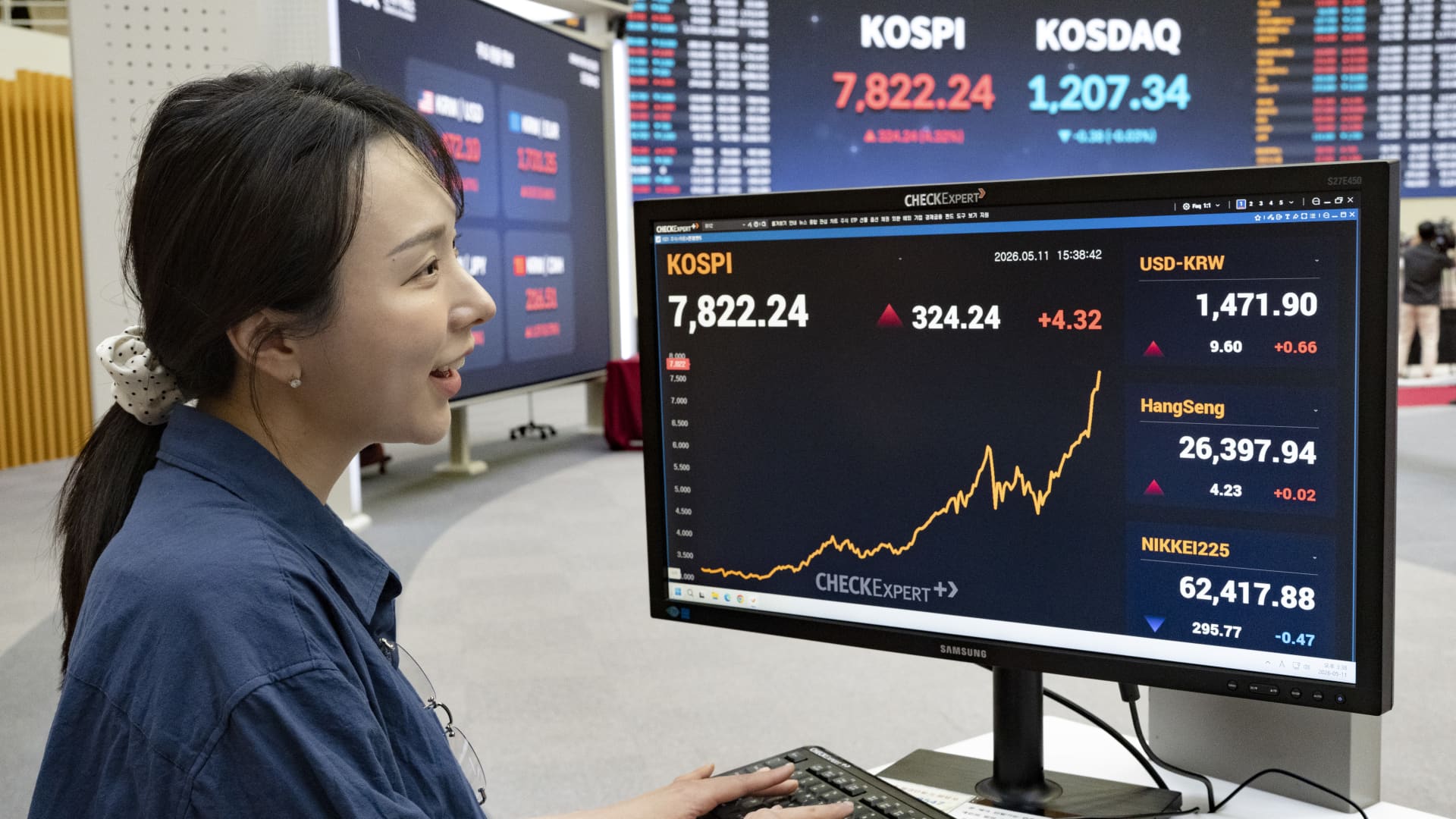
South Korean retail investors are absorbing heavy losses after leveraged products tied to Samsung Electronics and SK Hynix fell sharply with the country’s leading semiconductor shares. KB Financial Group said domestic individuals had bought a net 14 trillion won, or $9.4 billion, of single-stock leveraged exchange-traded funds since their May 27 launch, far above roughly 2 trillion won purchased by foreign investors.
The drawdown has been most visible in products linked to SK Hynix, one of the main beneficiaries of the artificial intelligence-led memory-chip rally. LSEG data show the KODEX SK Hynix Single Stock Leverage ETF, which is structured to deliver twice the daily percentage move in SK Hynix shares, has dropped about 70% from a June peak and about 50% from its launch level.
Single-stock leveraged ETFs use derivatives and daily rebalancing to multiply the return of an underlying share over one trading session. That structure can amplify gains when a stock rises, but losses can compound quickly when prices fall or swing sharply across multiple sessions.
The reversal has exposed the risk embedded in a retail trading boom that helped propel South Korean equities during the semiconductor rally. Online trading forums in South Korea carried posts from investors expressing distress after SK Hynix recorded its largest one-day fall last week, including one user who wrote: “I want to go back to before I started investing in stocks. Give me my money back.”
Retail leverage comes under scrutiny
Jung In Yun, founder of Fibonacci Asset Management, said domestic retail investors were taking the bulk of the losses. He said many buyers were not first-time traders responding to online chatter, but investors in their 40s and 50s who had become more willing to use leverage and hold concentrated technology positions.
Oxford Economics data show assets in the 25 largest leveraged Korea ETFs rose to about 30% of Korea-focused fund assets by June, compared with roughly 15% at the start of 2026. The advisory firm moved South Korean equities to neutral at the end of June, citing the rise in leveraged positioning and the risk that securities firms could become less willing to extend credit to retail clients.
The Bank of Korea also warned in a report last month that leveraged stock investment by retail investors had reached a record high. The central bank said the increase was driven mainly by margin borrowing and positions concentrated in semiconductor shares. It said the build-up was unlikely to threaten the financial system as a whole, while cautioning that leverage could increase market volatility during corrections, especially if investors use borrowed money to chase rising prices.
Rules tightened for single-stock products
South Korean authorities on Thursday announced stricter rules for single-stock leveraged ETFs after sharp moves in Samsung Electronics and SK Hynix. Under the measures, investors must hold at least 30 million won in cash to trade the products, compared with an effective previous threshold of 3 million won.
Peter Kim, head of global investment strategy at KB Financial Group, said the losses showed that single-stock leveraged ETFs were increasingly being used for speculative trading rather than long-term investment. In comments to CNBC, he said there were no signs of a large retail-led market rescue, but warned that persistent volatility and ETF-related selling pressure could extend the weakness.
Some investors and fund managers are also watching whether global technology spending plans affect sentiment toward memory-chip stocks. Thomas J. Hayes, chairman and managing member of Great Hill Capital, said semiconductor and memory shares had become a crowded trade among institutional and retail investors. He said any moderation in capital expenditure guidance from large technology companies could prompt further selling in the sector.
This story draws on original reporting from CNBC.


