NATO spending targets face implementation test at Turkey summit
Alliance leaders meet in Ankara with Europe’s 5% of GDP defense pledge under White House scrutiny and Ukraine support high on the agenda.
By Marcus V. Thorne · Markets Editor
· 4 min read
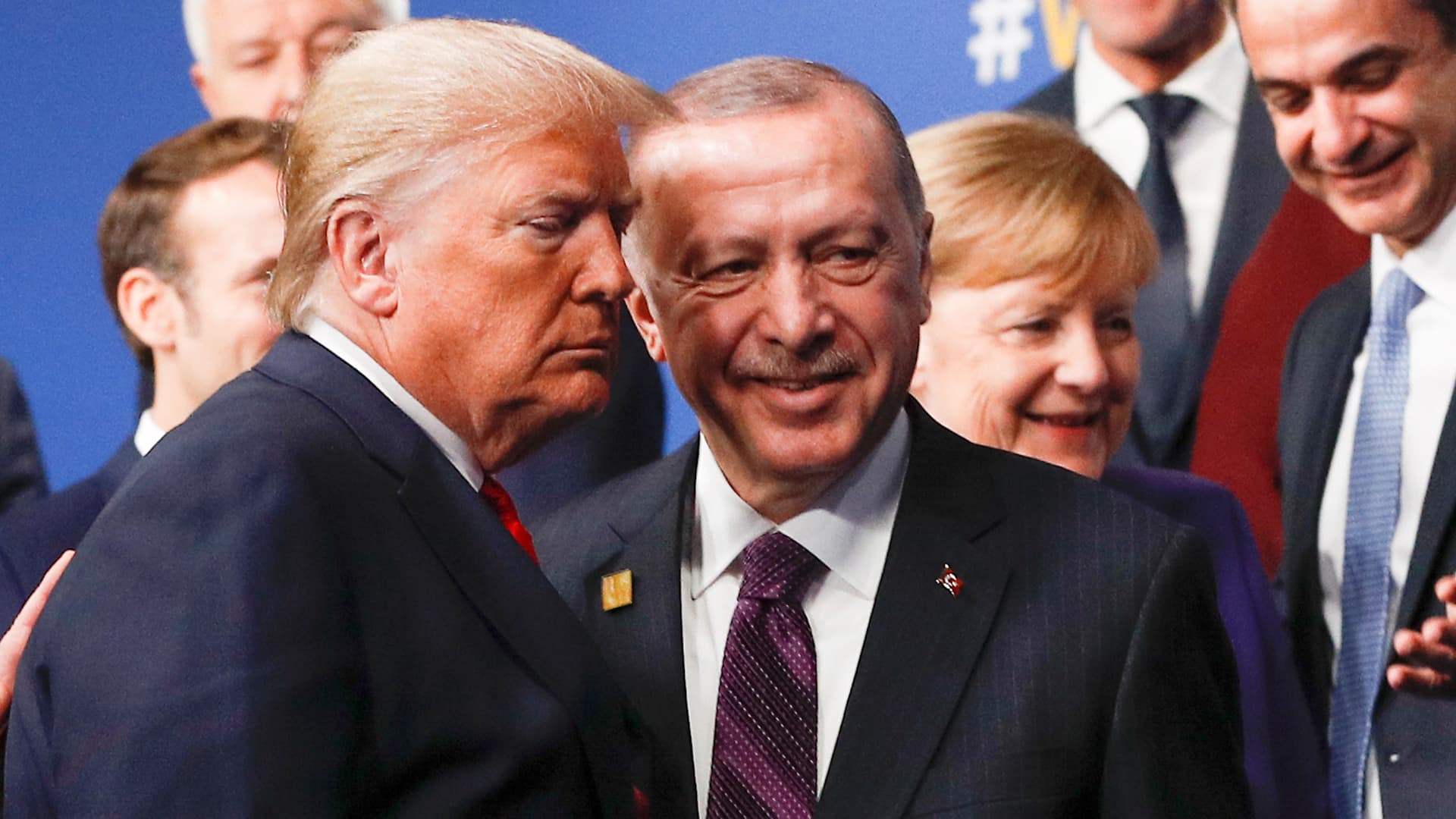
NATO leaders meet in Turkey this week with Europe’s pledge to lift defense-related spending to 5% of GDP by 2035 moving from political commitment to delivery test. The Ankara summit, beginning Tuesday, will examine whether larger budgets can be converted into deployable military capability quickly enough to keep U.S. President Donald Trump committed to the alliance while Europe assumes more responsibility for its own security.
At last year’s summit in The Hague, allies agreed to the 5% target, split between 3.5% for core defense needs and 1.5% for wider security requirements. This year’s agenda is expected to focus on procurement, industrial capacity, aid to Ukraine and the political framework the Trump administration has described as “NATO 3.0.”
Ulrike Franke, a senior policy fellow at the European Council on Foreign Relations, told CNBC the meeting marks a shift from sharing costs inside the alliance to transferring more responsibility toward Europe.
U.S. role remains central
European governments broadly accept the need to spend and produce more after sustained pressure from Washington. The harder question is institutional: NATO has relied heavily on U.S. military power for 77 years, and a reduced American role would force Europe to decide how to organize defense without Washington at the center, Max Bergmann, director of the Europe, Russia and Eurasia Program at the Center for Strategic and International Studies, told reporters last week.
NATO Secretary General Mark Rutte has sought to keep Trump engaged while advancing plans for greater European responsibility. Bergmann said there has been limited discussion of an alternative plan if the United States chooses to scale back its involvement without formally leaving the alliance.
Franke told CNBC that European governments want clarity if Washington plans to remove troops, assets or capabilities, including a timetable. She also said allies will try to show unity publicly, especially on defense budgets, after Spain and France drew criticism and as Britain and France face tight fiscal positions.
Budgets meet industrial limits
The spending commitment has already helped shift attention toward European defense producers, with Poland, the Baltic states and Nordic countries moving faster than larger economies closer to fiscal and political constraints. Franke told CNBC that Europe now has more money in the system but must prove it can spend it effectively and manufacture what its militaries need.
Europe’s defense sector remains divided by national procurement preferences, supply-chain constraints, bureaucracy, labor shortages and the effects of years of limited investment. Joint purchasing can reduce unit costs, improve interoperability and support scale, but governments still have incentives to keep contracts and jobs at home. Franke cited Franco-German defense projects as an example of how domestic politics can slow cooperation.
Ukraine shapes the capability debate
Ukraine is expected to be a central subject in Ankara, including long-term assistance, Kyiv’s defense industry and lessons from more than four years of full-scale war with Russia. Seth Jones, president of the Defense and Security Department at CSIS, said Russian forces were performing poorly in 2026, citing casualty rates and loss of ground.
Kyiv has increased long-range drone and missile strikes inside Russia against energy, military and logistics infrastructure, according to CNBC. Franke said NATO should treat Ukraine not only as an aid recipient but also as a source of battlefield innovation, particularly in drones, counter-drone systems and operational data on fighting Russia.
Turkey presses its case
Turkey’s role as host adds a further set of priorities. President Recep Tayyip Erdogan is expected to use the summit to highlight Ankara’s security concerns and defense industry as European military spending rises.
Bergmann said defense procurement and political legitimization are likely core Turkish objectives, while noting democratic backsliding under Erdogan. He added that Turkey, a NATO member but not an EU member, may be concerned about being left out as the European Union channels more defense spending toward European producers.
The summit also follows tension between Washington and European allies over Iran. Franke said Iran could feature in Ankara, including possible European contributions to maritime security or a peace arrangement, though she said such roles would probably be limited and partly symbolic.
This story draws on original reporting from CNBC.