US existing-home sales fell in June as median price hit record
Previously owned home sales declined 2.4% from May to a 4.09 million annual pace, while the median sale price rose to $440,600, NAR said.
By Marcus V. Thorne · Markets Editor
· 3 min read
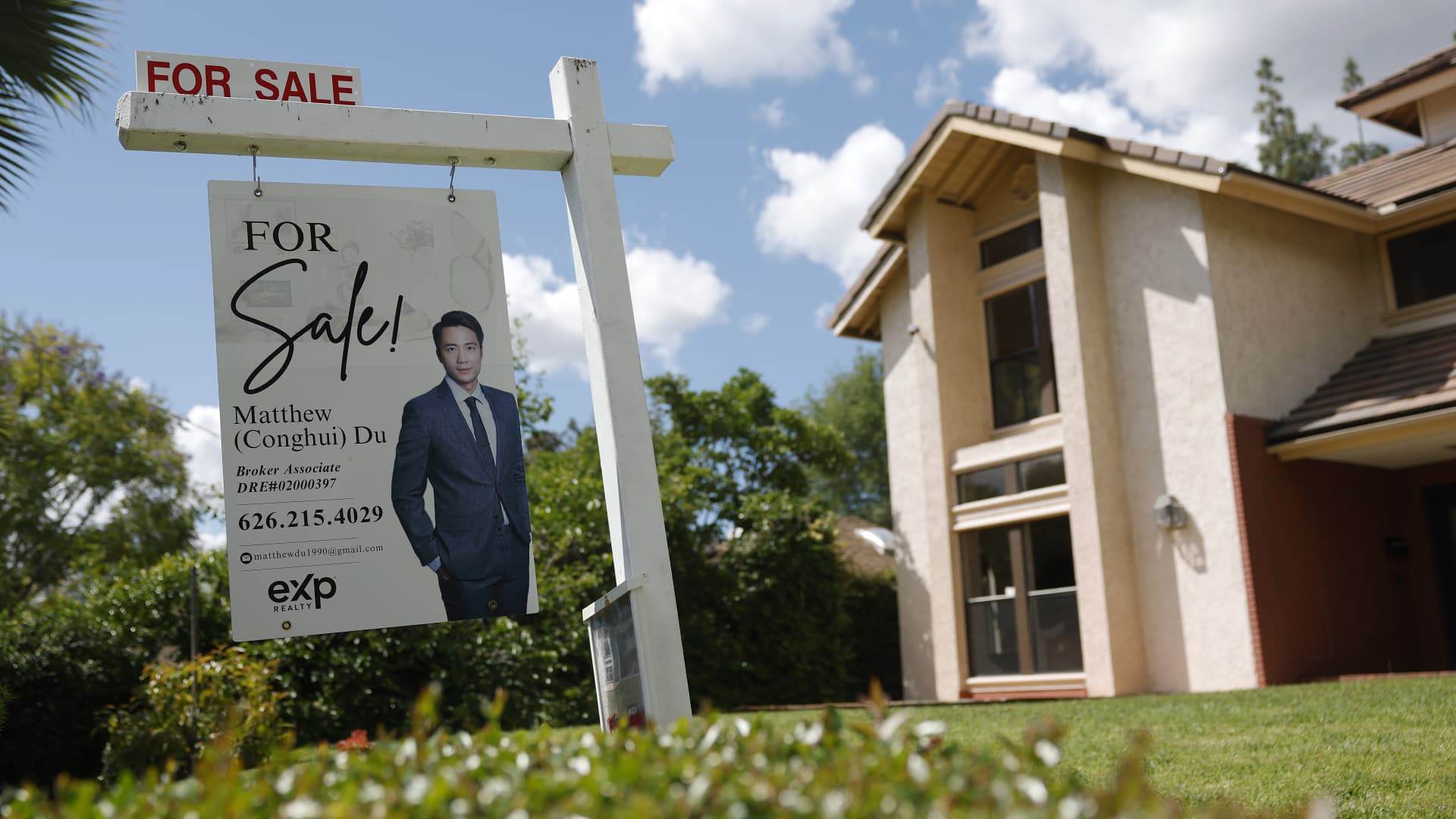
US sales of previously owned homes fell in June, missing analysts’ expectations for a monthly increase, as borrowing costs and record prices weighed on affordability. Transactions declined 2.4% from May to a seasonally adjusted annual rate of 4.09 million units, according to the National Association of Realtors.
The market was stronger than a year earlier, with June sales up 2.8% from June 2025, NAR said. The median price for an existing home sold during the month rose 1.8% year over year to $440,600, the highest level recorded by the trade group.
Lawrence Yun, NAR’s chief economist, said in a release that month-to-month volatility in sales reflected how closely buyers are responding to affordability conditions as mortgage rates shift. Yun also said job growth of more than half a million since the start of the year should continue to support housing demand.
Mortgage rates and inventory constrained demand
Existing-home sales are recorded when transactions close, so June’s figures largely reflect contracts signed earlier, likely in May. During that period, the average rate on the 30-year fixed mortgage was still moving higher, after a sharp rise that began in early March at the start of the Iran war, according to CNBC.
Higher mortgage rates reduce purchasing power because buyers must allocate more of their monthly payment to interest. When prices are also rising, households can qualify for less debt or must bring more cash to a purchase, which can remove some buyers from the market.
Supply remained below levels typically associated with a balanced market. NAR said there were 1.56 million homes for sale at the end of June, down 0.6% from May and up 1.3% from a year earlier. At June’s sales pace, that equaled 4.6 months of supply. A six-month supply is generally considered balanced between buyers and sellers.
Yun said affordability could deteriorate if inventory gains stall, because limited supply can push prices higher. He said adding homes to the market is necessary to broaden access to homeownership.
Higher-priced homes led annual gains
Sales strength was concentrated in more expensive segments of the market, according to NAR. Sales of homes priced below $100,000 fell 1.7% from a year earlier, while transactions for homes priced between $100,000 and $250,000 increased by less than 1%.
By contrast, sales of homes priced from $750,000 to $1 million rose nearly 14% from the prior year. Transactions above $1 million increased 18%, NAR said.
Regional performance was mixed. Sales fell from May in every region except the Northeast, according to NAR.
The composition of buyers also shifted. All-cash purchases accounted for 25% of June sales, down from 29% a year earlier. First-time buyers represented 33% of transactions, up from 30% in June 2025.
June is typically the strongest month of the year for both sales volumes and prices, according to CNBC. This year, the seasonal peak coincided with a market still defined by limited supply, elevated financing costs and a widening gap between lower-priced and higher-priced segments.
This story draws on original reporting from CNBC.