Venezuela earthquake death toll reaches 2,595 as losses rise
UNDP estimated $6.7 billion in direct damage after twin quakes, while rescue teams searched Caracas and La Guaira and the U.S. expanded its aid response.
By Sarah Jenkins · Chief Macro Economics Correspondent
· 3 min read
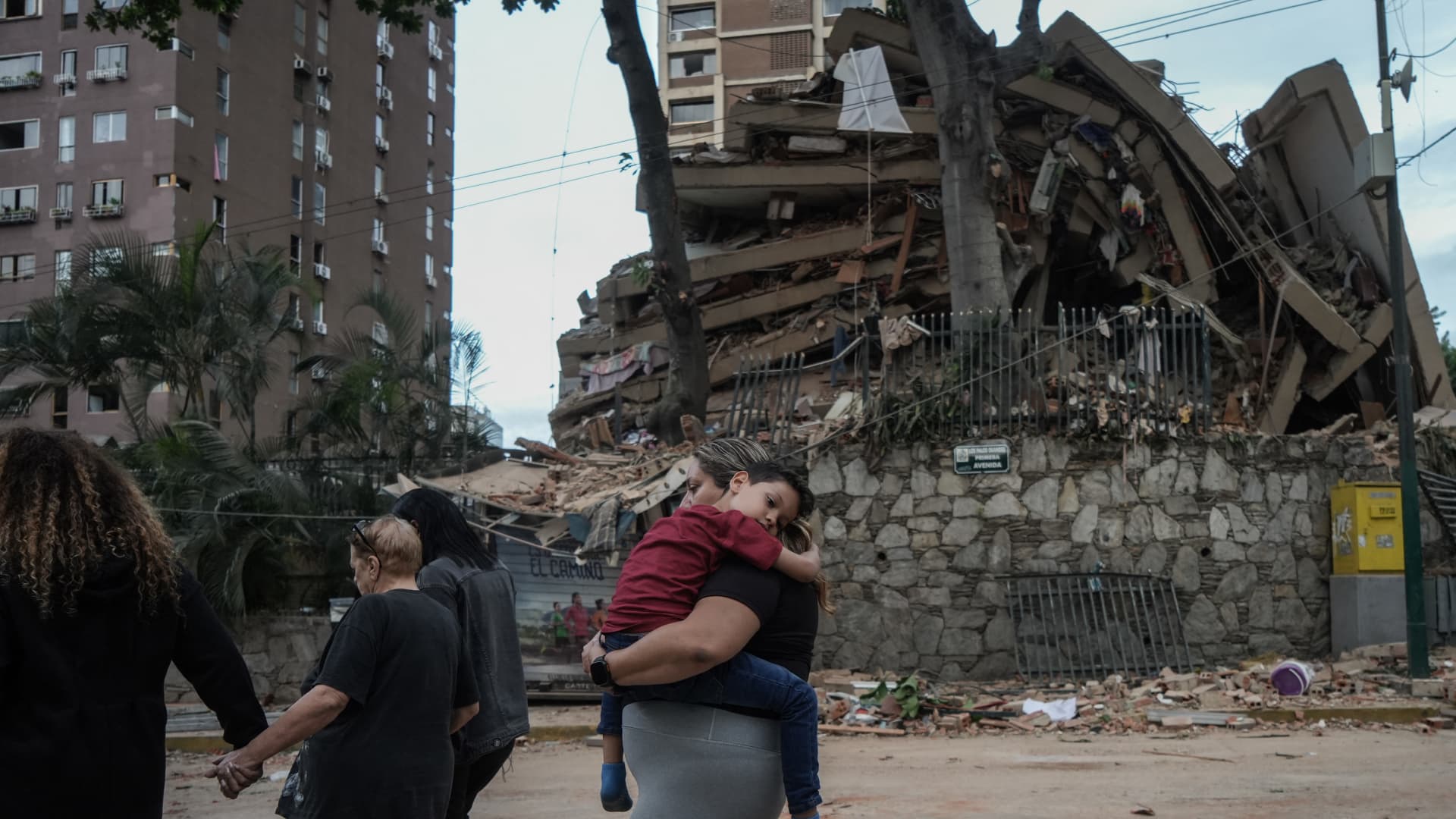
Venezuela’s death toll from twin earthquakes rose to 2,595, Acting President Delcy Rodríguez said Friday, as rescue work continued more than a week after the country’s most powerful seismic event in more than 100 years. The United Nations Development Programme estimated direct physical damage at $6.7 billion, about 6% of gross domestic product, adding to pressure on public services, transport links and the oil sector.
Rodríguez said the latest toll was 300 higher than the previous day and that more than 12,000 people had been injured. She did not give an official number for people still missing. An unofficial list circulating online put the unaccounted-for at about 38,500, down from nearly 60,000 in the immediate aftermath of the earthquakes.
The disaster began last Wednesday with a magnitude 7.2 quake, followed seconds later by a magnitude 7.5 mainshock. Authorities said the tremors were the strongest to strike Venezuela since 1900. Caracas and La Guaira suffered extensive building failures, and Simón Bolívar International Airport, the main airport serving the capital, was severely damaged.
La Guaira, the coastal state near Caracas, was the hardest-hit area. Rodríguez said nearly all officials from the state were killed in the disaster.
Damage assessments widen
Venezuelan authorities said nearly 800 buildings collapsed, including 189 that were destroyed in full. A preliminary satellite assessment by NASA and Oregon State University researchers, updated Monday, estimated that about 58,870 buildings were likely damaged or destroyed.
Damage estimates differ because they measure separate categories of loss. UNDP’s $6.7 billion figure covers direct physical damage, such as buildings and infrastructure. Risk modeler Verisk estimated total economic losses would exceed $10 billion, a broader measure that can include business interruption and other indirect costs.
The government said the earthquakes caused only minor delays at oil terminals and that exports appeared to remain broadly steady after the disaster. Authorities were also assessing damage at PDVSA’s Catia La Mar fuel terminal, which is located in one of the worst-affected areas.
International response expands
The United States has deployed four search-and-rescue teams with more than 900 personnel inside Venezuela and about 800 additional personnel in Caribbean hubs in Puerto Rico and Curaçao, Reuters reported. The Trump administration has pledged to mobilize $150 million in humanitarian aid.
Other governments, including Brazil, Mexico, Canada, Cuba and Switzerland, have offered support under United Nations coordination, according to reports cited by international media.
Rodríguez, who became acting president in January after a U.S. military operation captured Nicolás Maduro, rejected criticism that her government moved too slowly after the quakes. She said at a press conference that authorities issued an emergency decree within hours to activate civil protection and emergency procedures.
The government has not ended search-and-rescue operations, Rodríguez said. The continuing work leaves the final human toll uncertain, while damage assessments are still being updated across the capital region and the coast.
This story draws on original reporting from CNBC.