AI infrastructure race puts chips and computing power at center
Project Syndicate essay argues AI leadership now depends on compute, advanced chips, physical infrastructure and market scale.
By David L. Chen · Senior Columnist
· 2 min read
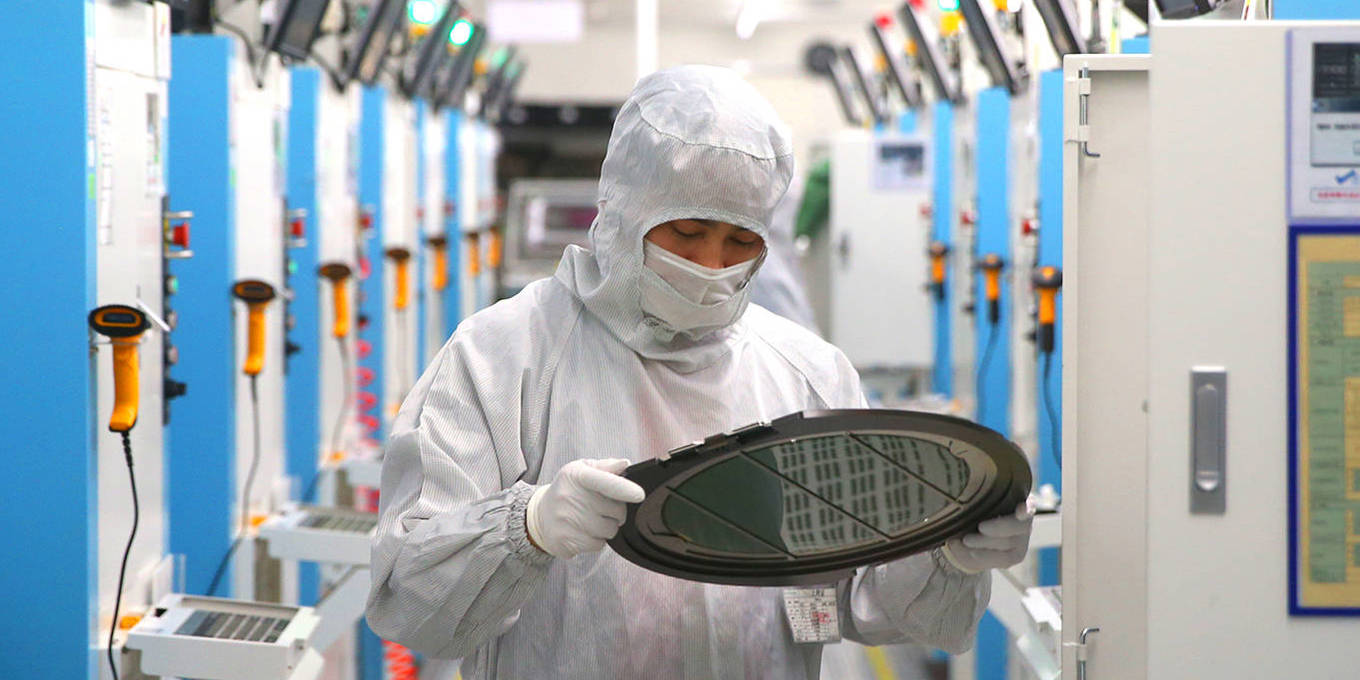
The AI infrastructure race is becoming less a contest over model design alone and more a competition for computing power, advanced semiconductors and the physical systems needed to deploy artificial intelligence at scale, according to Antonin Bergeaud and Robin Rivaton in a July 31, 2026 essay for Project Syndicate.
Bergeaud and Rivaton argue that the terms of competition have changed as artificial intelligence moves from scientific discovery toward broad deployment. In their account, leadership now depends not only on building better models, but also on securing the hardware, data-center capacity and large addressable markets needed to justify large capital spending.
The authors frame the shift as a move from software-led progress to an infrastructure-heavy phase. Advanced semiconductors supply the processing capacity used to train and run large AI systems, while physical infrastructure provides the power, facilities and networks that allow those systems to serve users at scale. The essay says market size also matters because the required investments are substantial.
What is the AI infrastructure race?
The AI infrastructure race is the competition to control or access the inputs that make large-scale AI deployment possible: computing capacity, advanced chips, data centers and the markets that can support their cost. Bergeaud and Rivaton present those inputs as increasingly decisive as AI tools move from research labs into mass-market use.
The essay traces the present AI boom through three milestones. It notes that transformer architecture, which underpins today’s large language models, was introduced in 2017. By 2020, researchers had described the basic scaling logic behind modern AI development: more computation and more data tend to produce more capable models in predictable ways.
The third milestone cited by the authors was the public launch of ChatGPT in late 2022. They write that the product demonstrated mass-market demand for generative AI and triggered an international contest for leadership in the field.
That sequence helps explain why the authors place new weight on silicon and infrastructure. If better performance requires more computation and data, then access to specialized chips and the facilities that house them becomes a strategic constraint. In that framing, scientific breakthroughs remain relevant, but deployment capacity becomes a central measure of competitive strength.
The argument also points to a broader economic issue for governments and companies. As AI systems require more capital-intensive infrastructure, the ability to finance, build and utilize that capacity may shape which countries and firms can turn AI research into commercial and strategic advantage. Bergeaud and Rivaton’s conclusion is that the AI race is increasingly being decided outside the model layer, in the industrial base that supports it.
This story draws on original reporting from Project Syndicate.