Ancient Greek oligarchy frames a warning on US minority rule
Matt Simonton links classical Greece’s elite regimes to modern US concerns over wealth, institutional veto points and the Senate filibuster.
By David L. Chen · Senior Columnist
· 3 min read
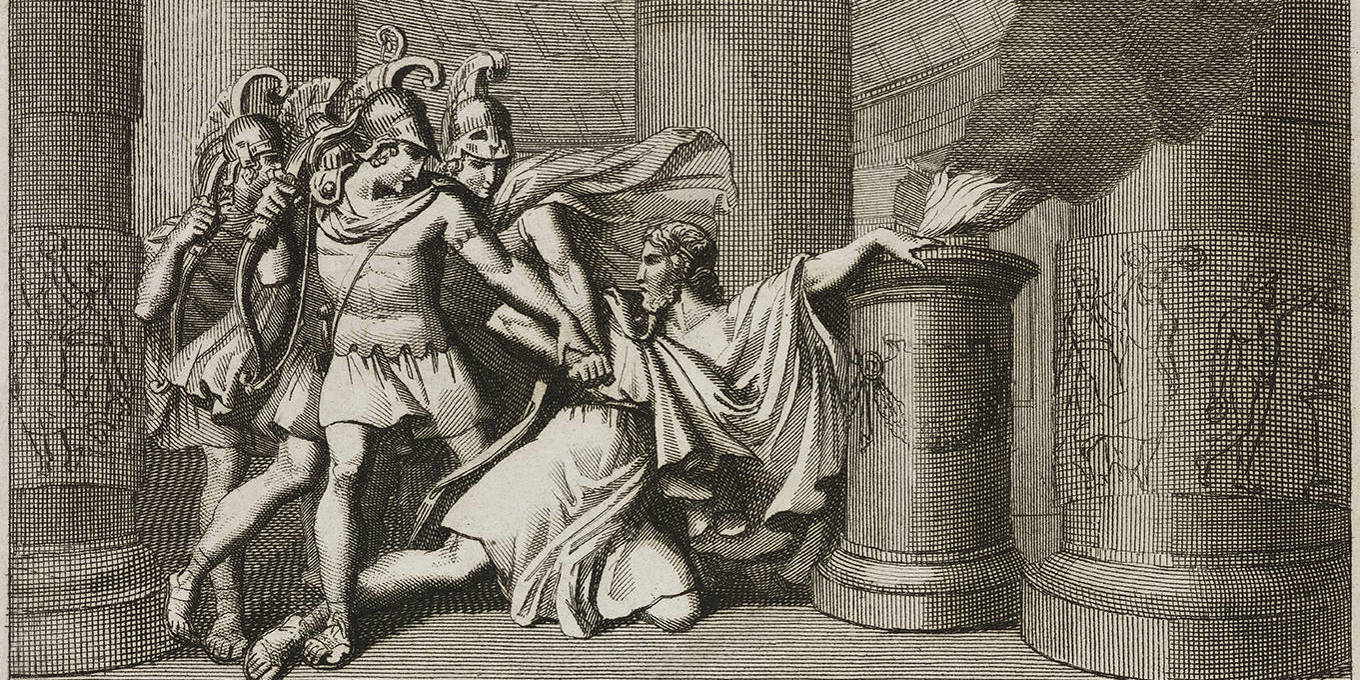
Matt Simonton has drawn on the 403 BCE restoration of democracy in Athens to argue that oligarchy’s central mechanism is institutional power held by a small minority. Writing for Project Syndicate, he connects that ancient history to US debates over wealth, technology power and legislative gridlock, citing a Senate filibuster that lets two-fifths of senators block bills.
Simonton begins with Athens after the 27-year Peloponnesian War, when the city surrendered to Sparta and an authoritarian regime known as the Thirty took control. According to his account, the Thirty executed more than 1,500 people before a democratic resistance, including working-class resident foreigners and slaves, defeated the regime after nearly a year of civil war.
The episode, he argues, illustrates a broader pattern in classical Greece: oligarchy, or rule by the few, often depended less on popularity than on institutions designed to preserve elite control.
Greek oligarchy as an institutional system
Simonton cites the contested story of a marble grave marker for Critias, a leader of the Thirty and an older relative of Plato. An ancient Greek commentator described the monument as showing Oligarchy setting Democracy on fire, with an epitaph praising men who had restrained the Athenian people.
No physical trace of the monument remains, and Simonton notes that some scholars doubt it existed. Even so, he argues that the account captures a political conflict that shaped much of the Greek world. Aristotle wrote in The Politics that most constitutions were either democratic or oligarchic, and Columbia University historian John Ma has described roughly 460 to 360 BCE as a “Hundred Years’ War” between the two systems, according to Simonton.
Greek oligarchies often used property thresholds to limit office-holding to a minority of male citizens. Simonton estimates that such rules may have restricted formal political access to the wealthiest 10% to 15% of that population. He also notes Aristotle’s view that oligarchy and democracy referred to rule by the rich and the poor, respectively, as well as to rule by the few and the many.
Simonton describes several tools used to maintain oligarchic control: co-opting prominent opponents, rewarding informants, restricting movement in central civic spaces and relying on foreign allies. Sparta, he writes, was known for intervening to support oligarchic regimes.
US parallels and the filibuster
The term oligarchy returned to US political debate in the 2010s, Simonton writes, citing Occupy Wall Street and Bernie Sanders’s 2016 presidential campaign. He also points to former President Joe Biden’s January 2025 farewell address, in which Biden warned of “an oligarchy … of extreme wealth, power, and influence” threatening US democracy.
Simonton argues that early US constitutional debate shifted attention away from a democracy-versus-oligarchy frame and toward concerns about the rule of law and majority tyranny. He cites Alexander Hamilton’s warning in Federalist 22 that requiring more than a majority for decisions gives a minority a negative over the majority.
That logic, Simonton says, now applies to the Senate filibuster. Because two-fifths of the Senate can block legislation, and may represent about 10% of the US population, he characterizes the rule as a de facto veto for a small minority.
Simonton’s conclusion is that institutional design, rather than open public support for elite rule, is the key continuity between ancient oligarchies and present US concerns. He argues that maintaining such veto points allows concentrated power to shape policy outcomes even when democratic majorities favor action.
This story draws on original reporting from Project Syndicate.