Ricks calls for UN-led debt and tax reforms to rebalance global finance
Jenny Ricks says sovereign debt, corporate tax and illegitimate borrowing rules should be redesigned to give poorer countries more fiscal room.
By Ingrid Halvorsen · Venture Capital Reporter
· 3 min read
Jenny Ricks has called for binding United Nations mechanisms on sovereign debt, international taxation and disputed public liabilities, arguing that current global financial rules constrain fiscal policy in countries with limited bargaining power. In a July 2 commentary for Project Syndicate, Ricks cited Malawi’s interest bill, reported at 43% of government revenue, as evidence of how debt-service costs can crowd out public spending.
Ricks linked the reform agenda to a broader political concern: that international institutions are losing legitimacy when those most affected by cross-border financial decisions have little influence over them. She pointed to Brazilian President Luiz Inácio Lula da Silva’s April remarks at the first Global Progressive Mobilisation meeting, where he connected democratic resilience with citizens’ expectations of material improvement.
The argument comes amid renewed debate over how multilateral institutions measure economic progress and allocate financial burdens. Ricks noted that UN Secretary-General António Guterres launched the Counting What Counts report in May, which says gross domestic product remains useful but is too narrow to capture social and environmental priorities. Guterres said metrics should be aligned with policy goals rather than proxies that conceal global challenges, according to the report.
Debt restructuring at the UN
Ricks said a binding UN framework for sovereign-debt workouts would shift negotiations away from creditor-led forums and give borrowing countries a formal role in rulemaking. Under her proposal, a restructuring process could include automatic pauses on payments once talks begin, similar treatment for public and private creditors, and independent assessments of whether a country can service its debt while meeting health and climate obligations.
She contrasted that approach with existing arrangements. The Paris Club, a group of official creditors, does not include China as a member. The G20 Common Framework for Debt Treatments has faced delays, which Ricks attributed in part to the voluntary nature of private bondholder participation.
A UN process, she argued, could place all creditors inside one procedure. In practical terms, such a framework would try to prevent holdout creditors from seeking better terms outside a restructuring and would clarify how losses are shared among lenders.
Tax rules and wealth levies
Ricks also identified the UN Framework Convention on International Tax Cooperation as a venue for rewriting global tax rules. She said an ambitious agreement would establish a minimum effective corporate tax rate to limit profit shifting and require automatic exchange of financial information among countries.
She acknowledged that the OECD and G20 Inclusive Framework on Base Erosion and Profit Shifting advanced a global minimum corporate tax. Ricks said that effort has been weakened by the exemption of American multinationals, citing earlier Project Syndicate analysis.
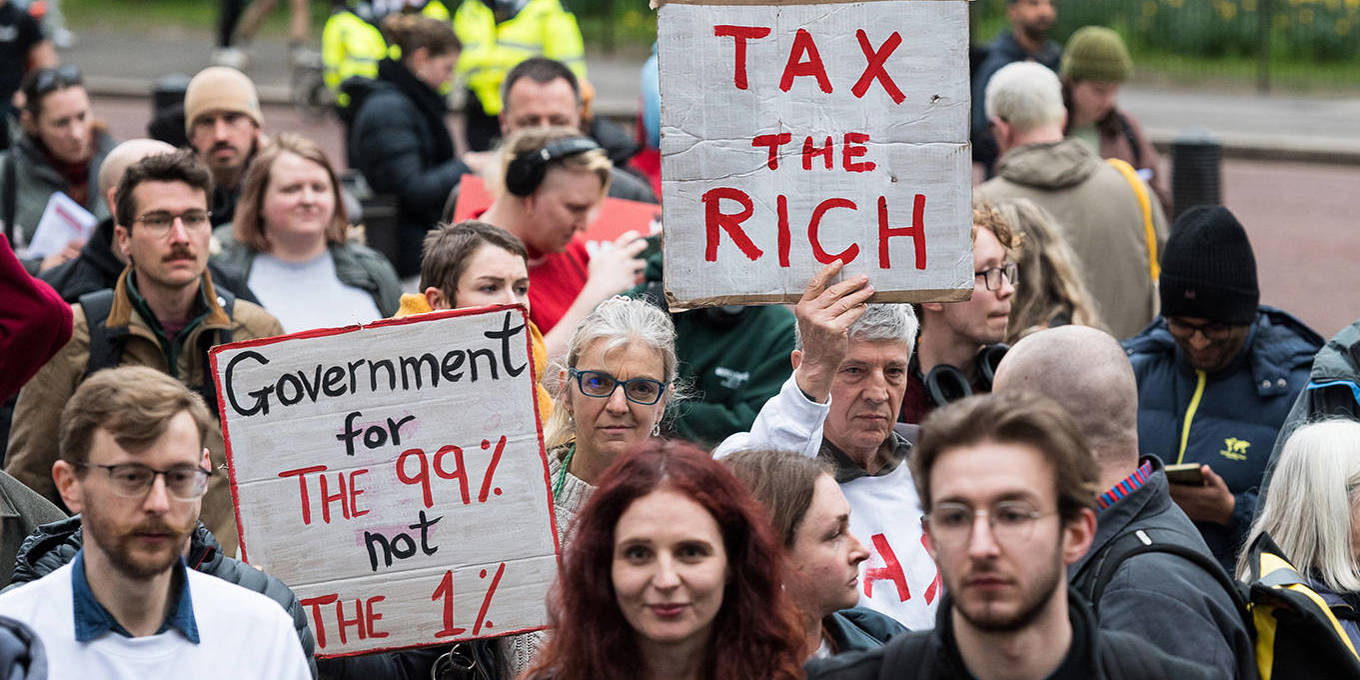
On wealth taxation, Ricks pointed to Brazil’s 2024 G20 proposal for a coordinated levy on extreme fortunes. Brazil said at the time that a 2% annual tax on billionaires could raise up to $250 billion a year. Ricks argued that the technical capacity to impose such measures exists, while political control over those tools remains contested.
Disputed debts and domestic pressure
A third element of Ricks’s agenda is a standing process to assess whether sovereign debts were contracted through fraud or against the public interest before citizens are required to repay them. She cited Malaysia’s 1MDB scandal, in which billions of dollars were looted while major banks earned fees from bond issues, as an example of losses being transferred to the public.
Ricks said reform cannot be delivered only through international summits. She argued that governments promoting wealth levies abroad, including India, Brazil and France, have at times pursued austerity or avoided stronger taxation of rich households domestically. In her view, citizen movements are needed both at home and in global forums to press governments to follow through on commitments.
This story draws on original reporting from Project Syndicate.