Portfolio balance vs loanable funds: two views of real rates
A teaching note compares how loanable funds and portfolio balance explain deficit-driven rate rises and private-investment pressure.
By David L. Chen · Senior Columnist
· 3 min read
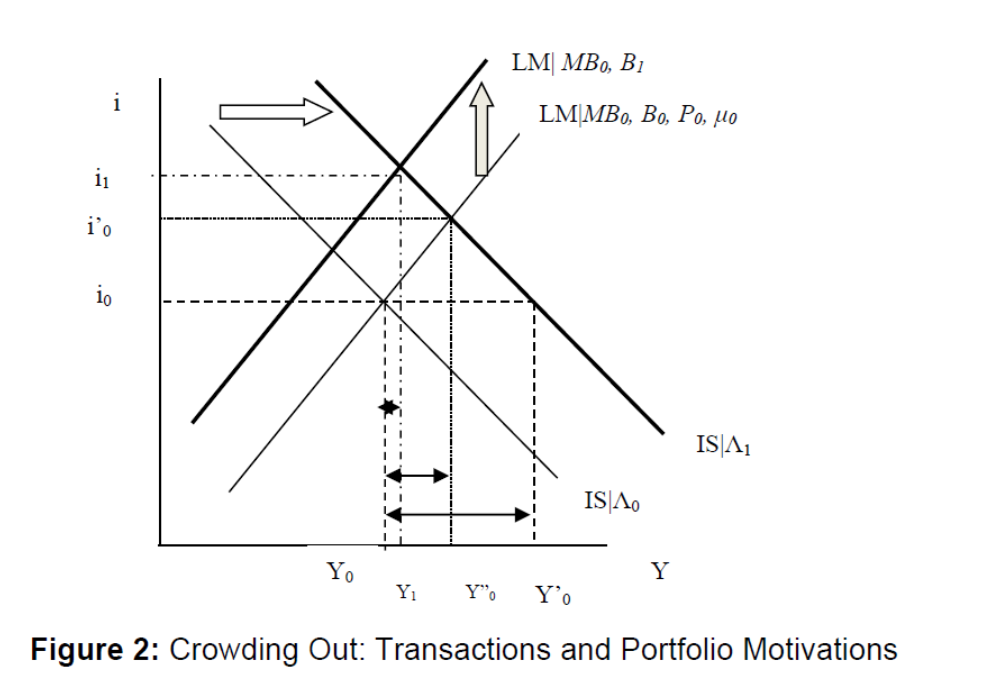
The portfolio balance vs loanable funds debate offers two ways to explain why a larger government deficit can push up real interest rates and weigh on private investment. An August teaching note from Econbrowser says both frameworks point to higher rates, but they begin with different markets and different adjustment mechanisms.
The loanable-funds framework treats the real interest rate, adjusted for inflation, as the price that brings saving and investment borrowing into balance. In the closed-economy simplification, national saving equals investment. National saving combines private saving with public saving, defined as tax revenue minus government spending, according to an educational explainer by Ryan O'Connell.
How do portfolio balance and loanable funds explain higher rates?
In the standard loanable-funds diagram, the vertical axis is the real interest rate and the horizontal axis is the quantity of funds. Saving supplies funds, while borrowing for investment creates demand, as described by ReviewEcon and O'Connell. A deficit makes public saving negative when spending exceeds tax revenue, reducing national saving. The resulting tighter supply of funds raises the equilibrium real rate and can leave fewer private projects able to borrow at a viable cost.
The same fiscal episode can also be drawn as government borrowing adding to demand for funds or saving, an alternative convention used in the Econbrowser teaching note. The accounting emphasis differs, but the instructional result is the same: more government financing needs can raise rates and put pressure on private investment.
Portfolio balance instead starts with investors' holdings of assets. The Econbrowser note frames the issue around demand for money, bonds and outside wealth. If the government issues more debt, investors must be willing to hold a larger quantity of bonds. In the setting specified by the note, one focused on outside assets and without Ricardian equivalence, the yield on government debt adjusts to produce that willingness to hold it.
That distinction changes the causal language. Loanable funds foregrounds economy-wide saving and investment. Portfolio balance foregrounds asset composition, liquidity preference and the substitutability of government bonds with other securities. A bond differs from a loan in its funding channel: government bonds are securities held by a range of investors, making the composition of their portfolios central to the latter account.
What can the two models establish?
Neither framework, on the evidence available, settles which force best explains a particular increase in real rates. Belton Fleisher and Kenneth Kopecky argued in a 1987 Journal of Economic Education article that loanable funds is substantively equivalent to more commonly used IS-LM teaching while being easier for students to grasp. That was the authors' pedagogical argument, rather than an empirical verdict.
Contemporary Treasury-market developments add a reason to consider asset substitutability, without proving either model. In an August paper, Hanno Lustig argues that Treasurys' safety premium has eroded and that they have become closer substitutes for AAA corporate bonds, particularly at longer maturities. The Econbrowser note also cites journalistic accounts that have identified corporate credit demand, particularly AI-related capital expenditure, as a possible influence on rates. Those observations broaden the question beyond fiscal deficits, but the material does not provide a formal test between the two introductory models.
This story draws on original reporting from Econbrowser.