Trump tariff threat over Canadian smoke raises climate trade concerns
Vera Songwe argues the US-Canada dispute could recast climate damage as a trade and security issue, with wider implications for global claims.
By David L. Chen · Senior Columnist
· 3 min read
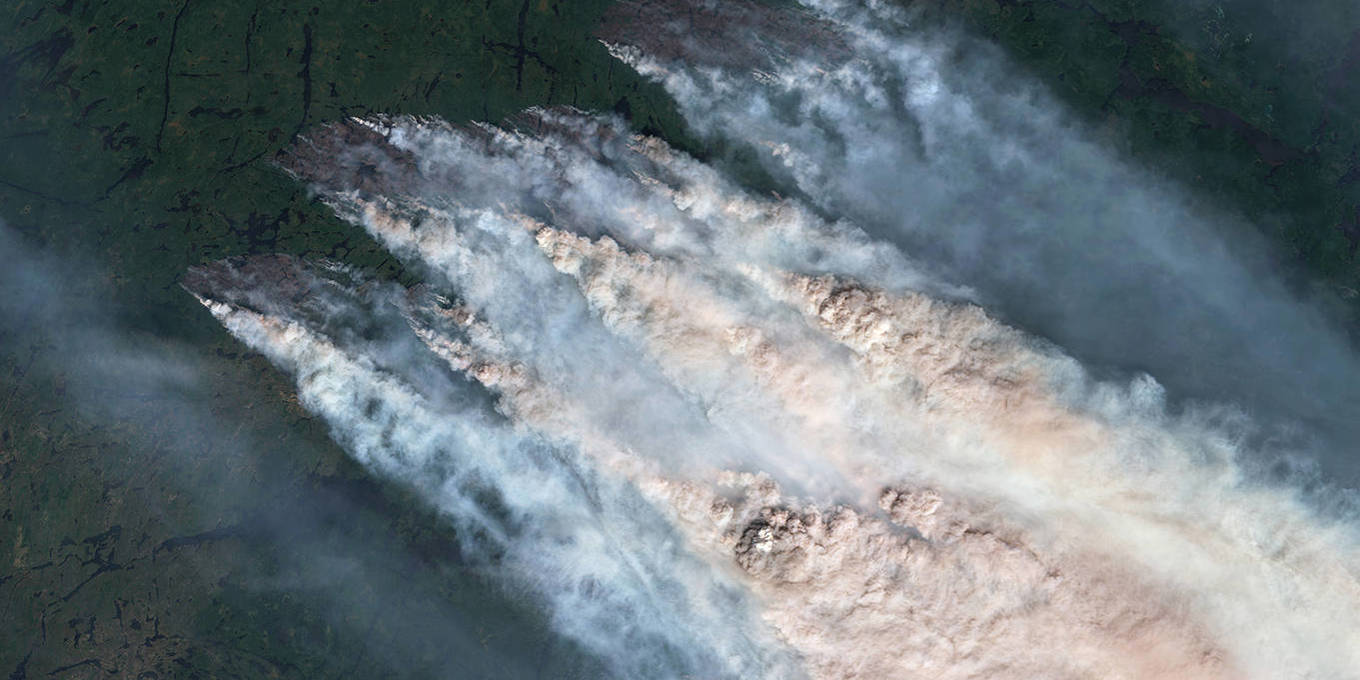
President Donald Trump’s move to link Canadian wildfire smoke to higher tariffs has turned a cross-border climate harm into a trade dispute between two G7 economies, according to Vera Songwe. The argument could affect how governments price climate damage, assign responsibility and use market access as leverage.
Songwe, writing for Project Syndicate, said Trump responded to smoke from hundreds of Canadian wildfires by accusing Canada of allowing an “unnecessarily invaded” flow of pollution into the United States. She said the administration attributed the smoke to alleged Canadian negligence in forest management and sought compensation through tariffs.
The mechanism is direct. A tariff raises the cost of imports from the targeted country, shifting part of the claimed damage onto exporters and consumers through the trade system. In Songwe’s analysis, that makes climate harm a border issue rather than only an insurance, disaster-relief or emissions-accounting question.
Songwe described the episode as the first international climate-security conflict because a major power is attempting to price transboundary climate damage unilaterally. She noted that the dispute involves Canada, a US ally and neighbour, rather than a developing economy with limited geopolitical power.
Climate attribution and claims
The commentary contrasted the US-Canada dispute with flooding in southern Africa that began in mid-December 2025. Songwe cited UN-SPIDER data showing flooding in Mozambique’s Gaza province affected more than 700,000 people, displaced more than 200,000 and left an estimated 300 people dead.
World Weather Attribution concluded that climate change made the rainfall about 40% more intense, according to Songwe. She argued that disasters in developing regions are generally treated as the result of a broad global failure, with no specific state billed for the loss.
Songwe said the Canadian smoke dispute may give other countries an argument for claims linked to climate damage that crosses borders. She pointed to small island states’ efforts at the International Court of Justice, as well as work by the V20 and the United Nations loss-and-damage fund, as existing forums for assigning responsibility and financing responses.
The broader risk, in her account, is that governments with economic leverage could use climate attribution selectively. She cited shared Himalayan-fed rivers among India, Pakistan and China, Mekong River tensions involving six countries, Saharan dust moving from Mauritania into Senegal and migration pressure on Europe as examples of climate stresses that could become interstate disputes.
Markets, insurance and policy design
Songwe warned that a fragmented response could be costly. She cited research indicating that a European “fortress” approach would slow decarbonisation and leave the region with about 14% less potential output by 2050.
She also said insurers are already concerned that financial fragmentation is trapping capital within borders, creating regional risk pools that are too concentrated to spread losses effectively. Tariff-based responses to climate damage would accelerate that trend, she argued.
Songwe proposed three policy responses: treating resilience as shared security, creating science-based systems to assess cross-border climate harm before disputes escalate and preventing national sovereignty arguments from undermining decarbonisation. She said trade rules should separate valid carbon levies from coercive climate protectionism.
She also argued for carbon-market structures that connect emissions, market access and finance for adaptation in a more predictable way. Her central warning was that climate damage is moving from scientific and development forums into the realm of trade power, where the strongest states may shape the bill.
This story draws on original reporting from Project Syndicate.