EU trade push meets heat-driven demand for Chinese cooling units
Brussels wants progress on its China trade deficit by October as a European heat wave lifts demand for air conditioners largely supplied by Asian manufacturers.
By Sarah Jenkins · Chief Macro Economics Correspondent
· 3 min read
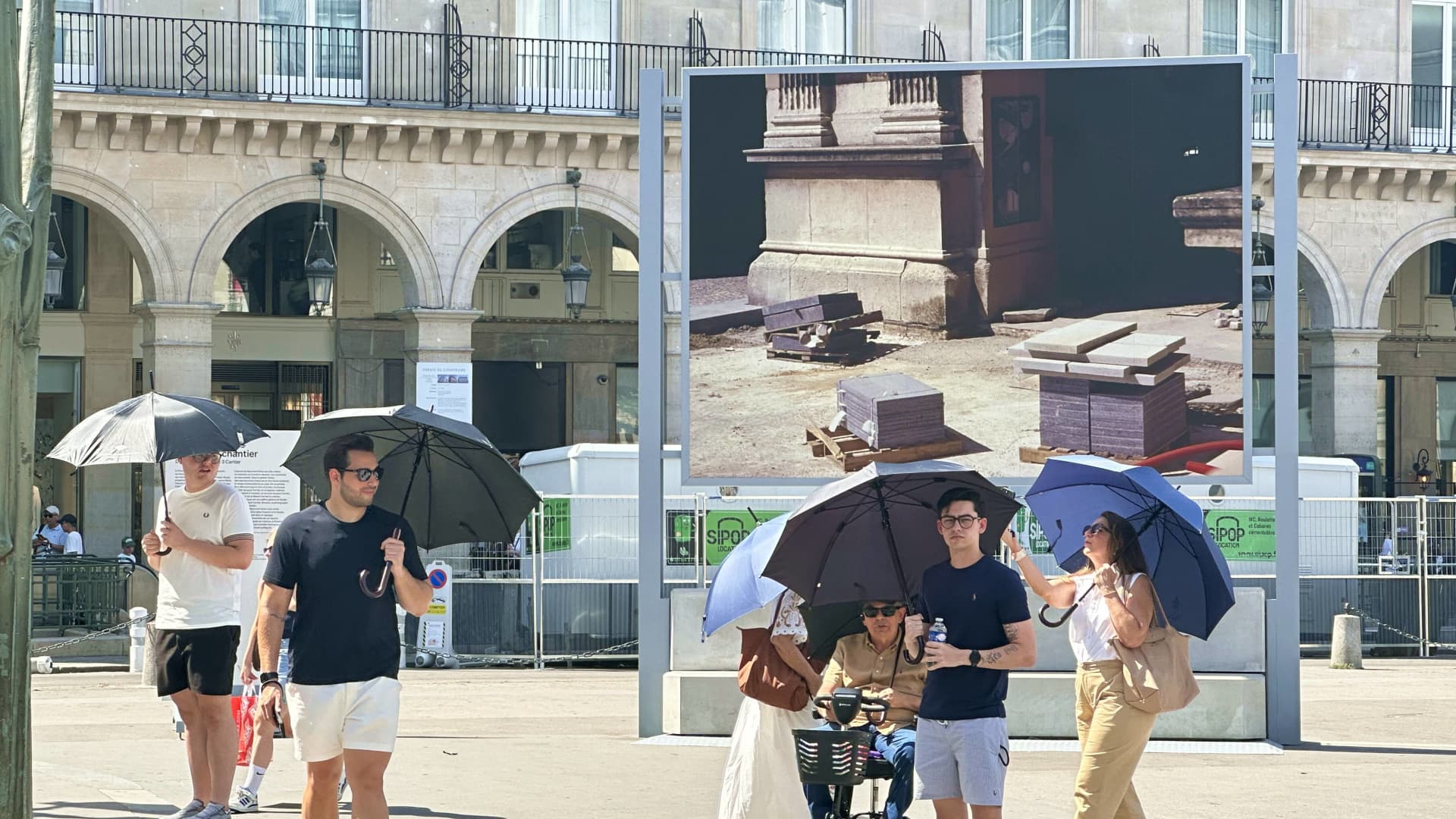
The European Union is seeking measurable progress by October on a goods trade deficit with China that reached €360 billion last year, even as record summer heat increases European demand for Chinese-made air conditioners. The mismatch highlights the pressure on Brussels as it tries to reduce industrial dependence while households look for lower-cost cooling equipment.
The EU and China issued a joint statement on Monday after talks in Brussels between European trade chief Maros Sefcovic and Chinese Commerce Minister Wang Wentao. Sefcovic told reporters that disputes over market access, export controls, intellectual property and trade imbalances should produce “tangible results” by October.
The two sides also agreed to create a bilateral working group to track trade flows. According to the European Commission, Beijing gave assurances that existing export controls on rare earths and permanent magnets would not interrupt EU supply chains.
EU data show the scale of the challenge. Eurostat said the bloc’s goods deficit with China rose 15% to €360 billion, or about $410 billion, last year, with all 27 member states running a shortfall. The deficit widened to €98 billion in the first quarter, the highest level since 2022. Electrical equipment and machinery are among the largest categories of imports.
Sefcovic said Chinese exports to the EU continue to rise while European market share in China declines, calling the pattern unsustainable. China’s commerce ministry has previously signalled that Beijing would respond to new trade restrictions aimed at Chinese industrial overcapacity.
Cooling demand exposes an industrial gap
Air conditioners have become a visible example of Europe’s reliance on imported consumer technology. The International Energy Agency has estimated that air-conditioning ownership in Europe is about 20% of households, compared with nearly 90% in the United States.
Asian manufacturers are competing to supply that gap. Midea Group reportedly said orders for its PortaSplit portable split air-conditioning system in Western Europe had exceeded 200,000 this year as of Monday, twice the pace recorded in 2025. A German inventory-tracking website built by software developer Adrian Kübel showed Midea units were largely sold out after gaining attention on social media.
Euromonitor International said none of Europe’s five leading air-conditioner brands by retail volume is EU-owned. Chinese groups Haier, Gree Electric Appliances and Midea together held about 32% of the European market in 2025, while Turkey’s Beko and Japan’s Daikin completed the top five.
Midea’s product design shows how suppliers adapt to Europe’s fragmented rules on buildings and facades. The PortaSplit outdoor unit attaches to a window bracket, requires no drilling and is treated as furniture rather than a permanent fixture, allowing it to avoid some facade-modification restrictions in cities such as Paris. Its refrigerant charge is 1.99 kilograms, just below France’s 2-kilogram limit.
Policy tools remain targeted
Analysts cited by CNBC said they saw limited evidence that Beijing had made commitments strong enough to reduce the surplus. Gabriel Wildau, managing director at Teneo, said European concern over Chinese pressure on industry appeared to have reached a turning point, while China’s leadership had shown limited willingness to ease those concerns.
Alicia García Herrero, chief economist at Natixis, said China had not committed to import quotas or a clear implementation system. Denis Depoux, global managing director at Roland Berger, said half of EU imports from China are technology products, including cars and advanced machinery, a reversal he described as troubling for European industry.
The European Commission has said the current trade pattern cannot continue. Recent EU steps include restrictions on funding for solar projects using Chinese-made components and the removal of a tax exemption for low-value parcels used by online retailers such as Temu and Shein.
Andrew Small, director at the European Council on Foreign Relations, said any EU measures were likely to focus on sectors where Chinese competition threatens critical industries or where dependency could be used as leverage. He named rare earths, chemicals, autos and heavy machinery, and said there was no discussion of broad tariffs across all Chinese goods.
This story draws on original reporting from CNBC.