US adds 50,000 jobs in December as prior months are revised lower
Calculated Risk called the December employment report weak, citing 50,000 new jobs, lower prior-month revisions and a 4.4% unemployment rate.
By Ingrid Halvorsen · Venture Capital Reporter
· 3 min read
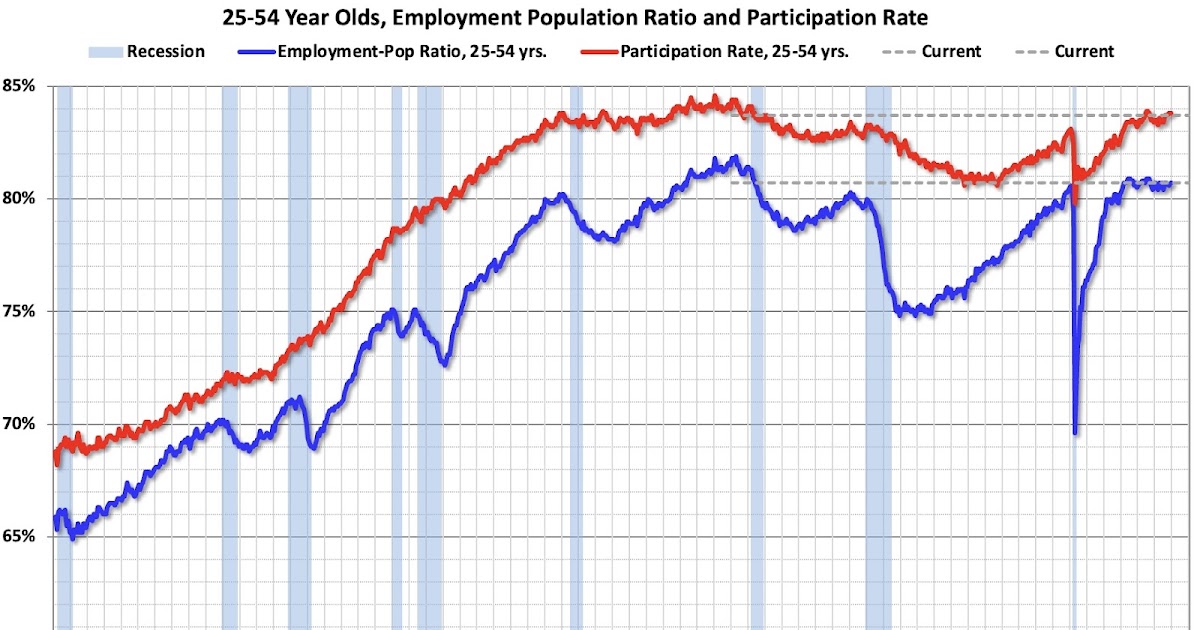
The US economy added 50,000 jobs in December, while payroll estimates for October and November were cut by a combined 76,000, according to figures discussed by Calculated Risk. The unemployment rate fell to 4.4%, but the blog said the headline payroll gain came in modestly below expectations and characterized the report as weak.
The data point to a labor market with limited payroll momentum but still-elevated participation among prime-age workers. Several underlying measures, including part-time employment for economic reasons and long-term unemployment, remained above their pre-pandemic or recent lows, according to the Bureau of Labor Statistics figures cited by Calculated Risk.
Prime-age employment remains high
Calculated Risk focused on workers aged 25 to 54 because that group is less affected by demographic shifts such as population aging or younger people staying in education. The broader labor-force participation rate can move for both cyclical reasons, such as recessions, and structural reasons, which can make prime-age measures a cleaner read on labor-market attachment.
The participation rate for workers aged 25 to 54 was 83.8% in December, unchanged from November, according to Calculated Risk. The employment-population ratio for the same age group rose to 80.7% from 80.6% a month earlier.
Calculated Risk said both prime-age measures have eased slightly from their recent highs but remain close to their strongest readings of this millennium. The employment-population ratio measures the share of people in a given age group who are employed, rather than only those participating in the labor force.
Wage growth ticks up from November
Average hourly earnings for all private-sector employees were up 3.8% from a year earlier in December, compared with a 3.6% annual increase in November, according to Current Employment Statistics data cited by Calculated Risk.
Wage growth has moderated from a recent peak of 5.9% year over year in March 2022, Calculated Risk said. The blog also noted that the early-pandemic wage spike reflected a compositional effect, as lower-paid workers were disproportionately displaced, before that distortion reversed a year later.
Underemployment remains above pre-pandemic level
The number of people working part time for economic reasons fell to 5.34 million in December from 5.49 million in November, according to BLS data cited by Calculated Risk. The BLS category covers people who would prefer full-time roles but are working shorter hours because their hours were reduced or because they could not find full-time work.
Calculated Risk said the December level remains well above pre-pandemic readings and near the highest levels seen since mid-2021. These workers are included in the U-6 measure of labor underutilization, a broader gauge than the headline unemployment rate because it includes part-time workers for economic reasons and other forms of labor-market slack.
U-6 declined to 8.4% in December from 8.7% in November, according to Calculated Risk. That compares with a record 22.9% in April 2020, a series low of 6.6% in December 2022 and a pre-pandemic level of 7.0% in February 2020. The seasonally adjusted series began in 1994.
Long-term unemployment also remained elevated relative to recent lows. The BLS reported 1.95 million workers unemployed for more than 26 weeks who still wanted a job, up from 1.91 million in November, according to Calculated Risk. That figure is below the post-pandemic high of 4.171 million but above the recent low of 1.056 million and above pre-pandemic levels.
This story draws on original reporting from Calculated Risk.