Delta keeps 2026 profit target as fare gains offset fuel costs
The airline beat second-quarter estimates and said it expects to recover more of its fuel bill through ticket prices this quarter.
By Sarah Jenkins · Chief Macro Economics Correspondent
· 3 min read
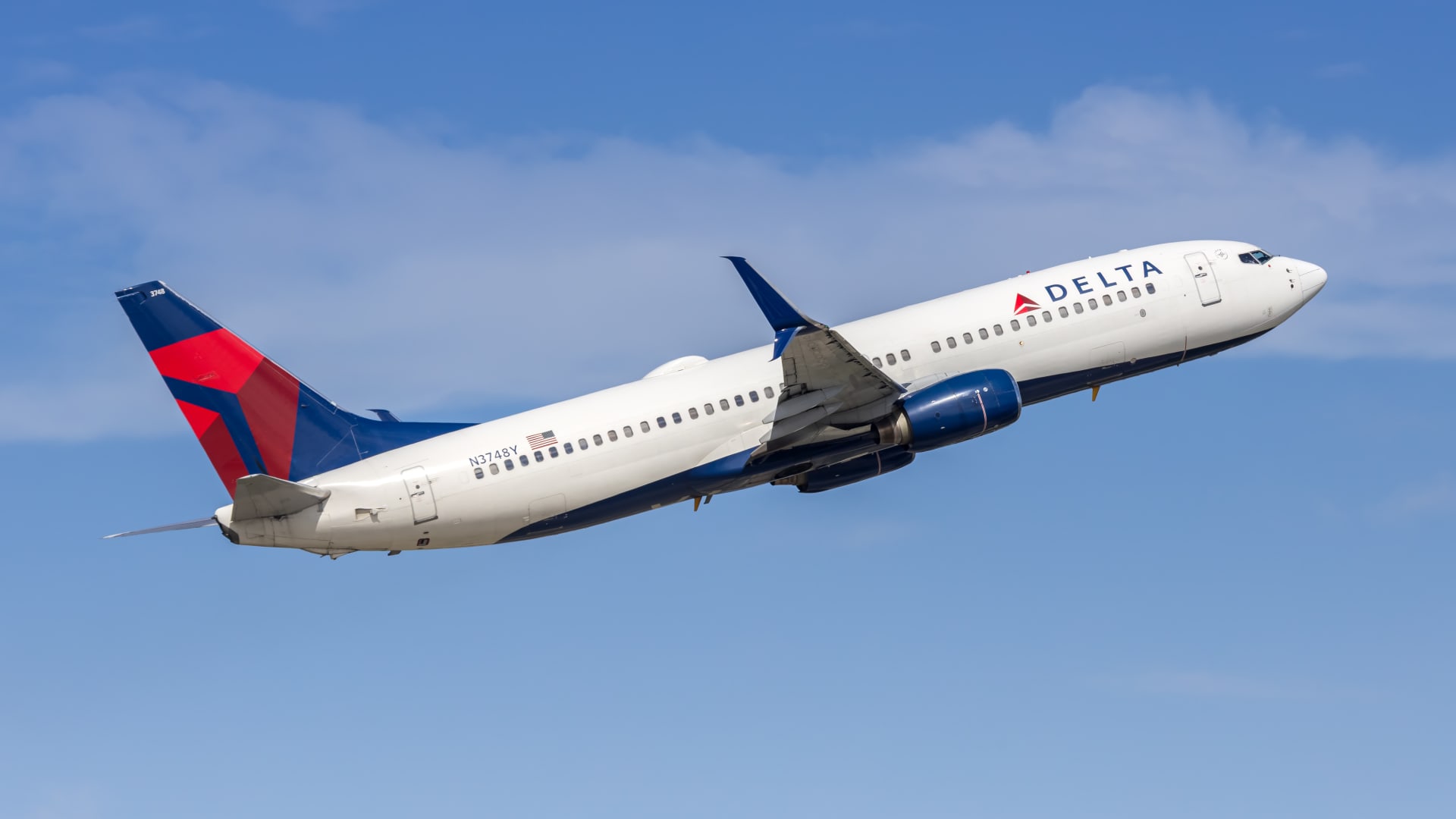
Delta Air Lines reaffirmed its 2026 profit target on Friday after second-quarter results topped Wall Street estimates, citing firm travel demand and higher fares that are helping absorb elevated fuel costs. Delta shares were indicated 3.31% higher after hours, according to CNBC quote data.
The carrier, the first large U.S. airline to report second-quarter results, forecast third-quarter earnings of $2.00 to $2.50 a share. Analysts polled by LSEG had expected $2.02 a share. Delta also projected revenue for the July-to-September quarter would rise in the mid-teens from the same period in 2025.
For the full year, Delta maintained the earnings outlook it issued in January, calling for $6.50 to $7.50 a share.
Chief Executive Ed Bastian told CNBC that Delta’s fare levels can hold even after oil prices ease from multi-year highs. He attributed that view to broad demand, a wider range of seat products and what he described as greater industry restraint on adding capacity when fuel prices fall.
Airlines have reduced growth plans and cut loss-making routes after a sharp rise in fuel costs this year, CNBC reported. Federal data cited by CNBC showed May airfares rose nearly 27% from a year earlier. Bastian told CNBC that Delta had passed about 60% of the higher fuel bill to customers and expected that figure to approach 100% in the current quarter.
Premium cabins lead revenue
Delta reported adjusted earnings of $1.56 a share for the second quarter, above the $1.48 expected by analysts in the LSEG consensus. Adjusted revenue was $17.67 billion, compared with expectations of $17.53 billion.
Premium products generated more revenue than standard coach seats during the quarter. Delta said premium ticket revenue, including first class, reached $6.92 billion, while main cabin revenue was $6.85 billion.
Bastian told CNBC that demand was strong across Delta’s customer base and said the airline benefits from serving higher-income travelers in what he called a K-shaped economy. He also said travel linked to the World Cup exceeded expectations, including demand from visitors entering the United States.
In its earnings release, Delta said corporate travel increased in the second quarter, led by aerospace and defense, banking and automotive customers.
Costs still outpace unit revenue gains
Delta’s revenue per available seat mile, a common airline measure of revenue generated for each seat flown, rose 17% from a year earlier. Its cost per available seat mile increased 21% over the same period, reflecting the pressure from fuel and other expenses.
On a reported basis, net income fell 25% from a year earlier to $1.6 billion, or $2.44 a share. Operating revenue increased 19% to $19.76 billion.
After adjustments for one-time items, including third-party refinery sales, Delta posted earnings of $1.03 billion, or $1.56 a share.
The company’s Trainer, Pennsylvania, refinery also contributed to revenue growth. Delta said revenue from the facility rose 83% to $2.09 billion in the quarter.
Delta’s results offer an early read on the U.S. airline sector after a period of higher fuel prices, fare increases and tighter capacity plans. The company’s guidance indicates management expects ticket demand and fare pass-through to remain sufficient to support its full-year profit range.
This story draws on original reporting from CNBC.


