Experts link Ebola response gaps in Congo and Uganda to aid cuts
The outbreak has caused more than 1,400 confirmed cases and 440 deaths, with specialists saying reduced foreign aid has slowed containment.
By Marcus V. Thorne · Markets Editor
· 3 min read
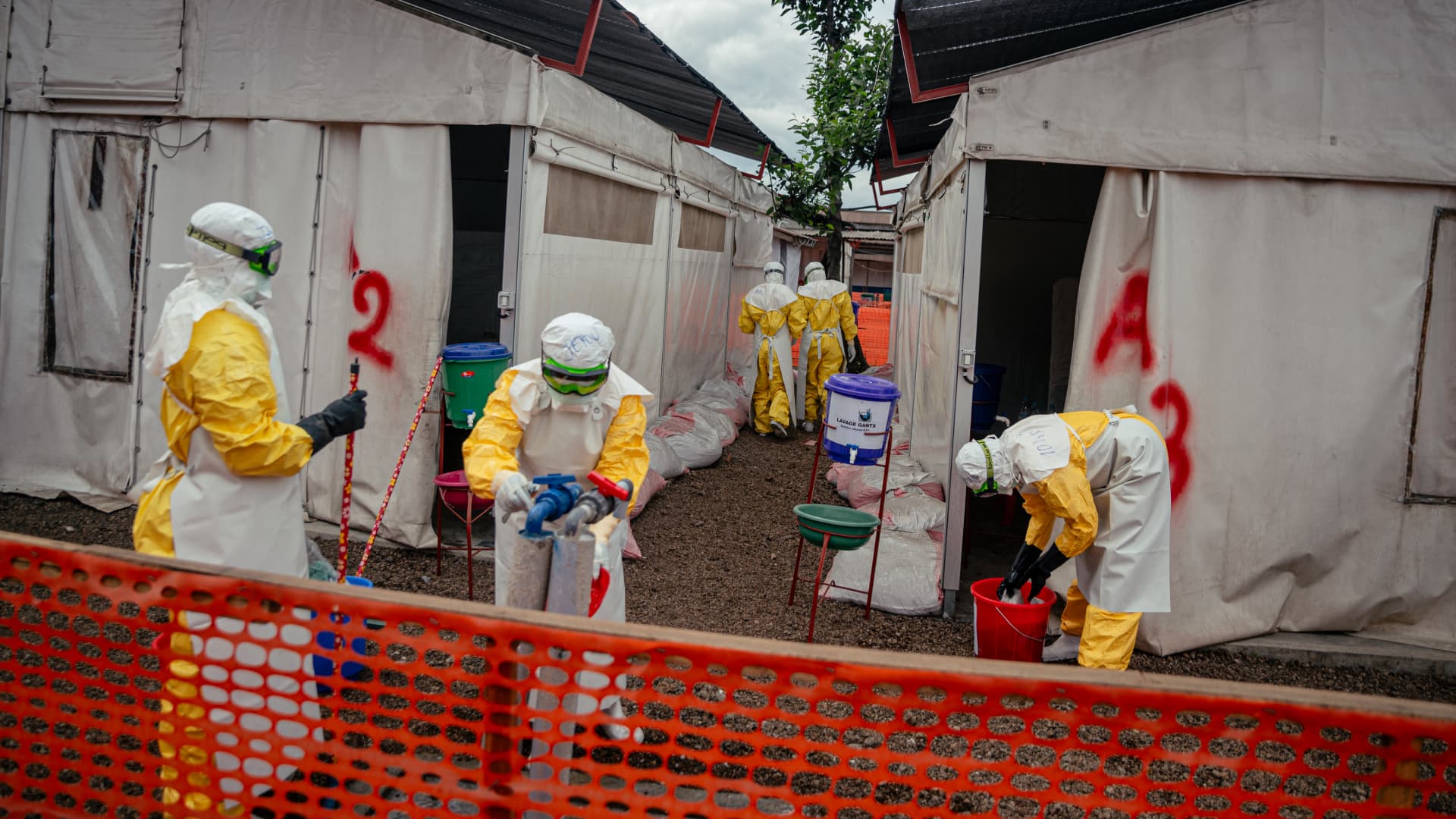
Authorities in the Democratic Republic of the Congo and Uganda are confronting an Ebola outbreak that has produced more than 1,400 confirmed cases and 440 confirmed deaths, according to the U.S. Centers for Disease Control and Prevention. Aid agencies and infectious disease specialists say reductions in U.S. and Western foreign assistance have weakened the systems needed to detect cases, protect health workers and stop transmission.
The outbreak, declared in May after laboratory tests identified the Bundibugyo virus, is the 17th recorded in the DRC and the third-largest Ebola outbreak on record, the CDC says. No cases have been reported in the United States, while one case has been confirmed in France, according to the CDC data cited in the report.
Ebola spreads through contact with infected bodily fluids, contaminated objects, wild animals or contaminated meat. The disease is rare but severe, with a fatality rate of about 50%, according to public health authorities cited in the report. Containment relies on fast testing, isolation of infected patients, protective equipment for health workers, safe burials and contact tracing to identify people who may have been exposed.
A weaker response system
The International Rescue Committee warned early in the outbreak that, without urgent intervention, the current crisis could become the deadliest Ebola outbreak recorded. Bob Kitchen, the IRC’s vice president of emergencies, said in a statement that the DRC entered this outbreak “more fragile and less prepared” than during the 2018 to 2020 outbreak, which killed more than 2,000 people.
Kitchen said conflict and lower global aid funding had reduced protective capacity at a critical moment. “The risks are growing and the resources are shrinking; that is the brutal arithmetic facing global aid today,” he said.
The U.S. Agency for International Development officially closed last July, with most programs abolished and a smaller number moved into the State Department. The closure followed cuts made through the Department of Government Efficiency, the temporary body created by President Donald Trump after his return to the White House. Elon Musk initially oversaw DOGE’s work and has defended decisions to cut USAID. DOGE closed on July 4, 2026.
Foreign aid reductions have extended beyond Washington. Oxfam said last year that G7 countries, which account for about 75% of official development assistance, were expected to cut aid spending by 28% in 2026 from 2024 levels. Researchers at the Barcelona Institute for Global Health reported that French foreign aid was on course to fall by about one-third since 2023, Germany’s by more than 36%, and the U.K.’s by 45% from recent peaks.
Conflict and logistics strain containment
Angela Rasmussen, a virologist and science chair for the Save America Movement, told CNBC by email that cuts to USAID-backed infrastructure had “demonstrably worsened” the outbreak. She said violence, weak transport links and lower trust in aid workers had made contact tracing and patient care harder and, in some cases, dangerous.
Rasmussen said medical supplies funded by USAID, including gloves, personal protective equipment and body bags, were not reaching the areas hit hardest in Ituri province. She also said the loss of USAID-supported cold chain infrastructure had allowed swab samples to degrade on the way to testing facilities, delaying confirmation of cases.
Fighting in eastern DRC has added pressure. The Council on Foreign Relations says clashes involving Congolese forces, M23, Rwandan troops and other armed groups have contributed to one of the world’s largest humanitarian crises, with 1 million Congolese seeking refuge abroad and 21 million people inside the country urgently needing aid, including medical supplies.
Jade Le, chief of infectious diseases at Access TeleCare, told CNBC that aid cuts had “absolutely” made the outbreak harder to contain. She said USAID had supported training, testing kits, protective equipment and transport of samples to laboratories able to identify Ebola. CNBC said it contacted the U.S. government for comment on the impact of foreign aid cuts.
This story draws on original reporting from CNBC.