Ukraine strikes and Russian barrage sharpen market focus before NATO summit
Trump's weekend calls with Putin and Zelenskyy came as Ukraine hit Russian oil assets and Russia launched another large attack on Kyiv.
By Marcus V. Thorne · Markets Editor
· 3 min read
Investors entered the week watching the Russia-Ukraine war after a burst of diplomacy and military escalation coincided before a NATO summit in Ankara. The developments put geopolitical risk, energy security and European defence commitments back in focus for markets already weighing the economic costs of a prolonged conflict.
Over the weekend, U.S. President Donald Trump held separate discussions with Russian President Vladimir Putin and Ukrainian President Volodymyr Zelenskyy, according to accounts from Kyiv and Moscow. At the same time, Ukrainian forces reported strikes on Russian oil and naval facilities near St. Petersburg, while Russia carried out another large assault on Ukraine’s capital.
Trump contacts both sides
Zelenskyy said in a social media post on Saturday that he had discussed the battlefield situation with Trump and that the two leaders agreed to continue talks during the NATO summit. Leaders from 32 countries are expected in Turkey’s capital from Tuesday for a two-day meeting.
“There is a real prospect to put an end to this war, and America’s resolve is decisive,” Zelenskyy said in the post.
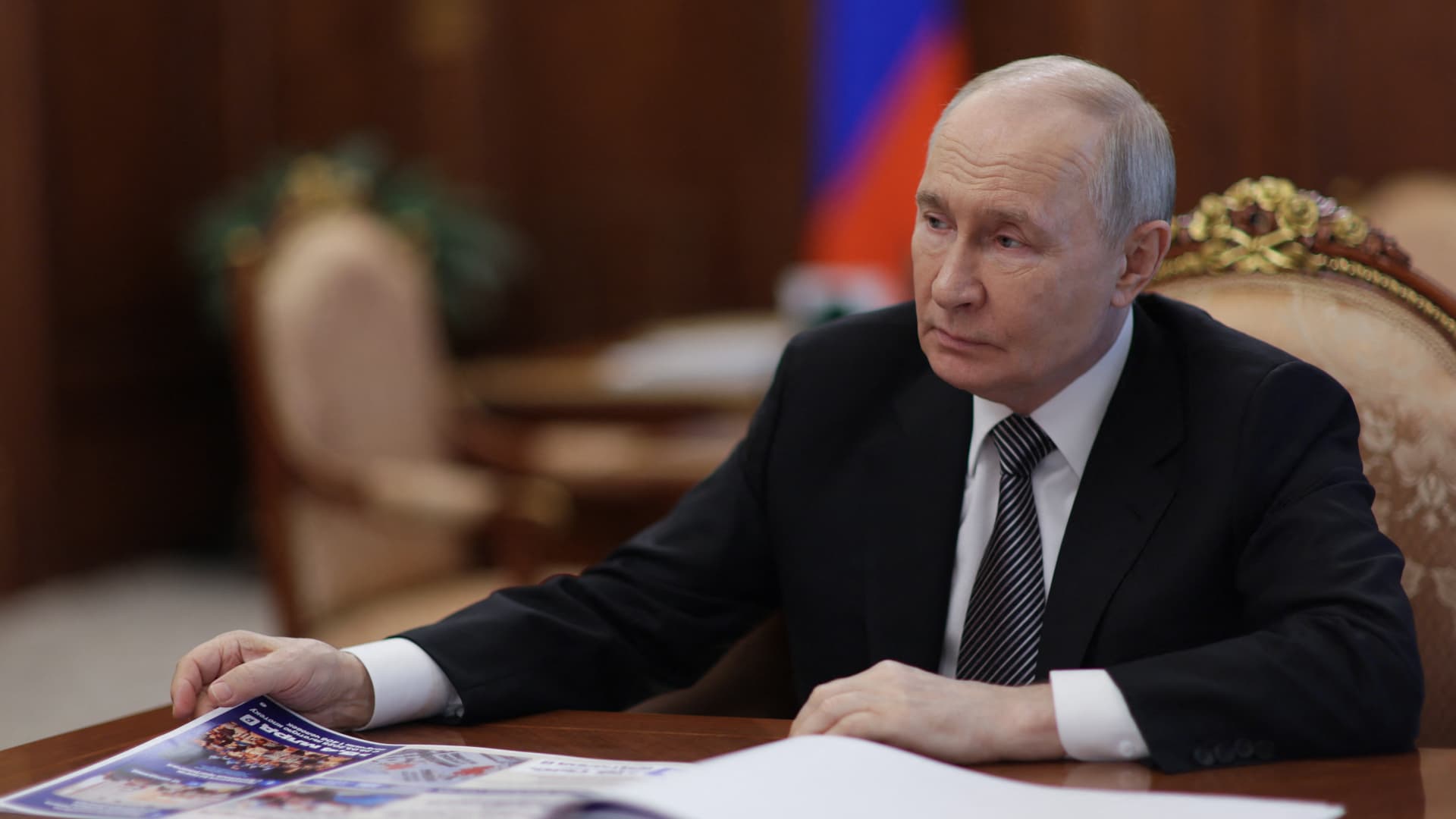
The Kremlin said on Sunday that Trump and Putin spoke for 90 minutes and that the U.S. president offered to help seek a resolution to the war. Yury Ushakov, a Kremlin aide, described the exchange as “businesslike and very constructive,” according to Russian state news agency RIA Novosti.
Ushakov told reporters that Trump linked closer U.S.-Russia economic cooperation to ending the conflict in Ukraine as soon as possible, RIA Novosti reported. A White House spokesperson was not immediately available to comment when contacted by CNBC on Monday.
Trump repeatedly said during the 2024 campaign that he could end the war quickly if returned to office. More recently, he has signaled possible renewed U.S. support for Kyiv after the signing of an interim peace deal with Iran, according to CNBC.
Oil and military sites targeted
Ukrainian officials said their forces struck a major oil terminal in St. Petersburg and the Kronstadt Naval Base, the main base of Russia’s Baltic Fleet, on Friday and Saturday. The reported attacks caused fires at both the oil terminal and the military site.
Ukraine has increased attacks on Russian oil facilities and military assets in recent weeks. Kyiv has sought to reduce Moscow’s energy revenues and raise pressure on the Kremlin, according to the reporting.
Those attacks matter to investors because energy infrastructure is both a revenue source and a logistics network. Strikes on terminals, refineries or storage sites can affect fuel output, export flows and perceptions of supply risk, even when the immediate physical damage is limited or still being assessed.
Russia responded with missiles and drones against Kyiv in the early hours of Monday, Ukrainian authorities said. The assault killed at least 11 people and caused heavy damage to residential high-rise buildings, according to the authorities. It was Russia’s second large attack on Kyiv in less than a week.
Competing battlefield claims
The Institute for the Study of War, a Washington-based think tank, said Putin used his call with Trump to challenge European assessments of the battlefield, citing Ushakov’s account. According to ISW, Putin claimed Russian forces were advancing and had taken the eastern town of Kostyantynivka.
ISW said the Trump administration has increasingly discussed Ukrainian battlefield successes, including mid- and long-range attacks on Russian military and energy targets. The think tank assessed that Kremlin officials are trying to insert claims of imminent Russian gains in Donetsk into Western debate to encourage concessions that Russia has not secured militarily.
The NATO summit will therefore take place with two pressures running in parallel: a renewed diplomatic channel involving Washington, Moscow and Kyiv, and an expanding strike campaign that has reached energy assets inside Russia and civilian areas in Ukraine’s capital.
This story draws on original reporting from CNBC.