Africa energy poverty persists despite oil and gas reserves, authors say
Rabah Arezki and Michael L. Ross say export-focused oil and gas policies leave 600 million Africans without home electricity.
By David L. Chen · Senior Columnist
· 3 min read
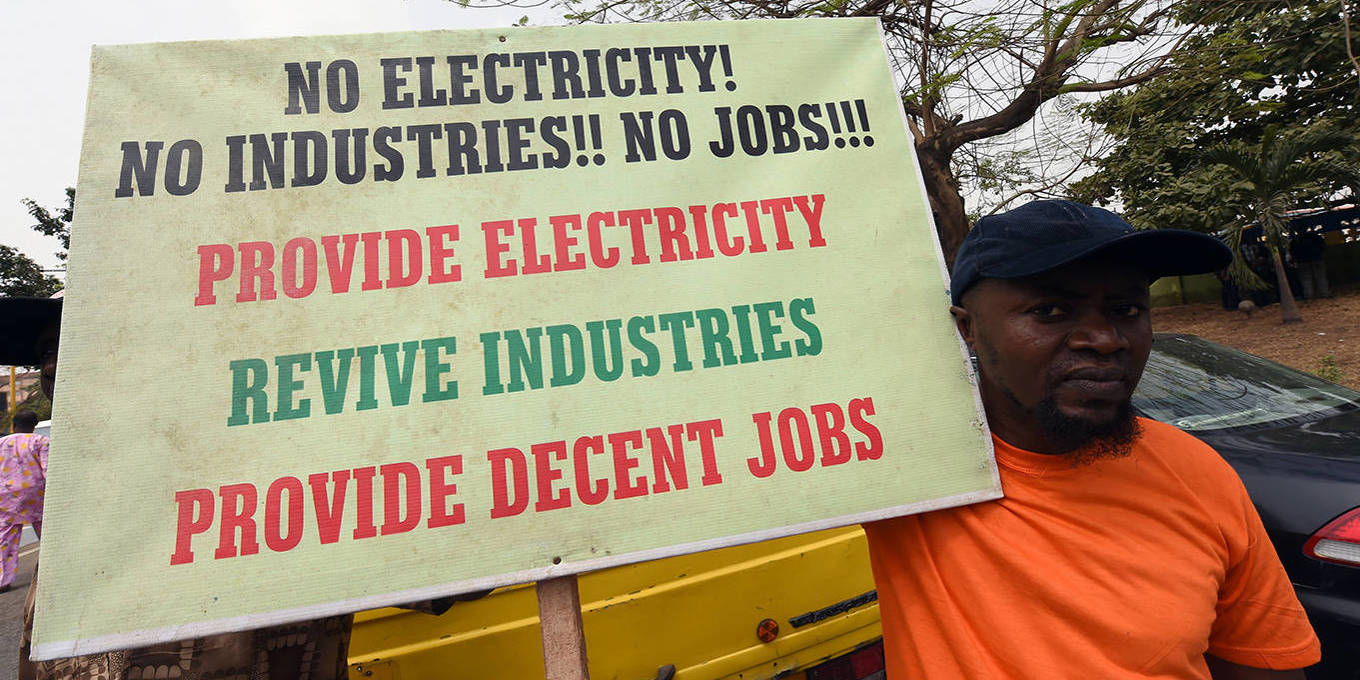
Africa energy poverty remains severe even as the continent sits on large hydrocarbon reserves, Rabah Arezki and Michael L. Ross wrote in a July 31 commentary for Project Syndicate. They cited roughly 125 billion barrels of confirmed oil reserves, more than 620 trillion cubic feet of natural gas, and about 600 million Africans without electricity at home.
The authors argued that the divide between resource abundance and household deprivation reflects policy choices rather than geology. On current trends, they wrote, the number of Africans without home electricity will still be above half a billion in 2030.
Arezki and Ross said African producer governments have tended to prioritize hard-currency export earnings from oil and gas. Those revenues help pay for imports of food, medicine, capital goods and manufactured products, as well as debt service and public spending needs.
They also argued that the same resources could be used more directly to power homes, hospitals, schools and factories. Nigeria, they wrote, has enough natural gas to reach full electrification within its borders, while gas-to-power projects elsewhere on the continent have shown technical feasibility.
Why does Africa have energy poverty despite oil and gas?
The authors identified governance, subsidies and geopolitics as the main reasons Africa’s energy wealth has not translated into universal power access. Exporting hydrocarbons can generate national wealth if revenues are well managed, but Arezki and Ross said that condition has often not been met.
They pointed to corruption as a major leak in the system. Nigeria has generated more than $600 billion in oil revenue since the 1960s while still recording one of the world’s highest rates of extreme poverty, they wrote. In Equatorial Guinea, they said, oil-boom years produced Africa’s highest per capita GDP while more than half the population lived below the poverty line.
The authors cited research on offshore bank accounts indicating that about 15% of windfall gains in petroleum-producing countries with weak institutional safeguards flows to those in power. They said such money often supports elite consumption rather than public investment.
Energy subsidies add another distortion, according to the commentary. In many African producer states, consumers pay less than the real cost of fuel and electricity. Arezki and Ross cited Angola as having the world’s fourth-cheapest retail gasoline and said Nigeria’s historically low domestic gas prices have made gas-fired power plants commercially unattractive.
Subsidies can give households visible relief in countries where citizens see limited benefits from resource extraction, the authors wrote. They also said subsidies can make exports look more attractive than domestic use, even when wider welfare gains from electrification may be larger.
Europe’s gas demand has strengthened the export pull
Recent global energy shocks have reinforced the export model, the authors said. Russia’s full-scale invasion of Ukraine cut about 80 billion cubic meters of annual gas supply to Europe, according to the International Energy Agency figures cited in the commentary, while the Middle East war tightened liquefied natural gas markets further.
That shift sent European governments seeking more supply from producers including Algeria, Senegal and Mozambique, Arezki and Ross wrote. Algeria became the European Union’s second-largest pipeline gas supplier in 2023, providing 20% of pipeline imports, behind Norway at 54% and ahead of Russia at 17%, according to the figures they cited.
The authors also noted that Angola has sent LNG cargoes westward and that a project off Mauritania and Senegal delivered its first cargo to Atlantic markets in 2025. A long-term LNG contract turns gas into an export commitment for years, limiting the volume available for domestic power generation during that period.
Arezki and Ross said Africa’s population is expected to reach 2.5 billion by 2050 and that the continent is projected to become a net energy importer by the early 2030s. They argued that reforms would require stronger checks on rent capture, energy prices that reflect domestic opportunity costs, and revenue systems that direct more money toward electrification.
This story draws on original reporting from Project Syndicate.