China’s second-quarter growth slows to 4.3%, missing expectations
Goldman Sachs said China’s GDP growth weakened in the second quarter as exports failed to offset soft investment, retail spending and property activity.
By David L. Chen · Senior Columnist
· 3 min read
China’s real gross domestic product growth slowed to 4.3% year on year in the second quarter from 5.0% in the first, according to official data cited by Goldman Sachs, undershooting both market expectations and the bank’s 4.5% forecast. The reading fell below the lower end of Beijing’s 4.5% to 5.0% growth target range for the year, although Goldman said first-half growth averaged 4.7%.
The figures sharpen attention on the balance of China’s economy, where strong overseas demand has not fully offset weaker domestic activity. The Wall Street Journal reported that exports rose 27% in June, while fixed-asset investment fell 5.7% in the first half and retail sales growth was stagnant.
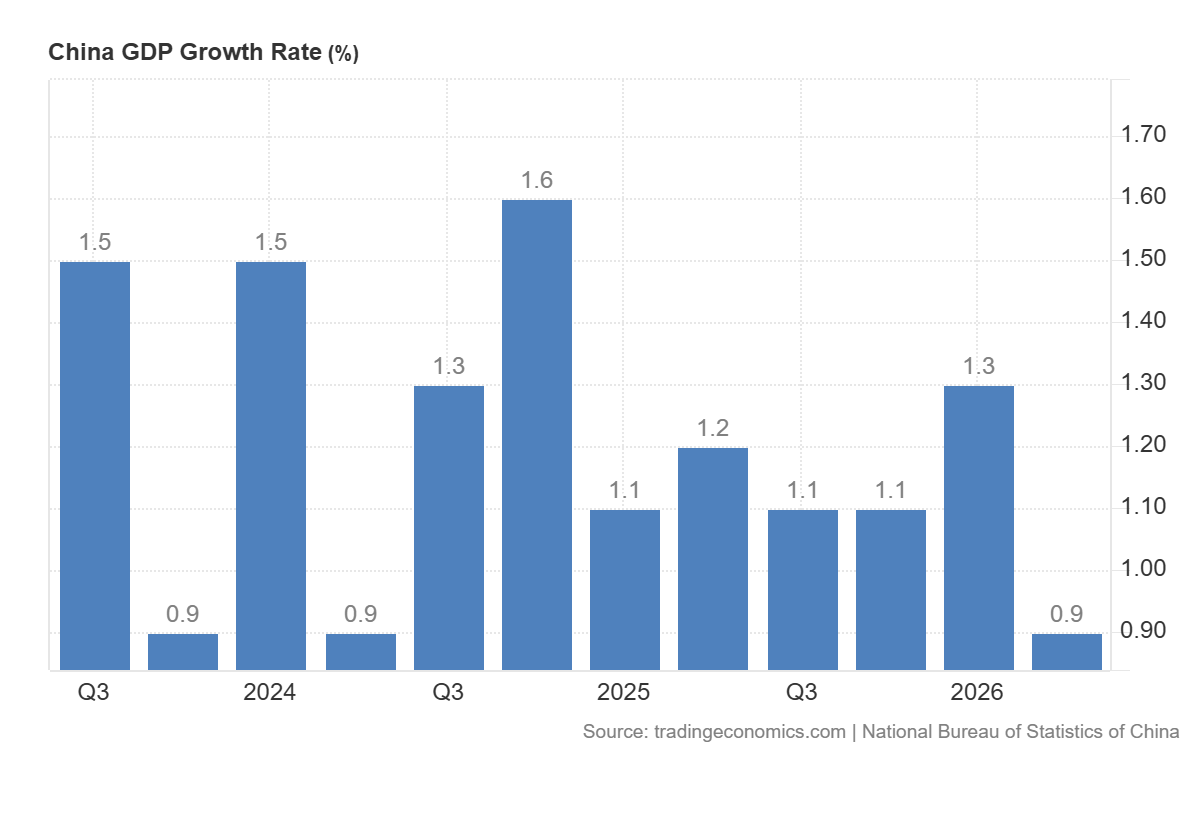
Goldman Sachs said the National Bureau of Statistics estimated seasonally adjusted quarter-on-quarter growth at 0.9% in the second quarter, non-annualised, down from 1.3% in the first quarter. That sequential figure was in line with market consensus and Goldman’s own estimate.
The divergence between the weaker-than-expected annual growth rate and the in-line sequential reading likely reflects revisions by the National Bureau of Statistics to earlier quarter-on-quarter growth estimates, Goldman said. Year-on-year GDP compares output with the same quarter a year earlier, while seasonally adjusted quarter-on-quarter figures measure the change from the immediately preceding quarter after accounting for recurring calendar patterns.
Exports carry more of the burden
The Wall Street Journal described the data as evidence of the strain in China’s increasingly export-led model. Strong foreign sales can support factory output and employment, but they do not directly repair weak household demand, falling property investment or subdued private-sector confidence.
Property remains a central drag. The Wall Street Journal reported that China’s real estate slump has reduced household wealth and weighed on consumer and business sentiment. Property investment declined 18% in the first half compared with the same period in 2025, according to the report.
Weak domestic demand has also pushed manufacturers to seek growth abroad. The Wall Street Journal reported that monthly Chinese car exports exceeded 1mn in June for the first time, while domestic car sales dropped 23% and declined for a ninth consecutive month.
NPR also reported on the 4.3% second-quarter growth figure, describing it as China’s slowest pace since late 2022. The slowdown comes despite the reported surge in June exports, underscoring the limited ability of external demand alone to offset weakness in investment and consumption.
Alternative gauges point to softer activity
Some analysts have questioned whether official GDP figures overstate China’s underlying momentum. A Wall Street Journal opinion essay argued that the economy may be weaker than reported, while other observers have pointed to the country’s ability to absorb a shortfall in oil imports as consistent with slower activity.
Those claims remain matters of assessment rather than confirmed official revisions. The San Francisco Federal Reserve’s China Cyclical Activity Tracker, which uses Chinese import data, showed slower growth than the official figures at least through the fourth quarter of 2025, according to the tracker as accessed on July 17.
For investors and policymakers, the second-quarter data leave China with positive first-half growth but a widening gap between external strength and domestic weakness. The official figures, Goldman’s interpretation and independent activity trackers all point to an economy still expanding, while the composition of that expansion remains uneven.
This story draws on original reporting from Econbrowser.