Ford tops mass-market quality ranking as recall costs remain in focus
J.D. Power ranked Ford first among U.S. mass-market brands for initial quality, while CEO Jim Farley said launches and warranty costs remain priorities.
By Marcus V. Thorne · Markets Editor
· 4 min read
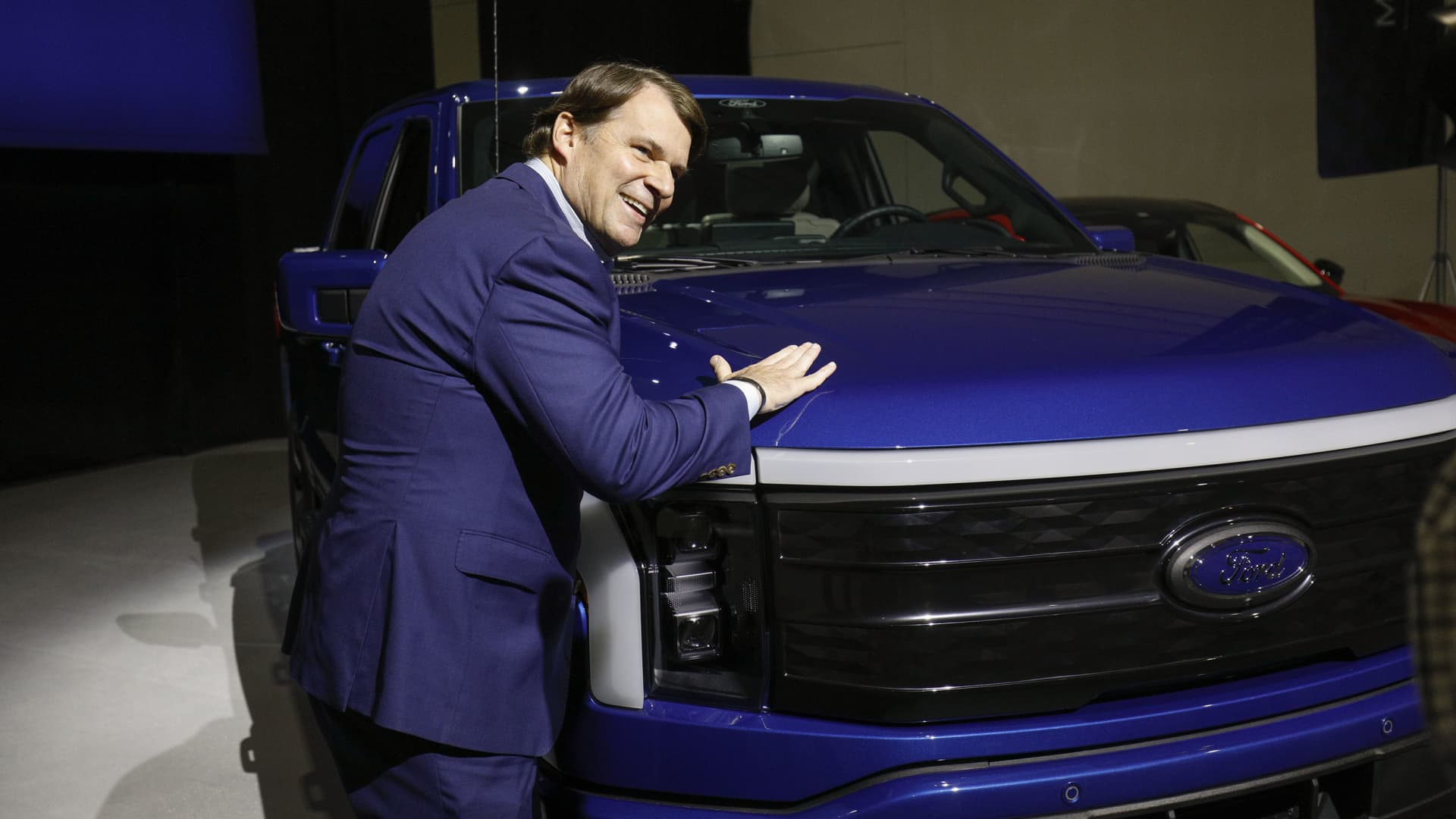
Ford Motor has taken the top position among mass-market brands in J.D. Power’s U.S. initial quality study, a marker the company is using to show progress after years of elevated recalls and warranty expense. The improvement comes as investors continue to scrutinize quality costs that Ford has said weigh on earnings and future product plans.
In an interview with CNBC, Chief Executive Jim Farley said the Detroit automaker has learned from earlier production and engineering problems and will apply those lessons to a broad refresh of its North American vehicle range in the next few years. “Our best days are in front of us as we continue to execute this quality turnaround for our investors, for employees, for our customers,” Farley told CNBC.
Ford has faced a long-running recall burden. Federal recall data cited by CNBC showed the company has issued 53 recalls covering more than 12 million vehicles so far this year, following 153 recalls covering 13 million vehicles in 2025. This week, Ford recalled 741,195 SUVs and F-150 pickups from the 2018 to 2021 model years, according to NBC News, citing the National Highway Traffic Safety Administration.
Initial quality improves
J.D. Power named Ford the top mass-market brand in its initial quality ranking released June 25. The study measures problems reported by owners during the first 90 days after purchase, giving manufacturers an early indication of whether vehicles are reaching customers with defects in software, infotainment, powertrains and other systems.
Ford ranked third among all brands in the study, behind Porsche and Genesis, the luxury marque owned by Hyundai. Lexus placed fourth. Ford said it was the first time since 2010 that its namesake brand led mainstream automakers in the study, after ranking No. 23 in 2023.
Ford shares rose 2% after the J.D. Power results were announced, CNBC reported, marking the stock’s second-best trading day of the month.
Farley, who spent nearly 19 years at Toyota before joining Ford, told CNBC he was proud that “an American car company can beat the world in initial quality,” while adding that the company was not satisfied and still aimed to improve across quality measures.
Warranty costs and launch risk
Warranty expense is a central financial issue for automakers because manufacturers pay for certain repairs, replacements and related work when a defect appears within the covered period or mileage limit. Ford said it cut warranty and material costs by $1.5 billion in 2025 on a volume-and-mix adjusted basis and is targeting another reduction in 2026. The company’s warranty costs reached $4.8 billion in 2023.
Barclays analyst Dan Levy wrote in a May 15 note that Ford appeared to have “turned the corner” on warranty costs after four consecutive quarters of year-over-year warranty benefits, according to CNBC. Levy also said further improvement would still be needed.
Farley declined to say when Ford would no longer lead U.S. recalls, telling CNBC he cannot control issues in older vehicles or the quality performance of competitors. He said Ford’s current work would lead to a large reduction in recalls for present and future products.
New model launches remain a test for the company. Vehicles increasingly combine software-defined functions, electrified powertrains and conventional hardware, so an error in one component can spread across a product line through shared parts or software systems.
Changes inside Ford
Farley told CNBC that Ford has changed its quality processes by identifying defects earlier in vehicle development. The company has hired 350 technical specialists since 2023, increased routine reviews, worked more closely with suppliers and expanded testing throughout development.
Ford also changed executive compensation to place greater weight on quality metrics, including for executives recruited from Whirlpool and Johnson Controls. Farley said the company brought back experienced engineers after finding that artificial intelligence tools needed better training and human oversight.
Longer-term quality remains a weaker point. In J.D. Power’s U.S. Vehicle Dependability Study released in February, Ford ranked 18th and Lincoln ranked 19th, both below the industry average. Farley told CNBC that the durability test will be whether the company can sustain better launches and quality performance over five to 10 years and through changing economic conditions.
This story draws on original reporting from CNBC.


