Water risks move up corporate and policy agenda, analysts say
Project Syndicate contributors argue that water stress is becoming a security, trade and investment issue as climate and geopolitical shocks intensify.
By Ingrid Halvorsen · Venture Capital Reporter
· 3 min read
Water stress is increasingly affecting trade routes, public health, corporate balance sheets and national security, according to Esther Crauser-Delbourg and Bertrand Badré, who argue that governments and companies are still treating the resource as too cheap and too abundant. Their assessment points to material economic exposure: droughts cost an estimated $307 billion a year, while floods caused $651 billion in damage from 2000 to 2019, based on figures they cite from disaster-risk and academic research.
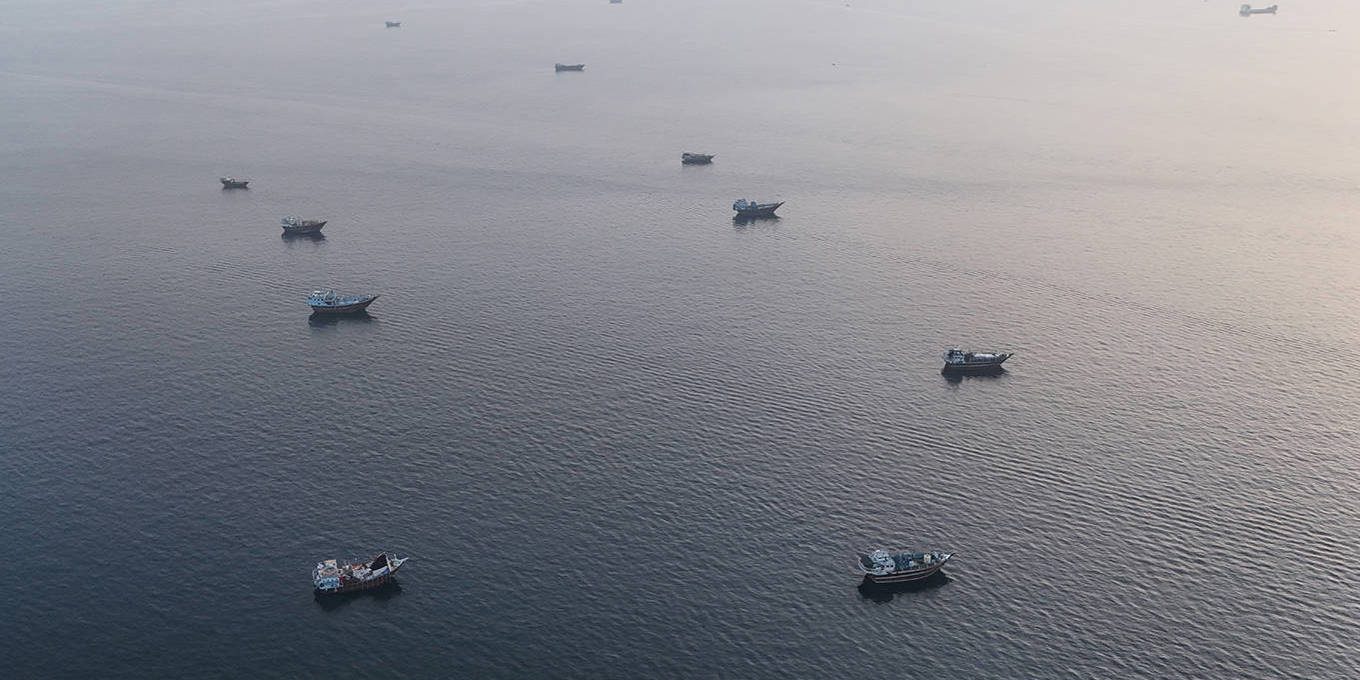
The authors highlight two recent pressure points. Gulf Cooperation Council countries, which together supply about 62 million people with drinking water drawn largely from the sea, have seen desalination plants targeted by drones and missiles, they write, citing analysis of the region’s dependence on seawater. In Panama, weak rainfall has reduced water levels in the canal system, forcing a trade-off between local freshwater needs and shipping demand.
That canal strain has had direct logistics consequences. Panama began limiting access to the waterway in 2023 after a prolonged drought, and daily transit had fallen by roughly one-third by early 2024, according to Reuters figures cited by the authors. Around 80% of global merchandise trade by volume moves by sea, according to UN trade data, leaving chokepoints such as the Panama Canal, the Suez Canal and the Strait of Hormuz central to supply chains.
Economic costs extend beyond shipping
Unsafe water and poor sanitation remain a major public-health risk and are among the leading causes of death for children under five globally, according to UNICEF data cited in the analysis. Water is also a core input for production: UNESCO figures cited by Crauser-Delbourg and Badré show that about 90% of global freshwater withdrawals support economic activity, while households account for the remaining 10%.
The World Bank has previously projected that water-related losses could reduce growth rates in the most vulnerable regions by as much as 6% of GDP by 2050, according to the authors. They also cite United Nations researchers warning that some regions are approaching “water bankruptcy,” a condition in which depleted, polluted or damaged water systems can no longer return to historical norms.
For companies, the Carbon Disclosure Project has estimated that water-related risks already run into the hundreds of billions of dollars, much of which could be reduced at a lower cost than the potential losses, the authors write. The mechanism is straightforward: water shortages can interrupt production, raise input costs, limit transport capacity and expose firms to regulatory or reputational risk.
Pricing and governance lag behind scarcity
Crauser-Delbourg and Badré argue that weak measurement and disclosure have kept water risks less visible than energy use or emissions. They cite France as an example of distorted pricing, where water can cost €0.02 per cubic meter for irrigation and about €4 for treated household use, a 200-fold gap that they say does not reflect scarcity or economic value.
The authors also point to a gap in international governance. They note that leaders at the 2003 G8 summit in Évian warned about the economic and geopolitical consequences of water insecurity, yet global water rules still rely on a patchwork of agreements and institutions. Roughly one-fifth of global water consumption is embedded in goods consumed outside the country where they are produced, according to research they cite on virtual water flows.
Investment in water systems can produce measurable returns, the authors argue. They cite World Health Organization research indicating that each dollar spent on water and sanitation infrastructure can generate about $4 to $12 in economic gains through lower health costs and higher productivity. Their conclusion is that water should be treated as a strategic asset alongside energy, trade and finance, with disclosure, pricing and investment decisions adjusted to reflect that dependence.
This story draws on original reporting from Project Syndicate.