China August imports rise 28.2% but fall short of forecasts
China’s imports rose 28.2% in August, below a Reuters poll forecast, as export growth lifted the monthly trade surplus to $119.09bn.
By Sarah Jenkins · Chief Macro Economics Correspondent
· 3 min read
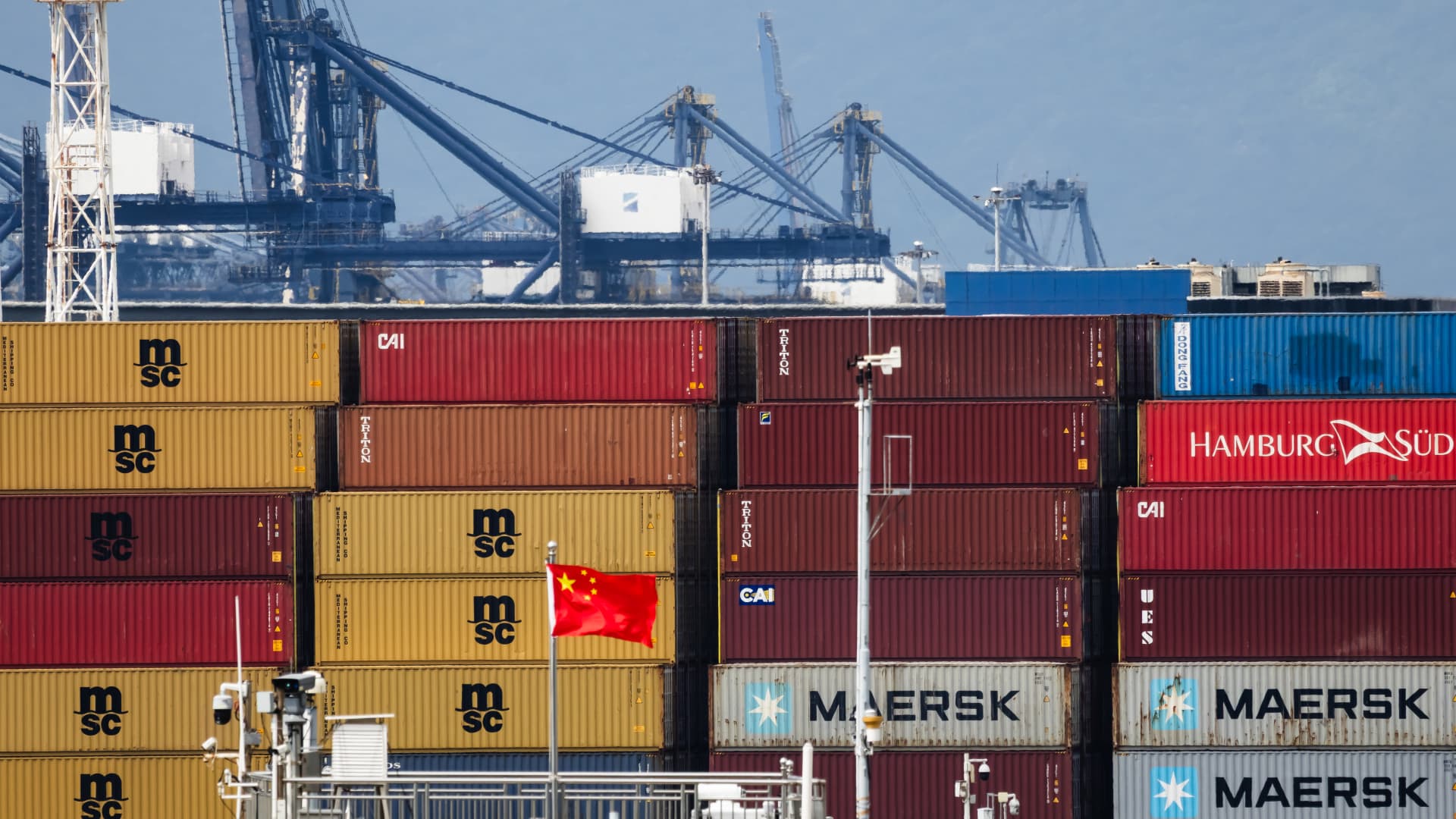
China August imports 2026 rose 28.2% from a year earlier in U.S.-dollar terms, below the 30% forecast in a Reuters poll, while exports increased 25%, according to customs data reported by Reuters. The figures lifted the monthly trade surplus to $119.09 billion from $112.5 billion in July, adding to international scrutiny of China’s trade imbalance.
Imports still grew faster than July’s 27.5% pace, so the shortfall was against economists’ expectations rather than a decline in purchases. Export growth matched the Reuters poll forecast and accelerated from 23.9% in July.
Why did China’s imports miss forecasts despite rising?
A forecast compares the reported rate of growth with what economists expected. China’s import growth was 1.8 percentage points below the Reuters poll’s 30% estimate, even though imports rose strongly from a year earlier and at a faster rate than in July.
Trade data alone do not establish the condition of household consumption. However, Reuters reported that second-quarter gross domestic product growth slowed to 4.3%, while July data showed weak domestic demand and investment. Premier Li Qiang said in August that domestic demand was insufficient, Reuters reported.
The gap between export and import growth helped widen the surplus by $6.59 billion in a month. China recorded an $805.51 billion surplus over the first eight months of the year, Reuters said.
Technology demand supports exports
Reuters attributed the strength in overseas shipments in part to demand for high-tech and artificial-intelligence-related products. Electric vehicles, solar cells and lithium-ion batteries also supported exports, according to ANZ senior China strategist Zhaopeng Xing, cited by Reuters.
High-tech product exports rose 42.9% in dollar value over the first eight months, Reuters reported. Semiconductor export values more than doubled, although volumes rose 4.1%, while car exports increased by more than 50% in both value and volume.
Trade with the United States also remained uneven. Reuters reported that China’s exports to the U.S. rose 34.4% in August while imports increased 17.8%, taking China’s bilateral surplus with the U.S. to $29.18 billion from $28 billion in July.
Pressure to narrow the surplus
U.S. and European Union trading partners have urged Beijing to reduce its trade surpluses, Reuters reported. Economists cited by Reuters said reliance on outbound shipments leaves growth exposed to potential tariff measures and to uncertainty over how long the technology-investment cycle will remain strong.
China disputes the premise that it deliberately targets a surplus. The government has said export growth reflects domestic innovation and overseas demand, including demand associated with green transformation and industrialisation. People’s Bank of China Governor Pan Gongsheng said China had not actively pursued a trade surplus or weakened its currency to gain trade competitiveness, CNBC reported.
Reuters said the trade figures had little immediate market effect, with the yuan broadly flat and Chinese stocks slightly higher as investors awaited U.S. inflation data.
This story draws on original reporting from CNBC.