ICE raids left Minneapolis businesses facing prolonged economic losses
Minneapolis estimates nearly $700 million in lost activity after Operation Metro Surge as research links raids to weaker spending and foot traffic.
By David L. Chen · Senior Columnist
· 3 min read
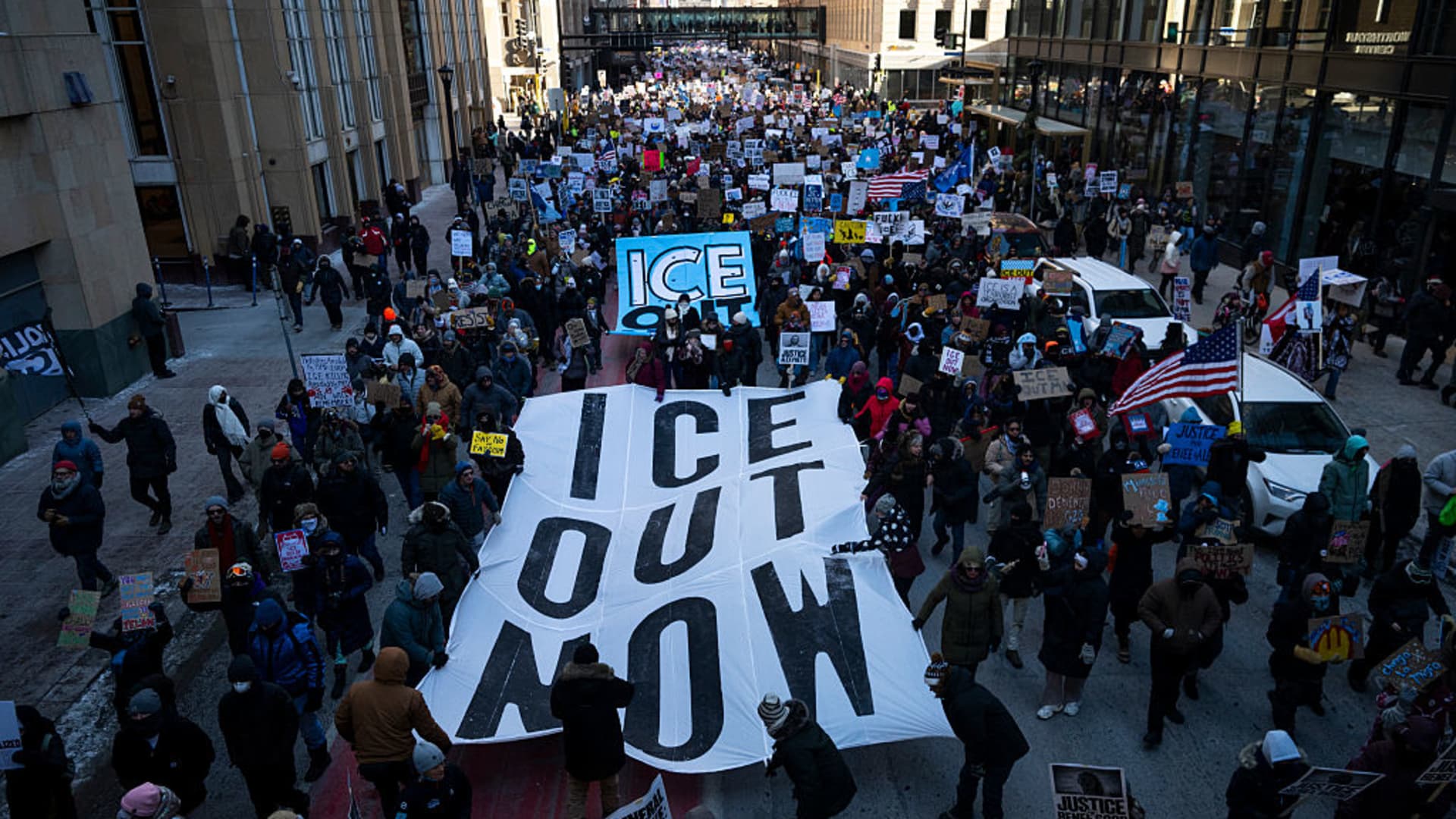
ICE raids local economies became a central concern in Minneapolis after Operation Metro Surge, with the city estimating almost $700 million in lost economic activity from December through April. Months after the enforcement operation ended in mid-February, foot traffic at Lake Street bars and restaurants continued to lag nearby areas, according to CNBC’s analysis of Advan Research data.
The gap in year-over-year visits for ZIP codes containing the Lake Street corridor reached nearly 10 percentage points in March, CNBC reported. The figures describe a local downturn during and after the operation, although the supplied evidence does not provide the city’s full calculation or establish that enforcement alone caused every business loss.
How did ICE raids affect Minneapolis businesses?
The Lake Street Council said immigrant-owned businesses in its commercial district lost a combined $46 million in December and January. Minneapolis lawmakers subsequently released about $7 million for local businesses and more than $3 million in rental assistance, CNBC reported.
Daniel Hernandez, owner of Colonial Market, told CNBC that Immigration and Customs Enforcement officers had used his parking lot as a gathering point. He said customer traffic did not recover after the surge and that sales at his stores had fallen by about 60%. CNBC reported that Hernandez closed a Lake Street location during the summer.
The municipal estimate measures lost economic activity across the city over five months, while the Lake Street Council’s figure covers reported losses by immigrant-owned businesses in one district over two months. Hernandez’s account is an individual proprietor’s assessment rather than an independently audited measure.
What does the wider research show?
Exequiel Hernandez, a Wharton management professor, examined 5,388 ICE raids, mobility records for 5.4 million commercial locations and card-transaction data for 1.1 million locations between January 2024 and February 2026. His approach compared places targeted by raids over time with places that were not targeted, according to Wharton’s summary of the research.
The analysis found a 2.73% weekly decline in foot traffic and a 6.18% fall in spending per commercial location in targeted areas. It estimated 8.1 billion fewer visits and between $3 billion and $14 billion in lost spending during the first year of President Donald Trump’s second administration.
Hernandez told Wharton that the effects did not fade over time and that consumers did not appear to switch their purchases to online or delivery channels. Those are findings from an observational analysis, not proof that enforcement was the sole driver of changes in local commerce.
Employment data point in the same direction. CNBC reported that a Brookings Institution analysis found a 0.4% employment shortfall six months after an enforcement surge in the cities most affected. Minnesota’s labor-force participation rate also fell faster than the national rate over the preceding year, CNBC said, though the material provided does not isolate the role of the Minneapolis operation in that statewide measure.
This story draws on original reporting from CNBC.