Verizon shares fall 8.75% after SpaceX spectrum deal announcement
Verizon recorded its worst session since 2002 as SpaceX’s planned spectrum purchase raised questions about future wireless competition.
By Marcus V. Thorne · Markets Editor
· 3 min read
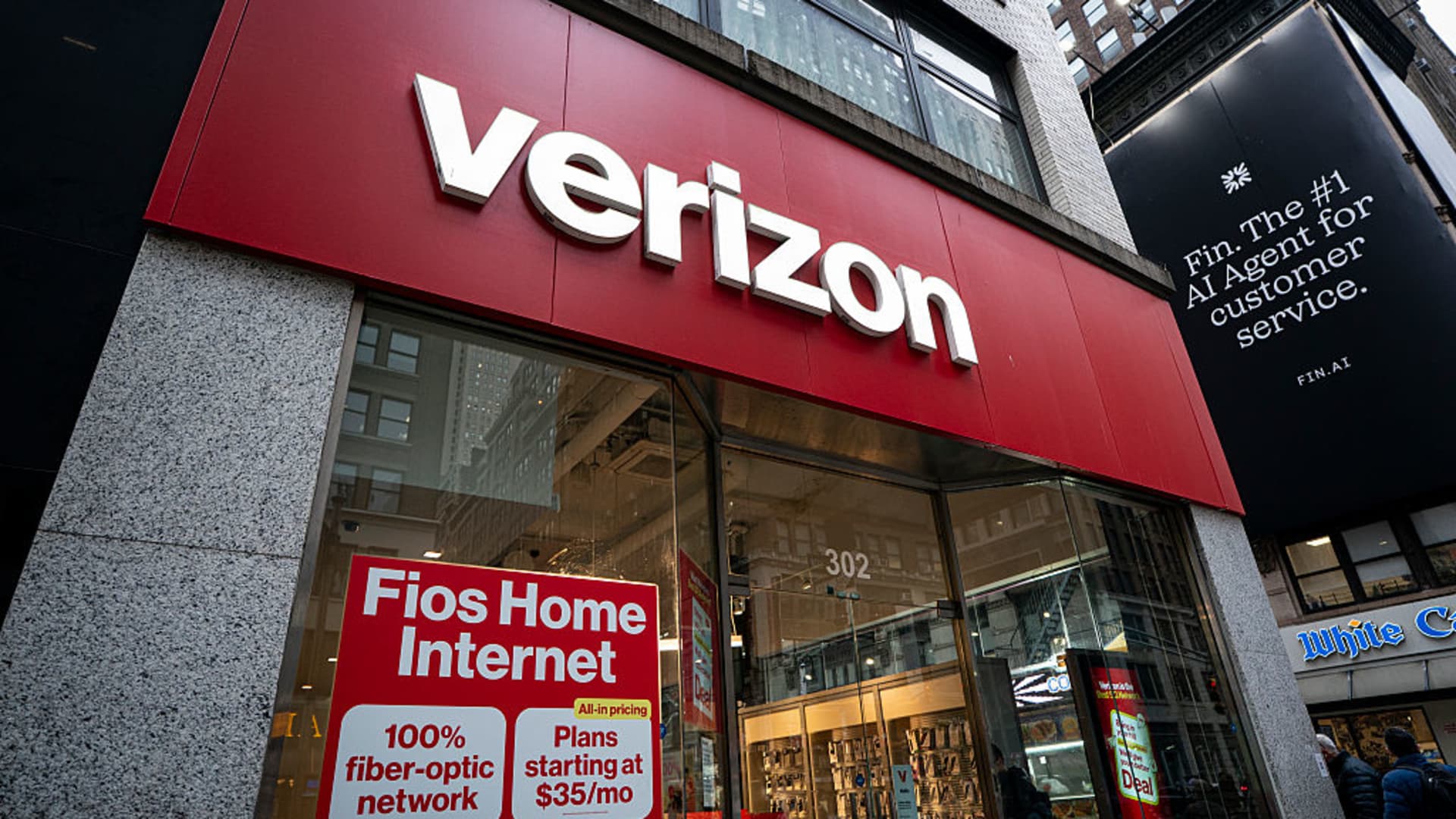
Verizon shares fell 8.75% after the SpaceX spectrum deal announcement, their steepest one-day decline since July 2002, CNBC reported. T-Mobile dropped 13.27%, its worst day since 2013, while AT&T lost 9.81%, its weakest session since 2000, after SpaceX said it had agreed to acquire a nationwide spectrum portfolio to support an expansion of Starlink internet into mobile service.
The proposed acquisition is from Grain Management. SpaceX described the asset as a licence portfolio containing up to 14 megahertz of paired spectrum in the 800 MHz band, according to CNBC. The announcement concerns a planned purchase of spectrum rights, rather than a completed nationwide mobile network.
The scale of the share-price moves showed that the prospect of a new competitor was being weighed by the market. Yet the available information does not disclose a purchase price, timetable for closing, detailed network-build plan, coverage target or launch date for a mobile service.
Why did the SpaceX spectrum deal send Verizon, AT&T and T-Mobile shares lower?
SpaceX’s plan would add licensed radio capacity to Starlink’s existing satellite capabilities, potentially strengthening its longer-term mobile ambitions. Evercore ISI said the transaction gave SpaceX the outline of a network alongside those satellite capabilities, while JPMorgan said it made the long-term opportunity for Starlink Mobile more credible, CNBC reported.
JPMorgan’s analysts also identified limits to the immediate competitive implications. They said the near-term risk to established US wireless operators remained limited because building a competitive terrestrial network requires time, infrastructure and capital.
That distinction is central to the reaction: the agreement offers SpaceX a potential input for mobile operations, but it does not by itself establish the service that would compete with the three carriers.
What still has to happen before the transaction can close?
The Federal Communications Commission will oversee approval of the proposed transaction, CNBC reported. The agency manages and licenses electromagnetic spectrum for commercial users, including mobile wireless and satellite services, according to the FCC. Regulatory approval is therefore a remaining step, alongside the network infrastructure and capital requirements identified by JPMorgan.
FCC Chair Brendan Carr told CNBC that greater competition in the spectrum market was good for US consumers. He said the agency would watch how the market developed rather than choose winners and losers.
What is known and what remains undisclosed?
Known: SpaceX has announced an agreement to buy Grain Management’s nationwide portfolio, described as up to 14 MHz of paired 800 MHz-band spectrum.
Known: SpaceX says the purchase is intended to help expand Starlink internet into mobile service.
Outstanding: FCC approval is required, according to CNBC.
Undisclosed in the available reporting: the deal value, closing date, a detailed deployment plan and the planned service timetable.
This story draws on original reporting from CNBC.